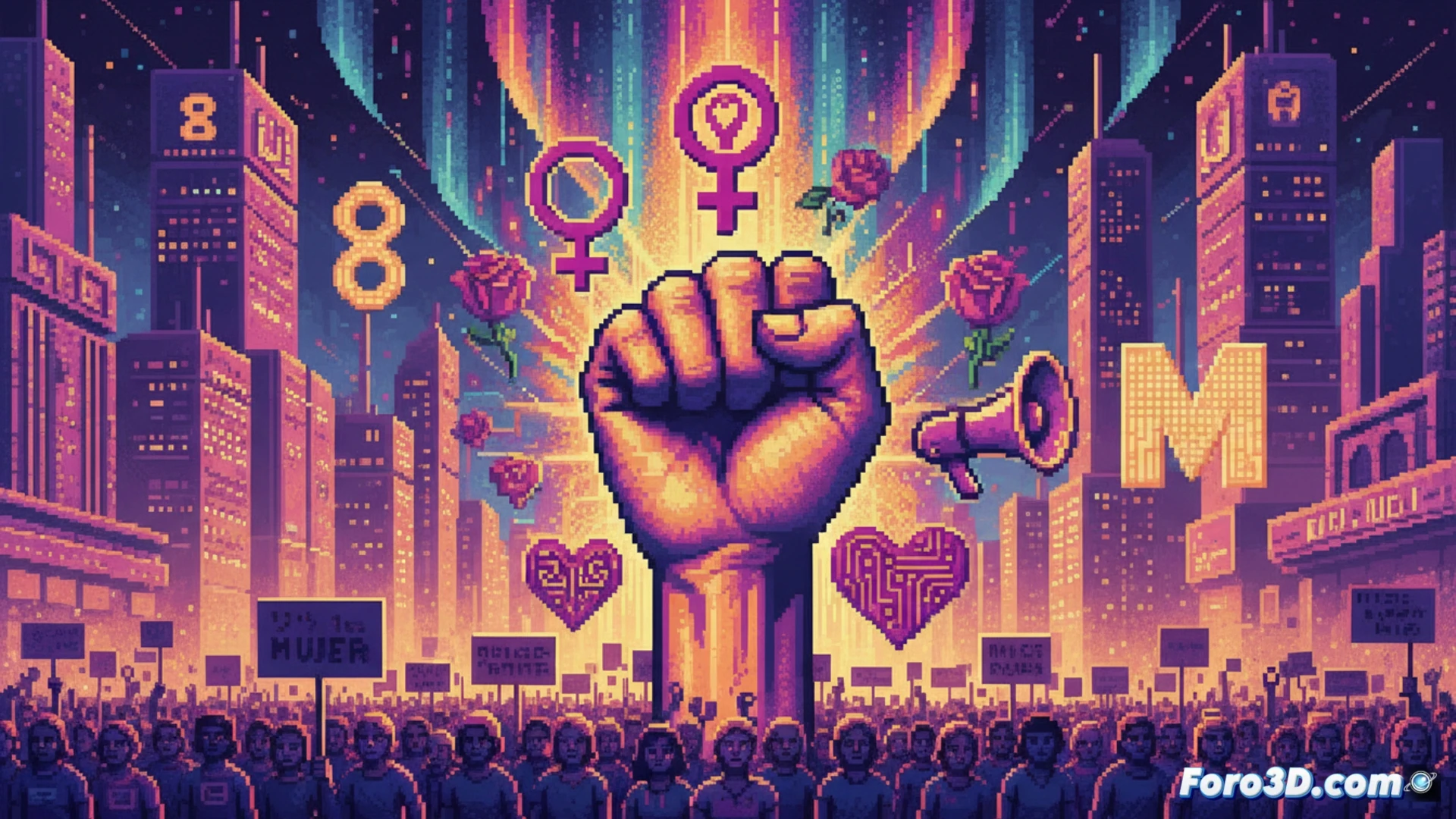
In the universe of digital art, pixel art emerges as a surprisingly powerful tool for visual activism. Its aesthetic, which evokes the retro and the playful, has a unique ability to synthesize complex ideas into clear and emotive icons. Harnessing this technique to commemorate International Women's Day is not just an aesthetic exercise, but a cultural act of reclamation. It transforms pixels into symbols of struggle, memory, and celebration, demonstrating that digital art can be a profound vehicle for social awareness.
The Visual Syntax of the Pixel: Minimalism with Power 🎨
The strength of pixel art for activist messages lies in its self-imposed technical limitations. The low resolution and restricted color palette force the artist into maximum expressive economy. Each pixel becomes a crucial decision. This visual syntax allows for the creation of recognizable icons of female empowerment, silhouettes that evoke historical milestones, or abstract symbols of equality with striking clarity. For the 3D creator, this exercise is invaluable: it trains the eye for essential composition, color weight, and pure visual narrative, skills transferable to any digital medium.
Beyond Tribute: Pixelating Everyday Struggle ⚙️
The true potential lies in going beyond figurative representation. Pixel art can diagram inequality statistics in emotive infographics, animate short sequences about invisibilized historical roles, or build interactive scenarios that prompt reflection. It invites not just representing women, but pixelating the structures that surround them. For the Foro3D community, this approach poses a creative challenge: using our technical prowess to serve a message, demonstrating that digital art, in its apparently simplest form, can house profound and moving social critique.
How can the retro aesthetic and technical limitations of pixel art enhance the activist message and social reclamation in digital campaigns like Women's Day?
(P.S.: if your virtual reality setup doesn't change the world, at least don't lag)