Pixar has unveiled its roadmap, a dual strategy that seeks to reconcile creative boldness with commercial solidity. On one hand, it bets on original projects like Ono Ghost Market, a musical, and the surprising Gatto in 2D. On the other, it continues to exploit its most profitable franchises with sequels like The Incredibles 3 and Toy Story 5. This move reflects a search for balance after the success of risky proposals like Hoppers, trying to satisfy both the demand for novelty and the security provided by characters already loved by the public.
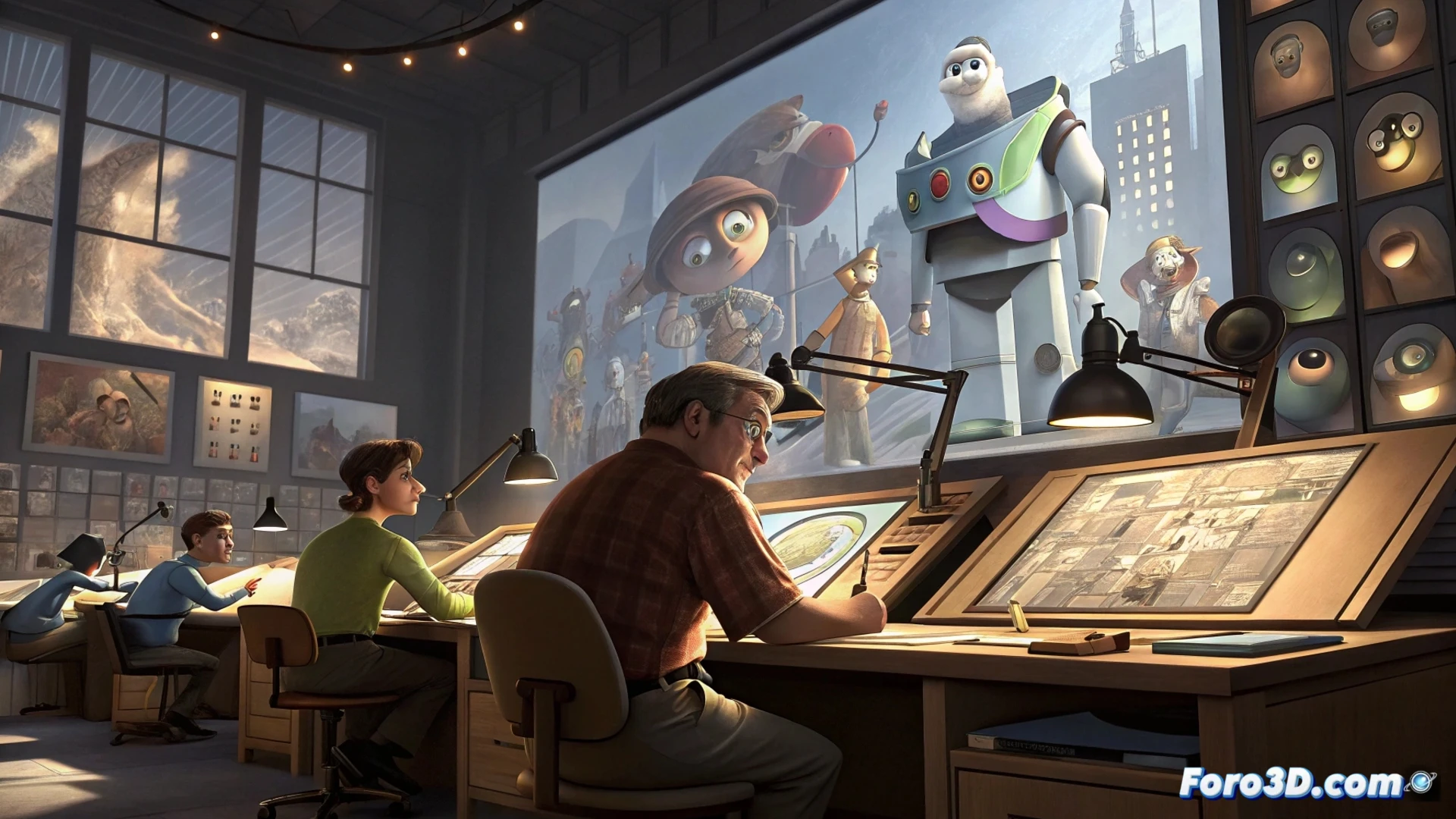
Technical pipeline: the backbone for creative diversity 🛠️
This dual strategy is only viable thanks to an extraordinarily flexible and mature technical-artistic pipeline. Pixar's 3D pre-production and previsualization tools are key. For a sequel, they allow quick iteration over existing assets and universes, optimizing times. For an original project like Gatto, which requires a 2D style, the pipeline must adapt to emulate traditional techniques within a digital environment, a different challenge. The musical and the Asian fantasy film, in turn, demand new developments in character animation and effects for choreographies and supernatural elements. Technology is not an end, but the means that makes it materially possible to alternate between innovation and IP exploitation.
Calculated risk or necessary evolution? ⚖️
Pixar's bet goes beyond a simple production plan. It defines the future of mainstream animation: can an industrial giant maintain its innovative essence? The success of Hoppers demonstrated that the public values originality, but the weight of sequels raises a crucial question. This strategy is a calculated risk where the studio uses the guaranteed profitability of sagas to finance and make room for experimentation. Its ability to manage this balance will define whether it remains a creative benchmark or becomes a franchise factory.
Can Pixar's dual strategy between originality and sequels redefine the future of visual storytelling in animation? 🎬
(P.S.: Previz in cinema is like the storyboard, but with more chances for the director to change their mind.)