At the intersection between pictorial tradition and technological innovation lies the work of Pierre Deschamps, concept artist for film and video games. His work goes beyond creating striking images; it builds complete narratives. By fusing classical influences with modern digital techniques, Deschamps generates worlds where retrofuturism and historical references dialogue, demonstrating that concept art is the backbone of audiovisual preproduction.
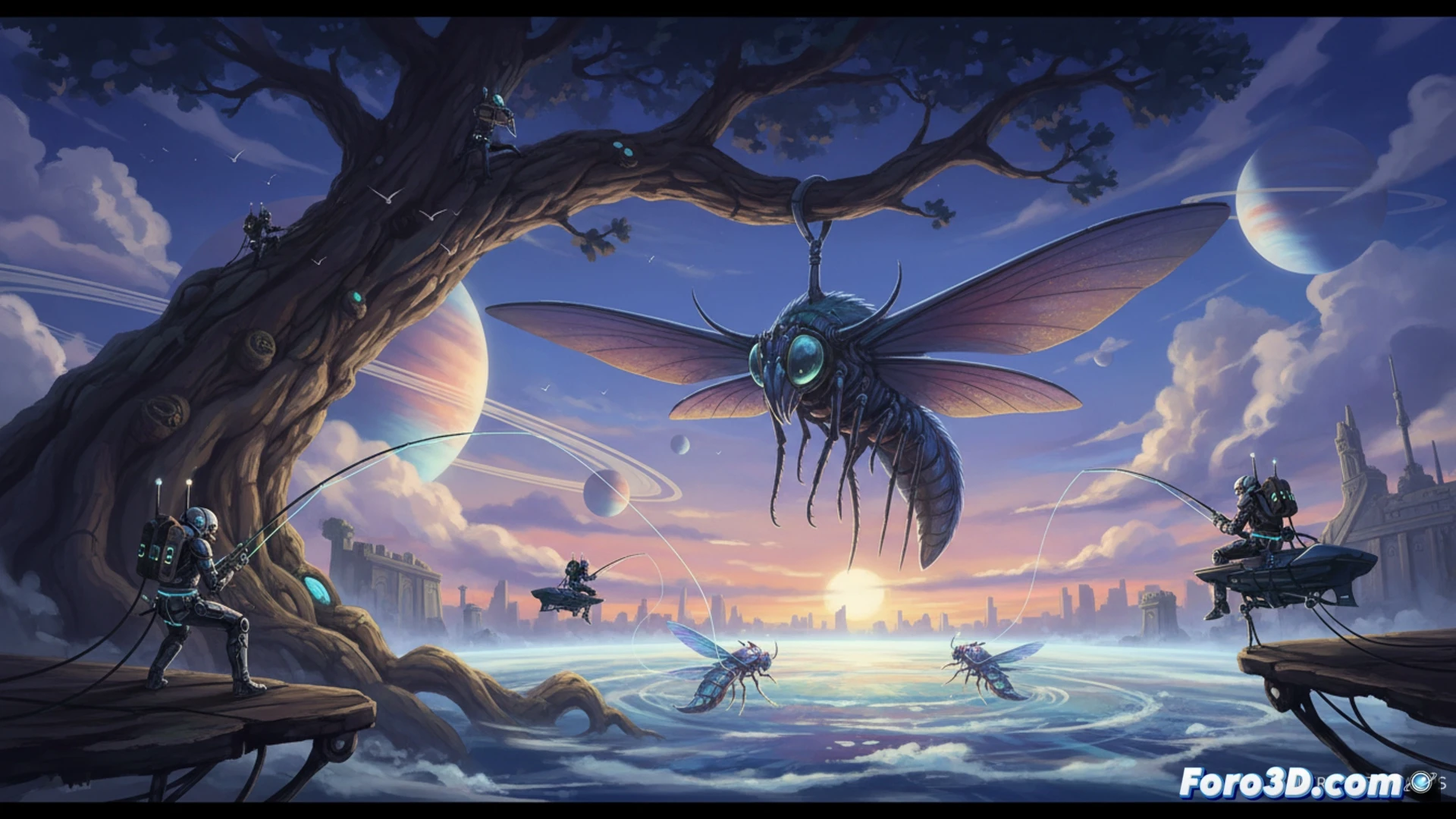
Blender and Photoshop: the pillars of a narrative workflow 🛠️
Deschamps' process exemplifies a modern workflow where 3D and 2D tools are inseparable. He uses Blender as the base for modeling, compositing, and lighting his scenes, leveraging the Octane engine to achieve renders with a defined atmosphere. This solid three-dimensional foundation allows him to then focus on narrative and detail in Photoshop, through photobashing and digital painting techniques. Projects like Carbon Dioxide Collector are born from this method, where 3D modeling provides the structure and 2D editing adds historical texture and narrative depth, uniting technical efficiency with artistic expression.
Concept art as the heir to pictorial tradition 🎨
Beyond technique, what defines his work is a deep understanding of art history. Works like The Sleep, which mixes samurai armor with Napoleonic uniforms in a mythological scene, show how digital art can be the continuation of classical painting. Deschamps not only creates assets for a production but builds iconographies and visual legacies, reminding us that the fundamental mission of the concept artist remains the same as that of the great painters: to tell a story through a powerful and evocative image.
How can classical visual narrative, based on pictorial composition and mastery of light, redefine the creation of digital environments for film and video games in the era of 3D and AI?
(P.S.: Previz in film is like the storyboard, but with more chances for the director to change their mind.)