The recent discovery of the star PicII-503, a cosmic relic with an extremely primitive chemical composition, opens a unique window into the first moments of the universe. For the scientific visualization community, findings like this represent both a challenge and an opportunity. How can we transform complex spectroscopic data and galactic formation theories into intuitive and educational visual representations that communicate the profound significance of this star?
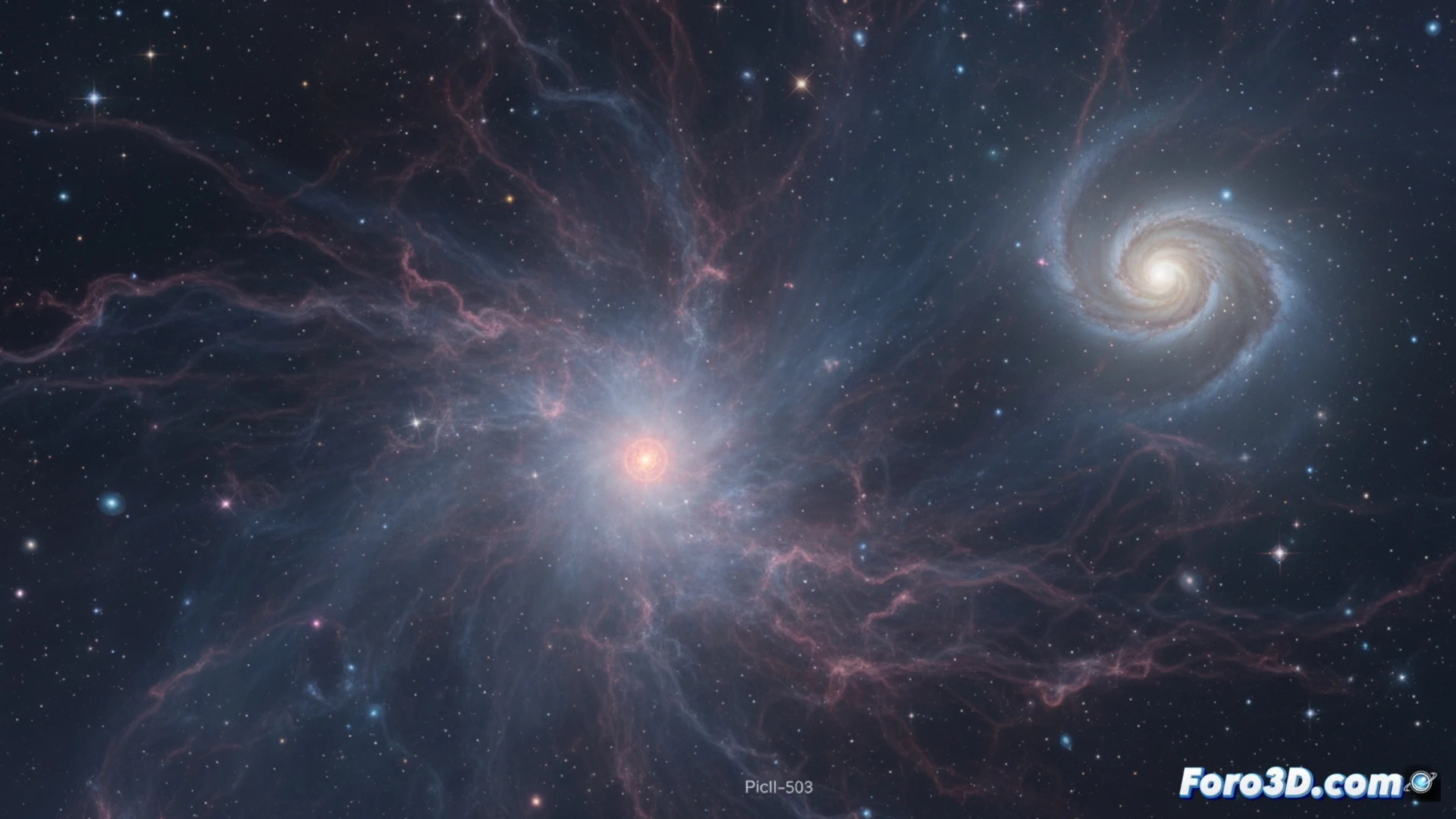
From data to image: 3D modeling of a primitive star and its environment 🔬
The key to the value of PicII-503 is its extreme metal poverty, an indication that it formed from material ejected by a single low-energy supernova. Here, 3D visualization is fundamental. We could create an interactive model of the ultra-faint dwarf galaxy that hosts it, showing its scale and structure. Within it, a model of the star could be linked to a visual representation of its chemical composition, graphically comparing its tiny fraction of iron or calcium with that of a modern star like the Sun. Additionally, a simulation of galactic accretion, showing how the Milky Way absorbs dwarf galaxies like this one, would visually validate the theory supported by the discovery.
Visualization as a bridge between science and understanding 🌉
Visualization projects based on PicII-503 are not only for outreach. They are cognitive tools that help researchers themselves identify patterns and communicate findings. A 3D model of the nucleosynthesis from that first supernova, or a visual flow diagram of the chemical evolution of the cosmos, transform abstract data into a comprehensible spatial narrative. Thus, scientific visualization is consolidated as an essential pillar for exploring and explaining the oldest mysteries of the universe.
How can we use scientific visualization techniques to represent the extremely primitive chemical composition of stars like PicII-503 and their environment in the early universe?
(P.S.: fluid physics to simulate the ocean is like the sea: unpredictable and you always run out of RAM)