The belief that platform games require a controller is a persistent myth. In PC development, adapting control mechanics and level design are key to offering an optimal experience with keyboard and mouse. Modern titles demonstrate that, with careful input and physics programming, millimeter-precise control is achieved that rivals any gamepad. This precision opens new possibilities in challenge design and the player's sense of agency.
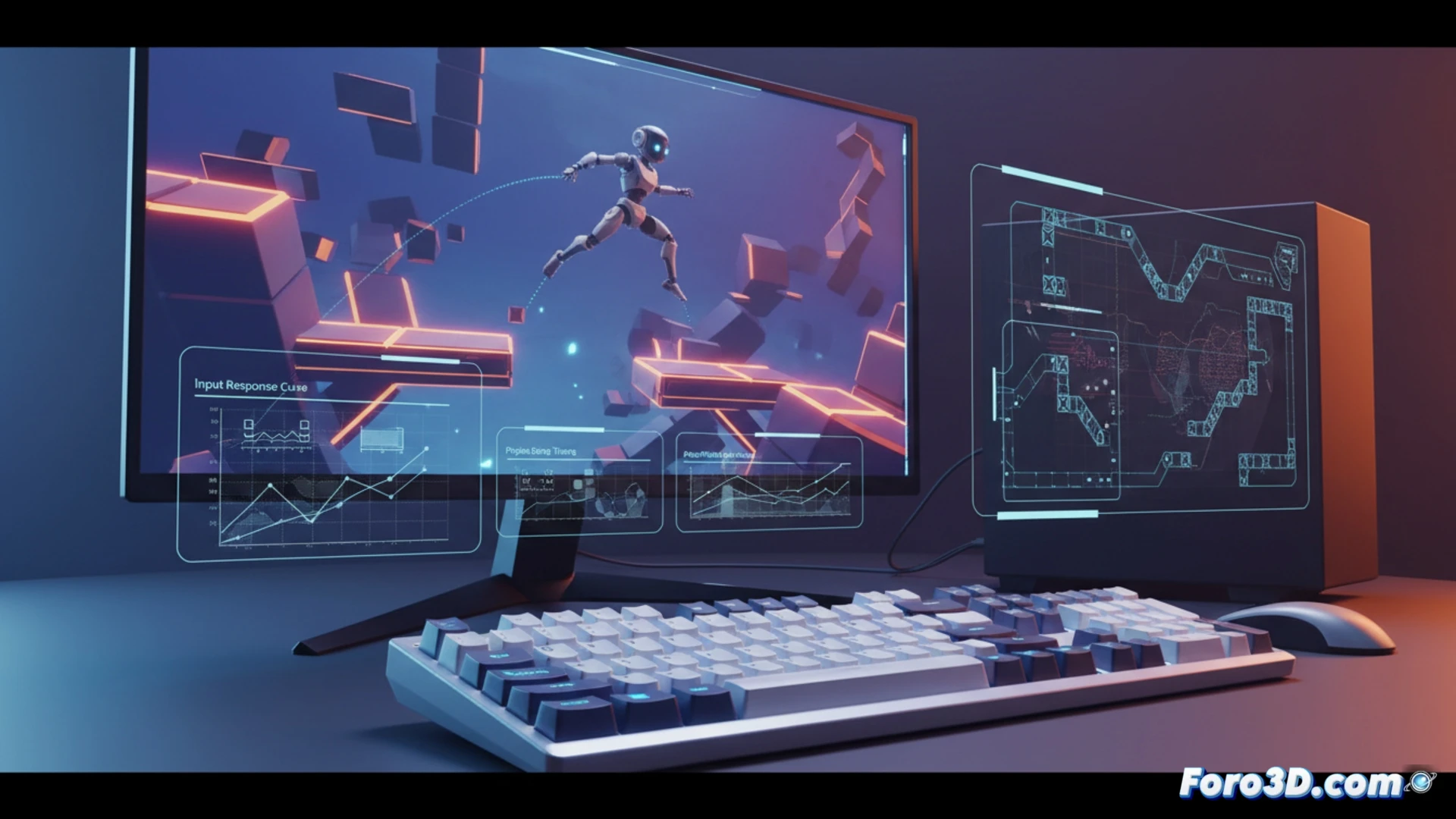
Technical analysis: Mechanics adaptation and input response 🎮
Examining specific cases, we see differentiated development strategies. Hollow Knight prioritizes sharpness in attacks and jumps, where each keyboard input translates into an immediate and recognizable action, crucial for its demanding combats. The Ori saga, natively designed for PC, implements fluidity in aerial movement and the bash that feels organic with the mouse, turning the pointer into a natural extension. Sonic Mania, for its part, optimizes inertia and speed so that the response with directional keys is instantaneous and reactive, maintaining the classic essence. Input buffer programming and control customization are common elements that these studios prioritized to ensure a satisfactory feel.
The keyboard as a canvas for level design ⌨️
This technical optimization is not a mere addition, but directly influences the design. The keyboard's precision allows designers to create platform sequences and challenges that demand exactness, trusting that the player has absolute control over every pixel of movement. Games like Hollow Knight with its spikes or Ori with its thrilling escapes benefit from it, creating a symbiosis between the scenario design and the control tool. It demonstrates that, with a solid code base, the keyboard can be the ideal peripheral to deploy all the artistic and challenge intent of the developer.
How can platform controls be designed for keyboard that surpass in precision and response feel a traditional controller? 🤔
(P.S.: a game developer is someone who spends 1000 hours making a game that people complete in 2)