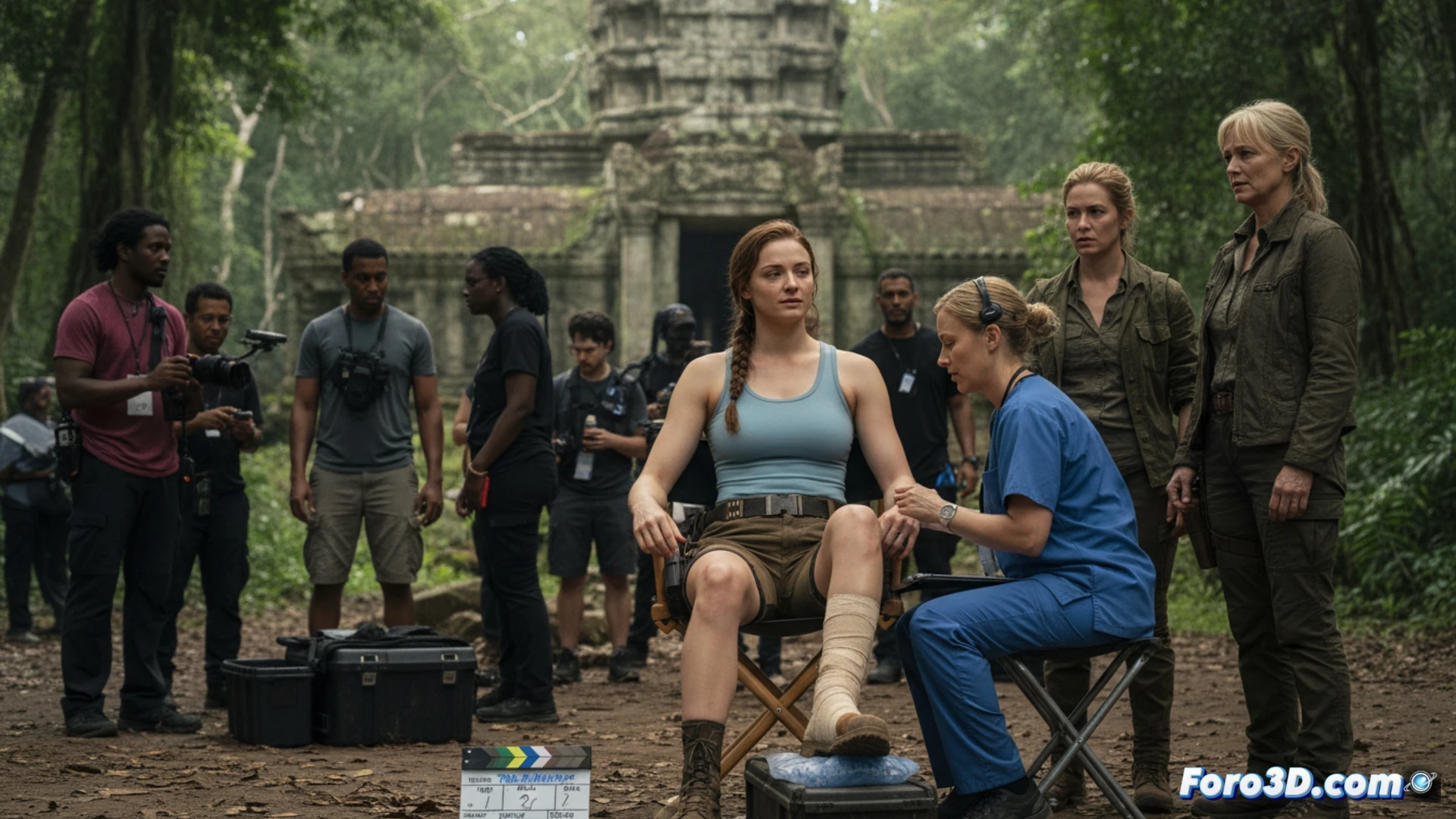
Production of Amazon's Tomb Raider series is temporarily halted due to a minor injury to its lead actress, Sophie Turner. This two-week pause, though brief, opens a window to analyze how interruptions affect the complex gears of modern visual production. Beyond the schedule, it impacts the synchronization of key teams, from art design to visual effects, where 3D planning is fundamental.
Mitigating Delays: Previs and 3D Assets to the Rescue 🛠️
In a project of this magnitude, a pause does not mean downtime. This is where digital preproduction proves its value. Teams can take advantage to refine 3D previsualization, adjusting shots and complex action sequences. VFX artists and 3D modelers can advance the development and texturing of critical digital assets, from environments to prop elements. This ability to work on parallel components, thanks to well-established digital pipelines, is key to absorbing the impact and avoiding greater delays when filming resumes.
The Video Game Aesthetic: A Clear Visual North 🎮
The pause also invites reflection on the stated visual goal: to evoke the aesthetic of the original 90s games. This purpose goes beyond mere costume or set design. It involves a conscious translation of an interactive visual grammar into a linear narrative, where concepts like lighting, color palette, and frame composition must resonate with that essence. Any interruption must be handled carefully to not lose sight of this visual cohesion, which is fundamental to the project's identity.
How do unexpected production stops affect the visual and narrative coherence of a high-budget cinematic project?
(P.S.: Previz in cinema is like the storyboard, but with more chances for the director to change their mind.)