The OVO show by Cirque du Soleil, a celebration of the insect world, dazzles with its acrobatics. From a contortionist spider to grasshoppers on trampolines, the production fuses nature and performing arts. This level of choreographic and visual complexity does not arise by chance. Behind it, there is a meticulous design process where 3D tools are key to previsualizing every jump, every projection, and every movement before reaching the physical stage.
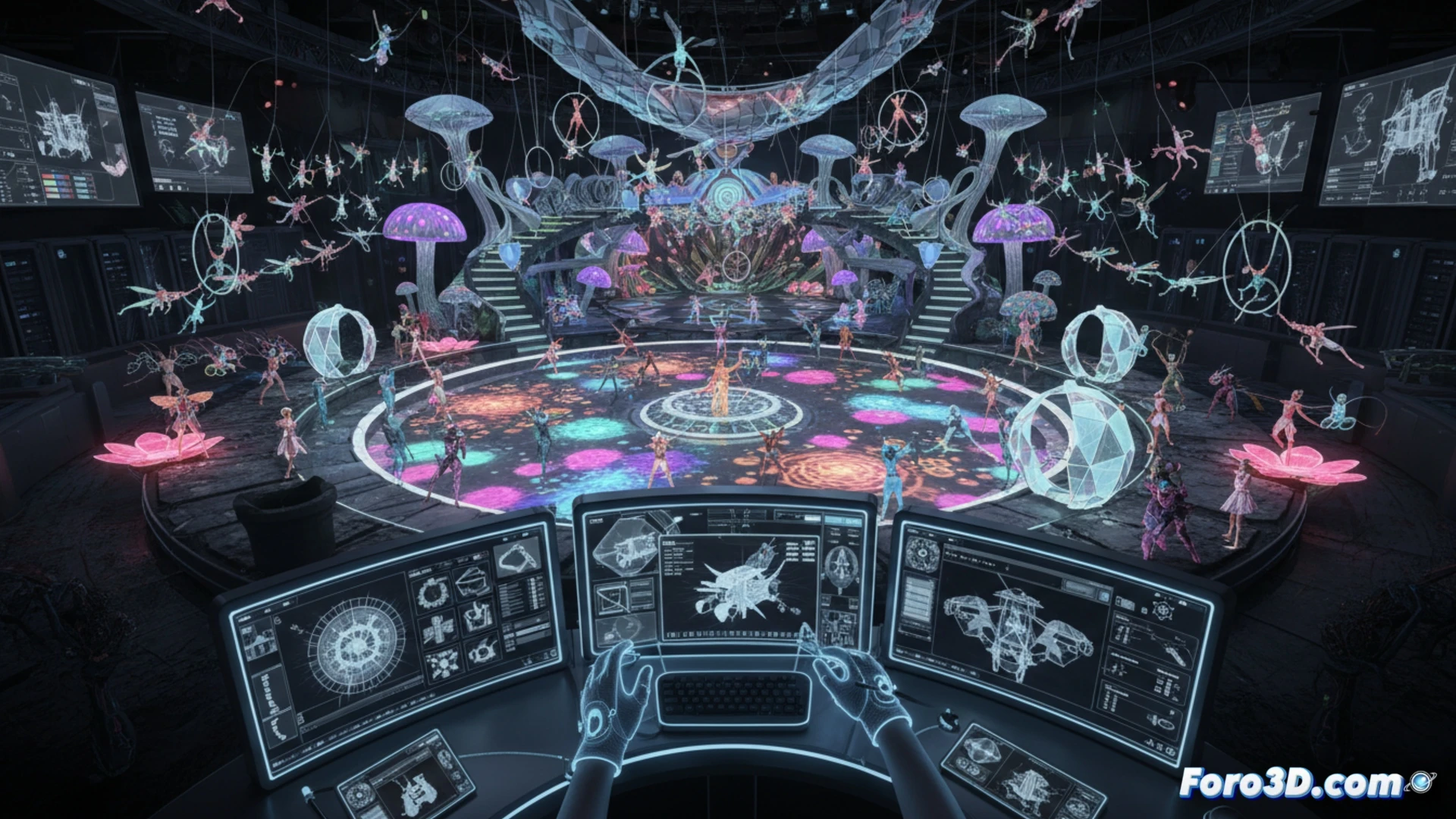
Digital preproduction: From concept to virtual stage 🎬
The conception of a show like OVO greatly benefits from a prior digital environment. Modeling the entire stage in 3D, including the trampoline wall and play structures, allows for precise planning of the performers' choreographies and trajectories, minimizing risks. Video mapping and lighting can be tested and synchronized in this virtual model. Additionally, the design of characters, insect-scale props, and even the simulation of arthropod-inspired acrobatic movements can be iterated digitally, optimizing time and resources in the physical production phase.
Technology at the service of organic narrative 🤖
The OVO case demonstrates that 3D technology is not an end, but a means to enhance organic creativity. By freeing designers from initial logistical limitations, they focus on narrative and emotion. Comprehensive previsualization ensures that the final result, that vibrant and believable insect ecosystem, conveys the magic and wonder planned from the first sketch, consolidating the show's message of appreciation for nature.
How was 3D modeling and virtual planning used to design and coordinate the complex acrobatic choreography and giant insect scenography in Cirque du Soleil's OVO show?
(P.S.: modeling the audience in 3D is easier than the real one: they don't complain, they don't record with their phones, and they always applaud)