The imminent commercialization of humanoid robots faces fundamental engineering challenges. This technical analysis, sponsored by Murata and associated with IEEE Spectrum, breaks down the critical barriers: from complex motion control and safe interaction to cost limitations. Understanding these decisions at the component level is vital for future reliability, a process where 3D modeling and simulation become indispensable tools.
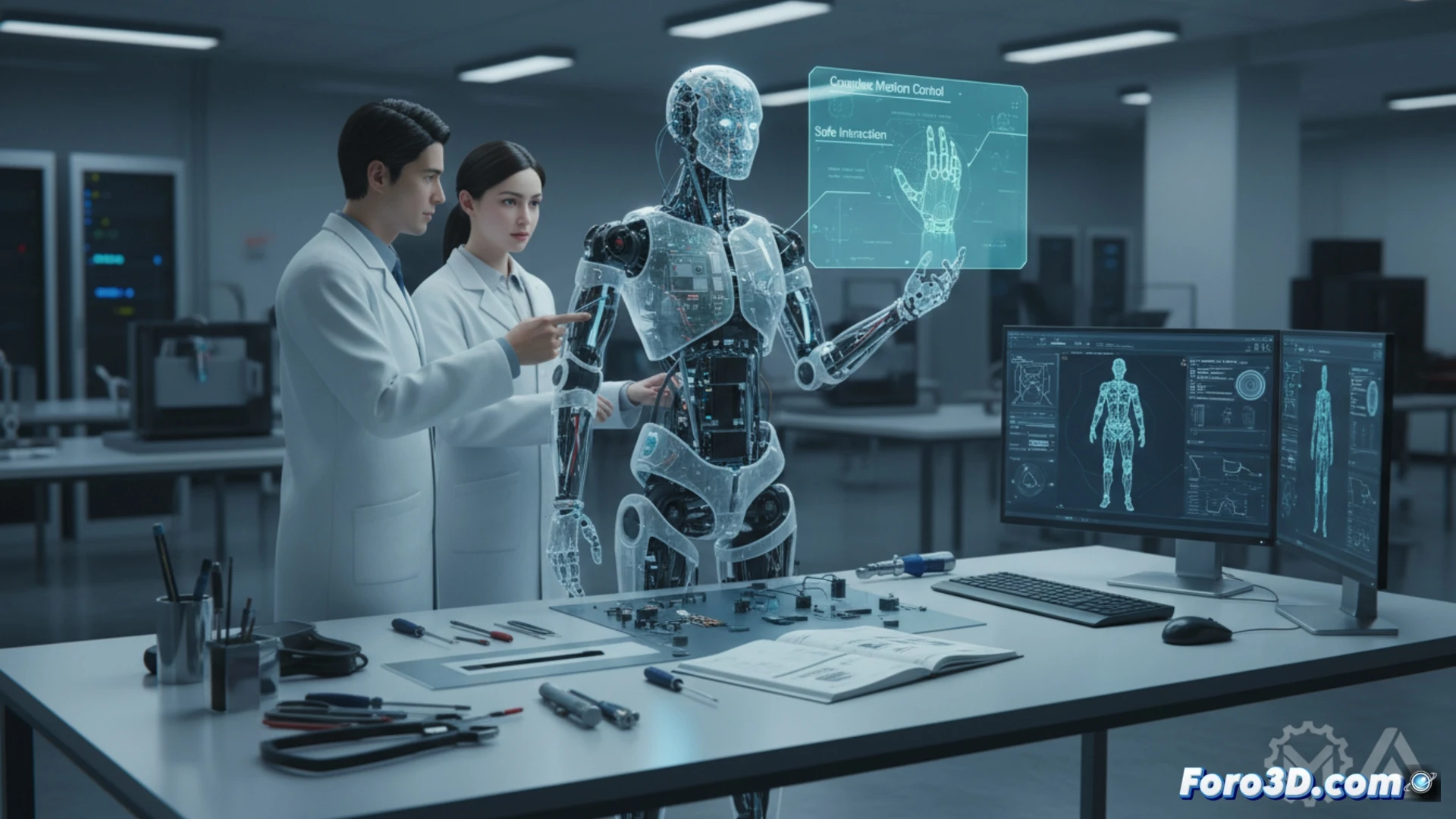
Sensors, actuation, and energy: the triangle of viability 🤖
Environmental perception requires the fusion of data from advanced sensors, while actuator design determines movement efficiency and smoothness. At the same time, thermal management and battery selection condition autonomy and safety. This is where 3D simulation becomes crucial, allowing engineers to virtually integrate these subsystems, optimize their interaction, and test extreme scenarios before physical prototyping. This reduces costs and accelerates the development of stable platforms capable of operating in unpredictable human environments.
Simulation as the bridge to mass reliability ⚙️
Facing commercial scale, every component decision impacts overall performance. 3D simulation is not just a design tool, but the bridge that connects theoretical viability with practical reliability. By modeling each interface and thermal stress, professionals can predict failures and optimize robustness, ensuring that future humanoids not only walk, but operate safely and efficiently among us.
How can the challenges of energy efficiency and dynamic control be resolved to enable humanoid robots to operate autonomously in real domestic and workplace environments?
(P.S.: Simulating robots is fun, until they decide not to follow your orders.)