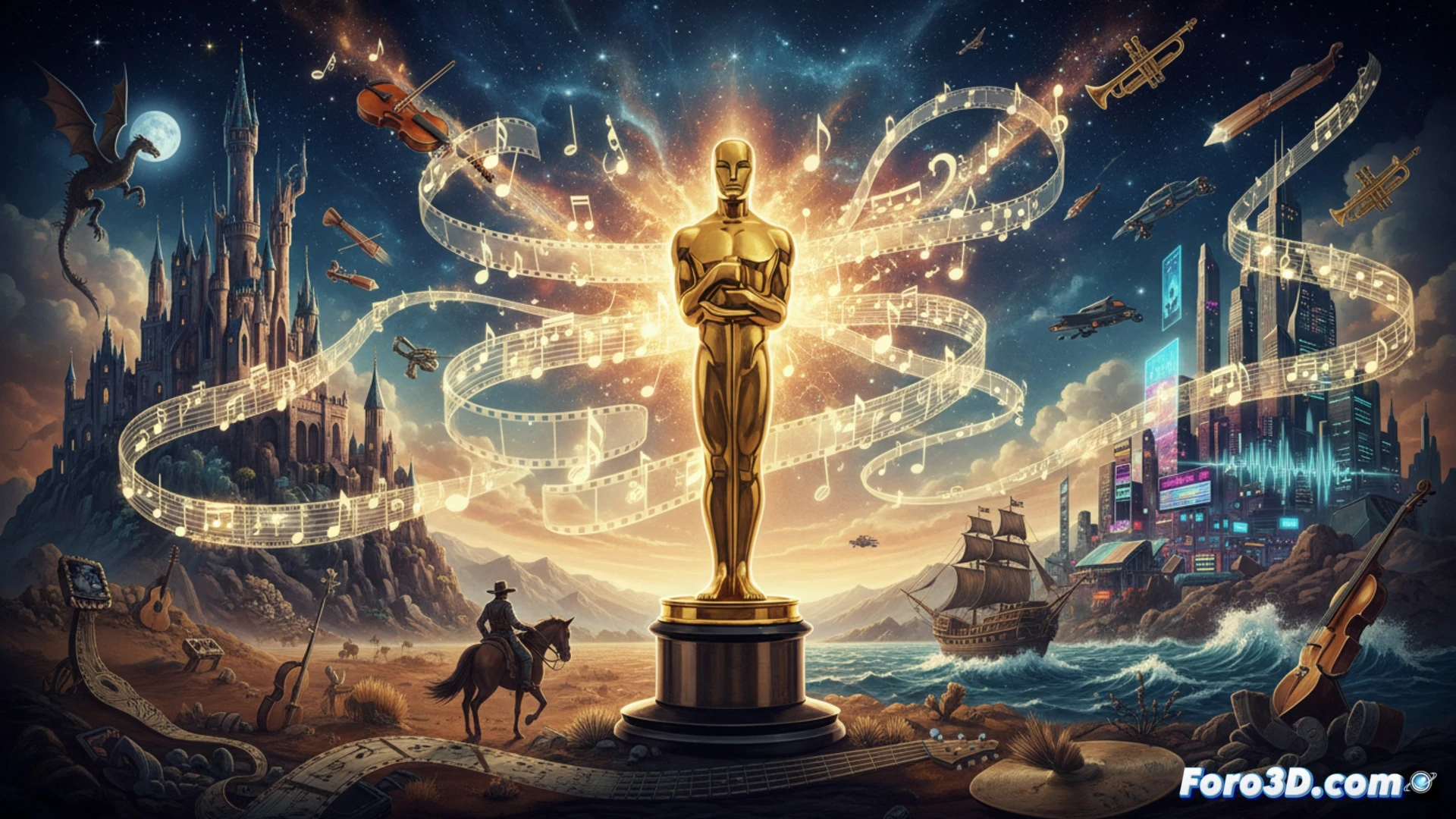
The Oscar for Best Original Score does not award just a melody, but the auditory architecture of a cinematic world. Scores like those of The Lord of the Rings or Titanic demonstrate that music is a narrative pillar as crucial as the script or cinematography. These masterpieces transcend the screen to define the emotional identity of the films, becoming cultural icons and demonstrating the transformative power of a score perfectly integrated into the visual narrative.
From the Score to the 3D World: Sound Construction and Immersion 🎧
The soundtrack is the auditory dimension of worldbuilding. In large-scale projects, such as epic cinema or 3D animation, the music is planned from pre-production alongside storyboards and previsualizations. Leitmotifs like those of Howard Shore for Middle-earth not only identify characters, but map geographies and cultures, adding depth and coherence to the universe. This sound layer guides the viewer's emotional response, synchronizing with the visual rhythm to enhance immersion. The score acts as the emotional skeleton upon which the images are built, defining the tempo of the scenes and sealing key moments in the audience's memory.
More than Accompaniment: Sound as an Invisible Script 🎬
Oscar-winning soundtracks operate as an invisible script. They do not illustrate, but interpret and reveal subtext, completing what the image does not show. This total integration between the auditory and the visual is the ultimate goal in cinematic narrative. For any creator, understanding this dialogue is essential: music is not an ornament, it is a fundamental storytelling tool that gives three-dimensional shape to the filmic experience.
How does an Oscar-winning score build a sound identity that becomes another narrative character within the movie?
(P.S.: Previz in cinema is like the storyboard, but with more chances for the director to change their mind.)