OPPO has presented an innovative development that could solve one of the biggest problems of foldable smartphones: the visible crease on the screen. Its solution lies in a new hinge mechanism manufactured using 3D printing. This technique allows the creation of complex and ultra-lightweight components that achieve a perfectly flat fold, eliminating the unsightly mark in the center of the screen. The advancement fuses industrial precision and functional design, improving both durability and the user's visual experience.
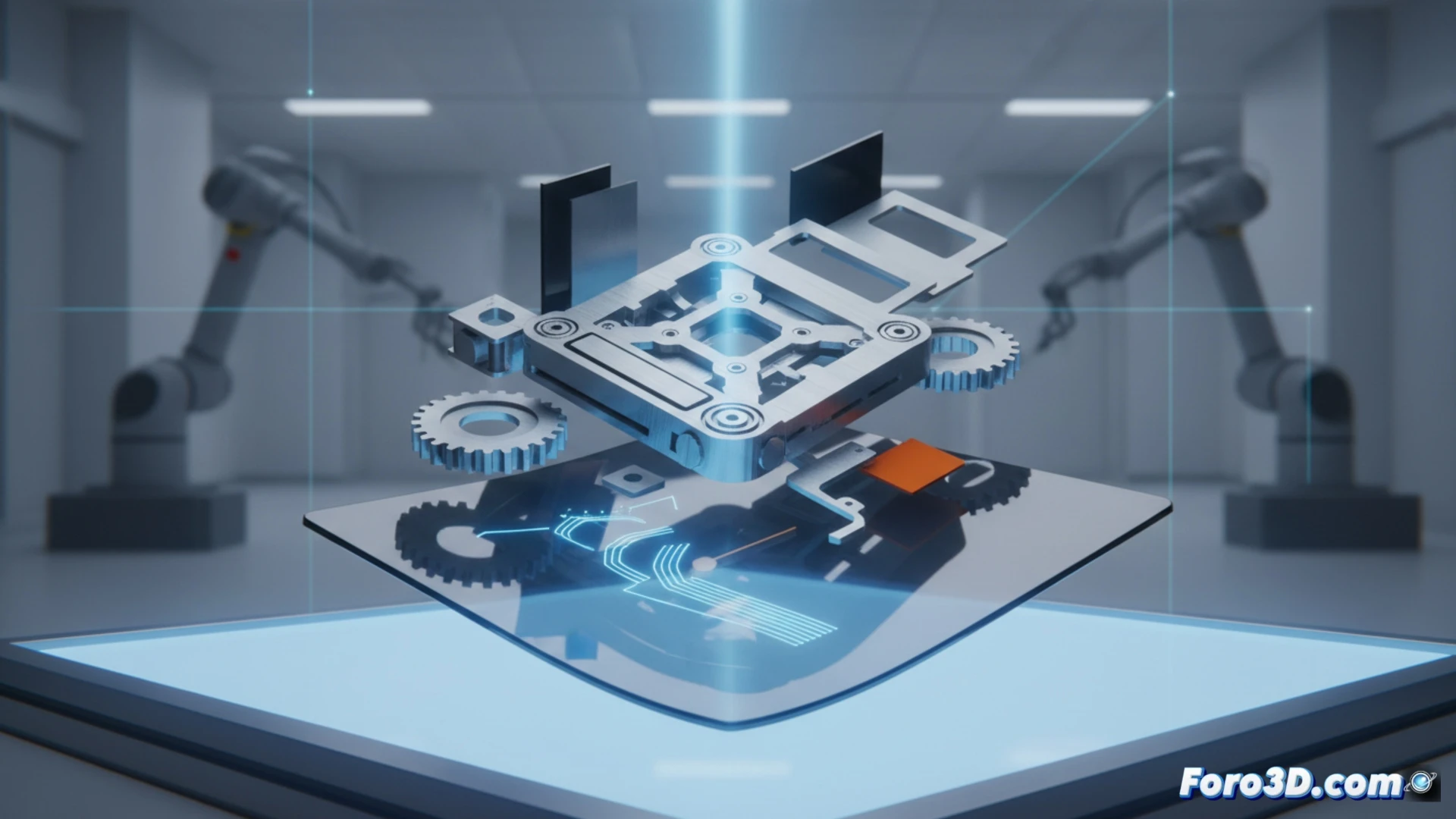
Additive manufacturing for complex and high-precision geometries 🔬
The core of this advancement is the use of 3D printing as a manufacturing method. This technology overcomes the limitations of traditional processes like molding or machining, which can be restrictive for creating parts with intricate geometries, internal cavities, or optimized lightweight structures. In OPPO's case, additive manufacturing allows the production of the hinge's critical components with the micrometric precision necessary for smooth movement and a hermetic closure. This results in a more robust and thinner mechanism, key to housing the hinge within the chassis without compromising the design or protection of the flexible screen.
3D printing redefines the limits of industrial design 🚀
This OPPO case exemplifies how 3D printing is transcending its role as a prototyping tool to become a pillar of final component manufacturing in consumer electronics. Its ability to materialize optimized designs that were impossible or prohibitively expensive to produce is driving a new wave of innovation. It's no longer just about creating shapes, but about engineering comprehensive solutions where geometry, material, and function fuse from their conception, opening a range of possibilities for the future of product design.
How does OPPO use 3D printing to overcome the limitations of traditional manufacturing and create a hinge that eliminates the visible crease in foldable smartphones? 🤔
(P.S.: Designing a product in 3D is like being an architect, but without having to worry about the bricks.)