Openreach, BT's infrastructure subsidiary, is using AI-powered digital twins to solve two monumental challenges: deploying full-fiber optics to 25 million homes in the UK by 2026 and decarbonizing its fleet of 24,000 vans. This expanded collaboration with Google Cloud focuses on three practical artificial intelligence applications that generate tangible operational efficiencies, backed by a £15 billion investment. The case demonstrates how AI transcends theory to accelerate critical infrastructure projects. 🚀
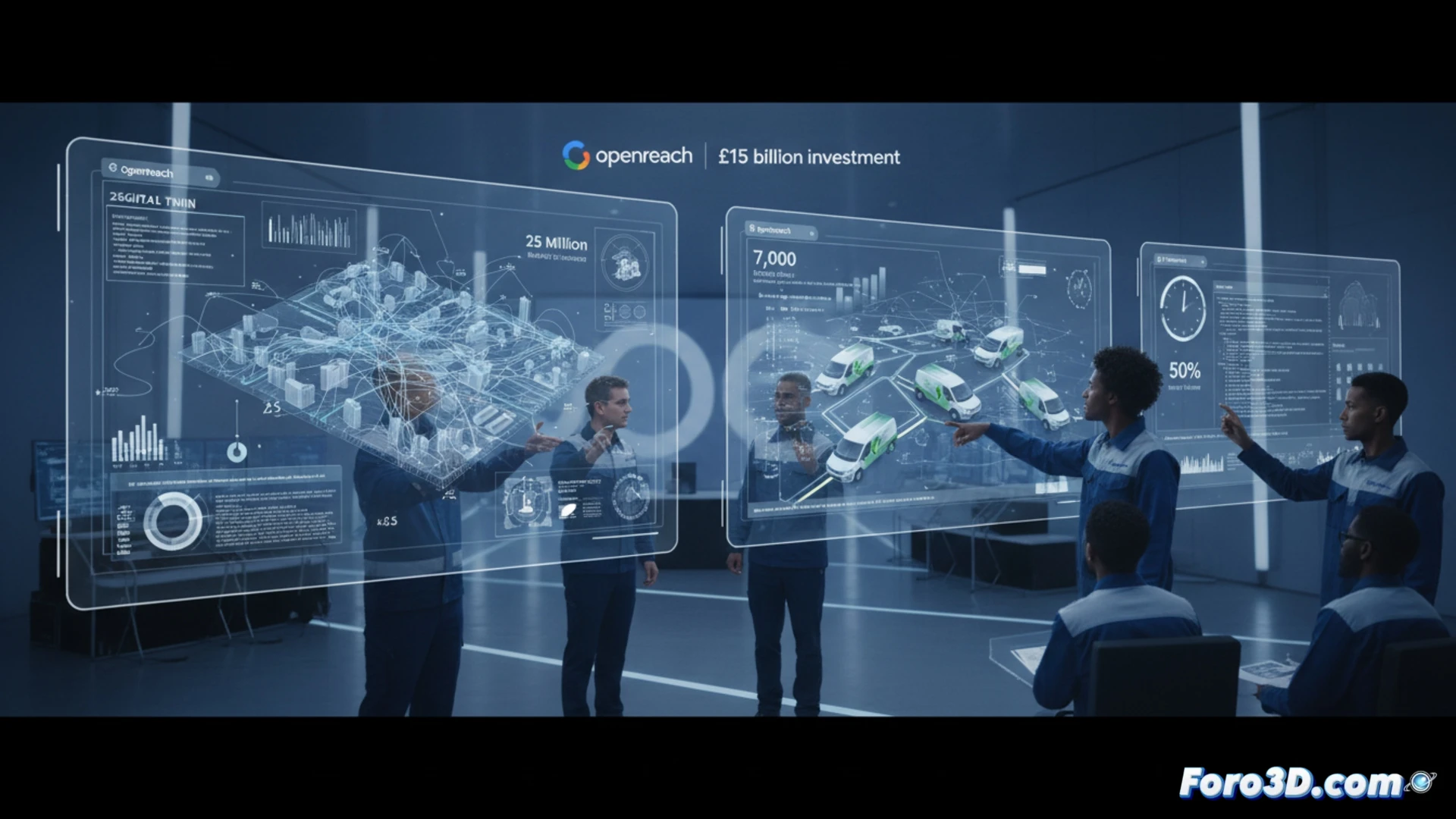
Vertex AI and the transport corridor digital twin 🗺️
The technical core is a digital twin created with Vertex AI that integrates and contextualizes massive data. The model fuses the location and characteristics of 35 million buildings with existing public and private infrastructure networks, such as roads, sewers, and power lines. This virtual replica of the territory allows planners to simulate and optimize fiber optic deployment with unprecedented precision. By visualizing all variables in a single environment, the most efficient routes are identified, conflicts are anticipated, and operational costs are reduced, accelerating what would otherwise be a titanic deployment.
Beyond simulation: tangible operational efficiency ⚡
The project goes beyond static planning. The BigQuery platform analyzes real-time telematics data from the fleet to optimize maintenance routes and manage the transition to electric vehicles, with 7,000 units already operational and an estimated savings of 10,000 tons of CO₂ per year. In parallel, Gemini Enterprise modernizes data query code, reducing the time to obtain insights by more than 50%. This case shows that the real value of a digital twin lies in its ability to orchestrate complex decisions and generate measurable impacts on cost, time, and sustainability.
How are AI-powered digital twins transforming fiber optic network planning and electric fleet management in critical infrastructure?
(P.S.: don't forget to update the digital twin, or your real twin will complain)