A project developed in Andalusia is providing an innovative outlet for olive pruning waste. Instead of being burned, these agricultural wastes are now transformed into raw material for 3D printing. This initiative seeks to apply the principles of the circular economy to the agricultural sector, reducing environmental impact and generating new economic value from what was previously a problem.
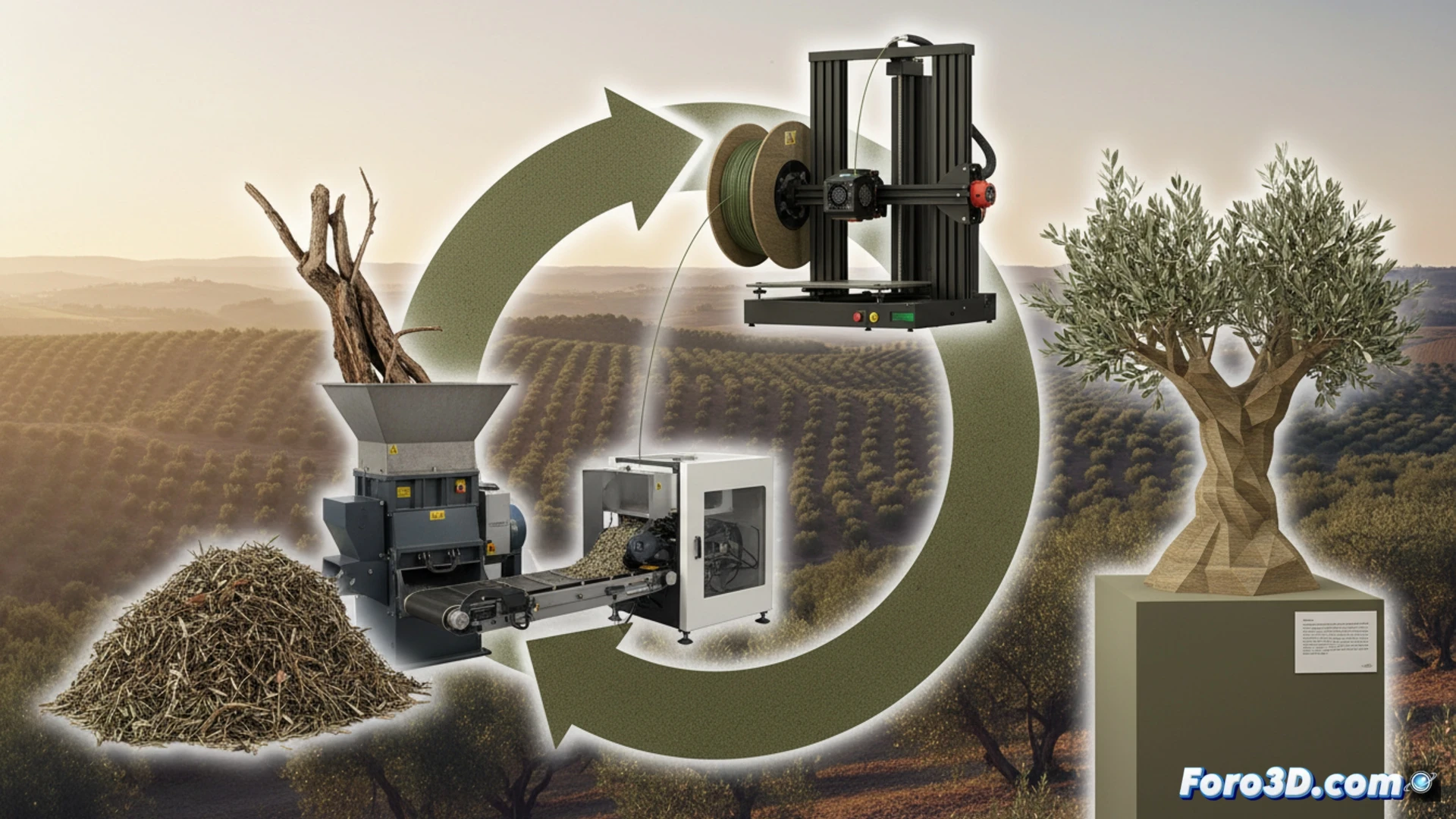
From the field to the printer: the technical process 🔬
The process begins with the collection and shredding of pruning remains. Subsequently, through physico-chemical treatments, the lignocellulosic components are extracted and processed to create a composite material. This biopolymer can be turned into filament for FDM printers or into fine powder for laser sintering techniques. The result is a material with mechanical properties suitable for manufacturing prototypes, design pieces, or non-structural components.
Your next 3D pot could be your own olive tree... recycled ♻️
It's the circle of life in version 4.0: the olive tree that gave oil for your salad, and then firewood for the fireplace, could now be reborn as the pen holder on your desk. Who would have thought that those piles of branches that always got in the way in the field would end up being the brown gold of makers. Now all that's left is for someone to print an oil bottle with pruning filament, so the circle is truly vicious (and sustainable).