Okuda San Miguel celebrates three decades of his career by inaugurating Factory Of Dreams, his new studio. With works in more than 50 countries, his signature is unmistakable: a language of fragmented geometries and a vibrant color palette that floods the public space. Beyond aesthetics, Okuda defines his work as a vehicle for universal messages of freedom, diversity, and coexistence. In a context of loss of human essence, the artist vindicates the value of the ancestral to build a diverse future, positioning his work at the intersection between art and activism.
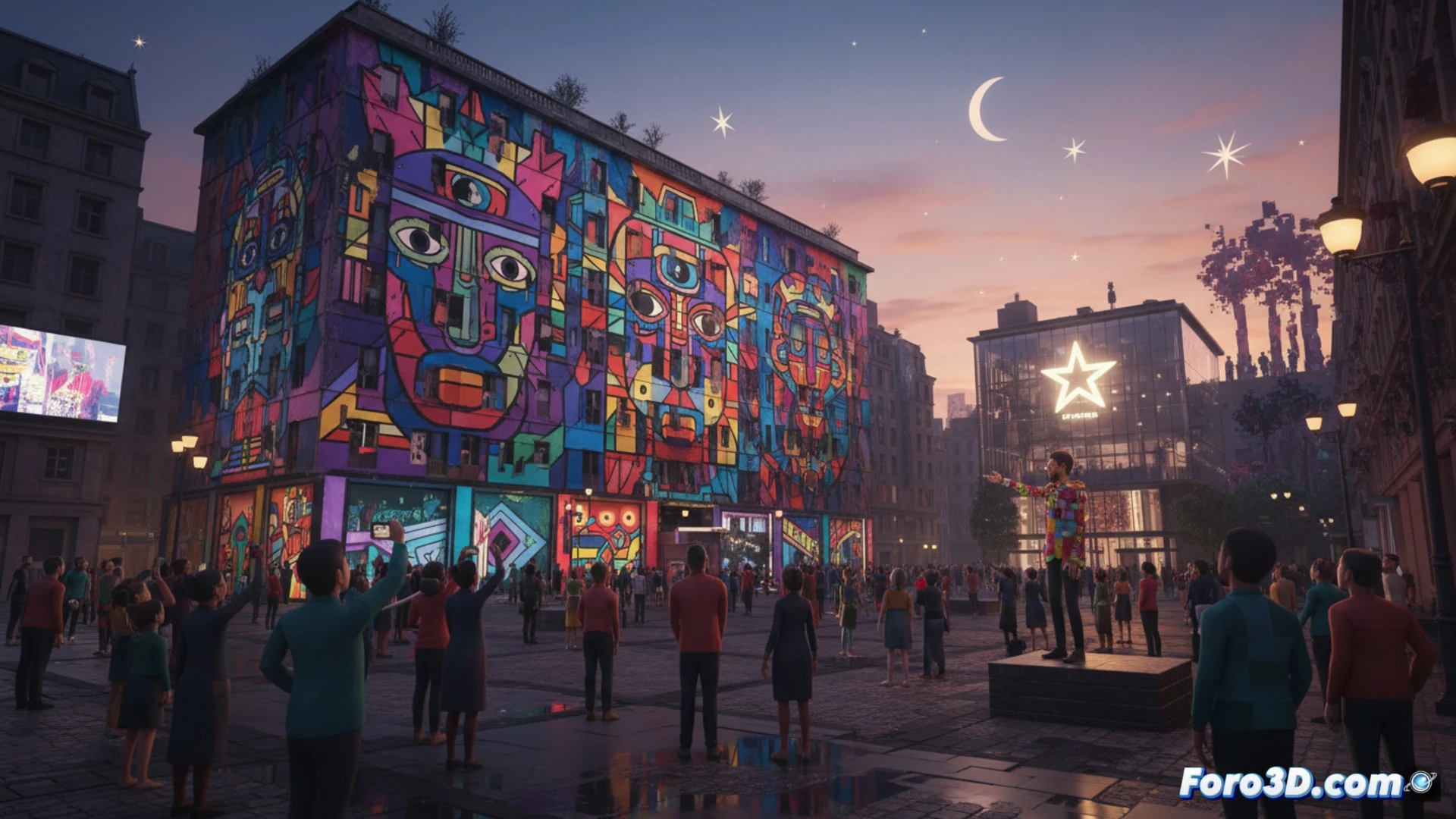
From Sketch to Monument: Scale as a Tool of Impact 🎯
Okuda's monumental work, like the iconic Skate church, operates as a tool of activism by reclaiming and resignifying spaces. His choice of large-scale formats is not casual; it seeks to transcend the immediate urban environment and avoid conditioning factors like gentrification. This is where digital tools are key. 3D design and visualization allow planning these complex interventions, simulating their impact on the landscape, and communicating the project to communities and institutions. These technologies are essential allies for conceiving public art that, due to its scale and message, aspires to global dialogue.
Color as a Call to the Lost Essence 🌈
Okuda's final reflection on the loss of human essence finds its visual counterpart in his chromatic explosion. Against homogenization, his vibrant colors are an act of resistance and a reminder of the diversity inherent to life. This chromatic optimism, projected on facades around the world, is more than decoration; it is a psychological and social intervention. In a often gray digital world, his physical art interpels us, advocating for a future where technology and the ancestral, tradition and the avant-garde, coexist on the same plane of color and hope.
How has Okuda San Miguel's street and digital art evolved in its ability to challenge social narratives and maintain its activist impact when transitioning from the street to institutional studios and virtual spaces? 🤔
(PD: digital political art is like an NFT: everyone talks about it but no one really knows what it is)