The case of Libera, an Italian woman with multiple sclerosis, sets a crucial precedent in the protection of vulnerable groups. Paralyzed from the neck down, she was able to access medically assisted suicide thanks to an eye-command device created by the Cnr. Her story underscores how human-machine interface technology becomes an essential tool to make the rights of people with severe disabilities effective, overcoming physical and bureaucratic barriers.
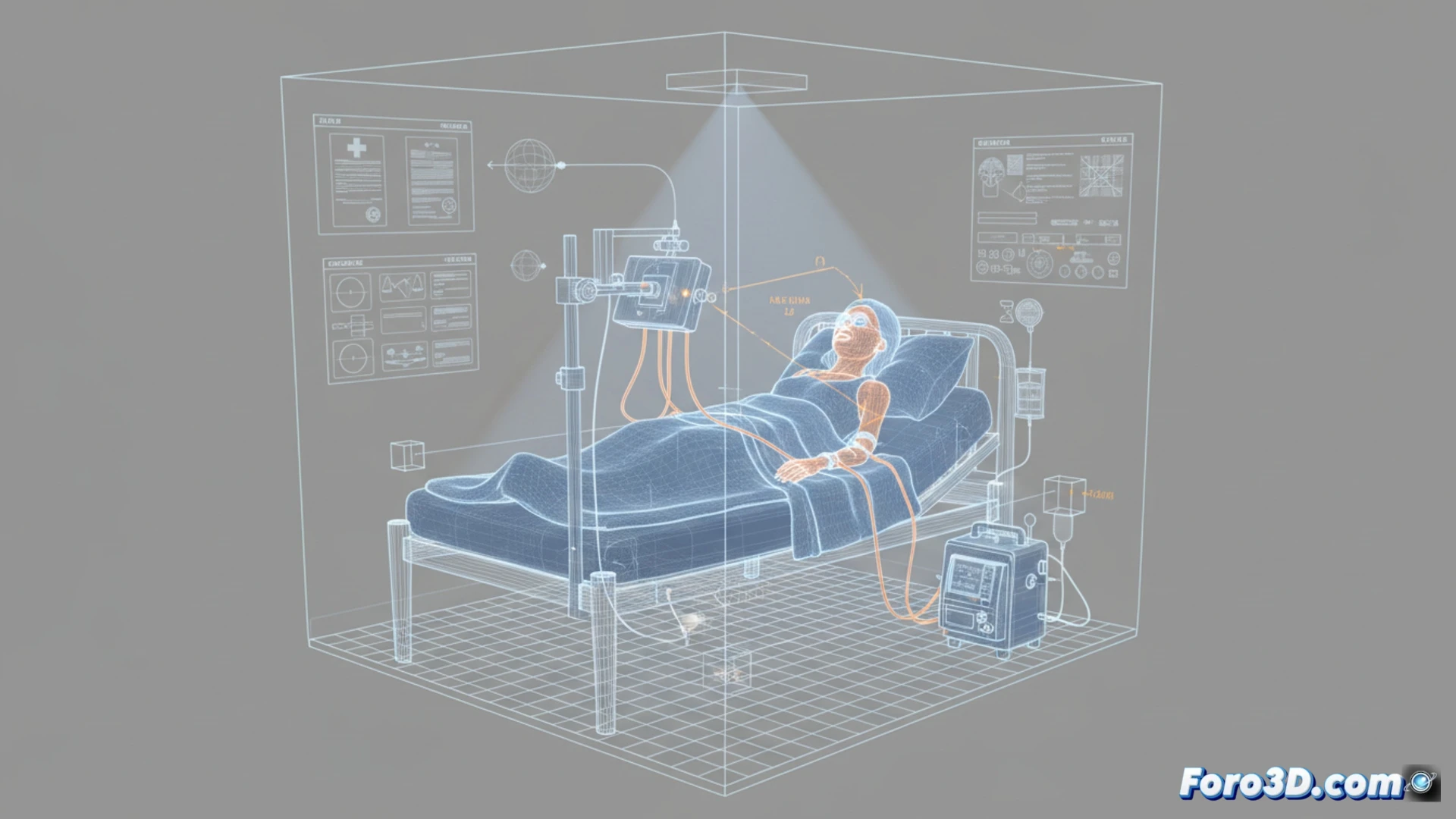
Eye interface and verification: technological design for autonomy 👁️
The system used by Libera represents the convergence between high-precision assistive technology and ethical-legal verification protocols. Eye-tracking interfaces, commonly used for communication, were adapted here to activate an irreversible medical process, requiring a foolproof design that guaranteed the conscious and exclusive will of the user. In this field, 3D modeling and computer simulation are key. They allow prototyping and validating ergonomics, viewing angles, and confirmation sequences, creating virtual environments to test protocols without risks. This contrasts with frameworks where accessibility is not contemplated, forcing patients to travel or suffer.
Simulation as a bridge between law, ethics, and technology ⚖️
Beyond the hardware, digital simulation emerges as a tool to democratize the debate and train professionals. Modeling these devices and their usage environments in 3D helps visualize and communicate their operation to legislators, judges, and society, reducing suspicions. Libera's struggle shows that the right to decide requires technical ingenuity that materializes autonomy. Her legacy highlights the need to design technologies and legal frameworks in an integrated way, where simulation accelerates the creation of accessible, safe solutions that respect dignity.
Do you think digital twins can help prevent abuses in vulnerable groups? 💭