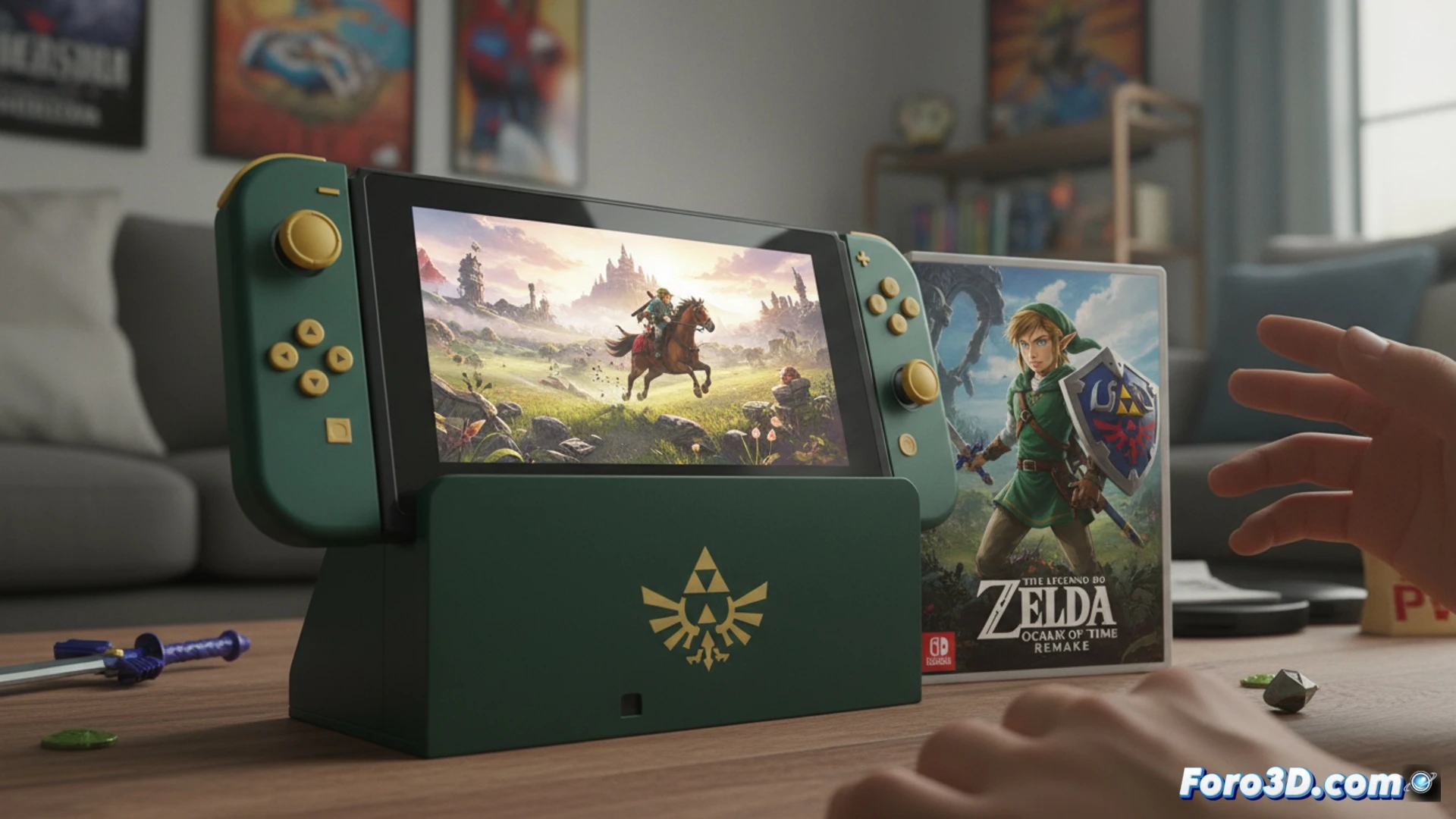
Rumors point to a complete remake of The Legend of Zelda: Ocarina of Time for 2026, possibly as an exclusive for the upcoming Nintendo Switch 2. This move, accompanied by a hypothetical special console, is not just news for fans, but a case study in development and marketing. We analyze the technical implications of modernizing a classic and the launch strategy linked to new hardware, key elements in the current video game industry. 🎮
The Technical Challenges of a Modern Remake ⚙️
Remastering a title like Ocarina of Time goes beyond increasing the resolution. It involves an almost total recreation: new high-poly 3D models, 4K or higher textures, modern lighting and shadows systems, and possibly a reorchestration of audio. The biggest technical challenge would be adapting the original gameplay and level design to current standards without losing its essence. If it's exclusive to Switch 2, developers could leverage more powerful hardware to implement technologies like real-time ray tracing or very high frame rates, which would require deep optimization and a production pipeline adjusted to a new architecture.
Exclusivity and Marketing as a Launch Strategy 📈
The possible exclusivity for Switch 2 is a business and technical decision. From production, it allows focusing resources on a single platform, maximizing its potential. Commercially, a title of this caliber is a formidable hardware sales driver. A limited edition console consolidates this strategy, creating a collectible product that maximizes the launch impact. This approach reflects how high-profile remakes are no longer just content, but central pieces in the transition between console generations.
What technical modernization strategies should a studio prioritize for an Ocarina of Time remake that respects its essence but leverages modern hardware?
(P.S.: game jams are like weddings: everyone happy, no one sleeps, and you end up crying)