In a landscape dominated by artificial intelligence and hyperrealistic visual effects, independent filmmaker Albert Birney takes a radical stance with his new film, Obex. Birney explicitly rejects the use of AI tools in his creative process, arguing that they generate soulless results by eliminating craftsmanship and the human process. His bet is a conscious return to the tangible, filming in black and white and setting the story in 1987 to explore nostalgia and the physical nature of ancient technology.
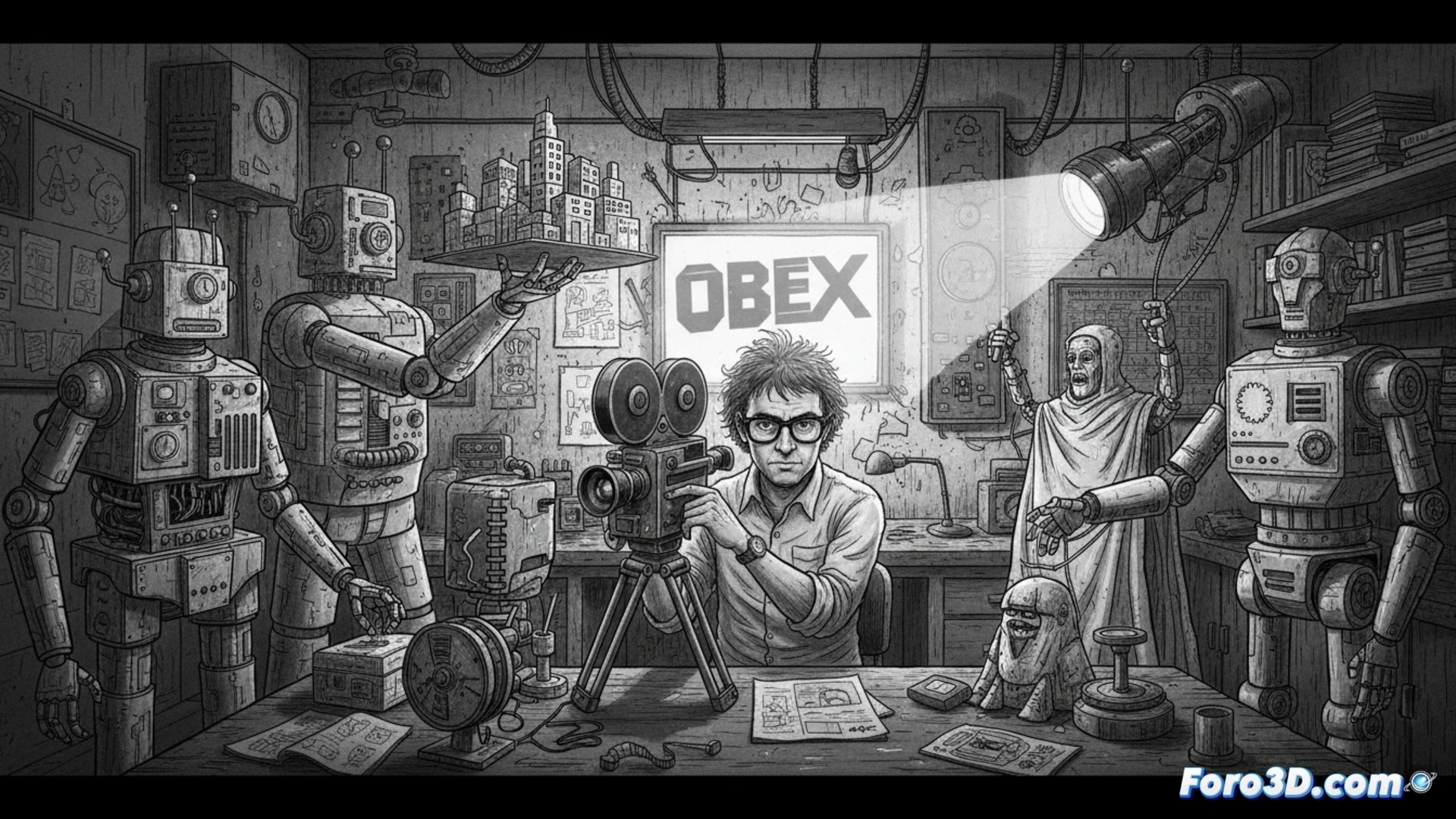
Tangible craftsmanship as visual narrative in Obex 🎬
Birney's decision is not only philosophical but a practical production methodology. Obex is built on a deliberately lo-fi and DIY aesthetic, where every physical detail is a narrative element. The meticulous attention to period technology, such as CRT monitors, floppy disks, and a Macintosh, is not decorative. It is the core of the story, which follows a character whose reality blends with a pixelated video game. This artisanal recreation evokes a tactile and authentic sensation, where the weight of a floppy disk or the flicker of a CRT monitor are integral parts of the emotional and visual experience, something Birney considers lost in automated digital pipelines.
The creative pipeline: conscious choice vs automation ⚙️
The contrast between Birney's approach and high-budget productions reflects a larger debate in the industry. While many studios prioritize the efficiency and scale of AI and VFX, Birney defends a traditional creative pipeline where imperfection and manual intervention are virtues. His work underscores that every technical choice, from the grain of the film to the specific computer model, is a narrative and emotional decision. Obex thus stands as a practical manifesto: authenticity in cinema often resides in craftsmanship and not in mere simulation capability.
Can science fiction cinema recover its artisanal soul in an era dominated by artificial intelligence and digital effects?
(P.S.: Previz in cinema is like the storyboard, but with more chances of the director changing their mind.)