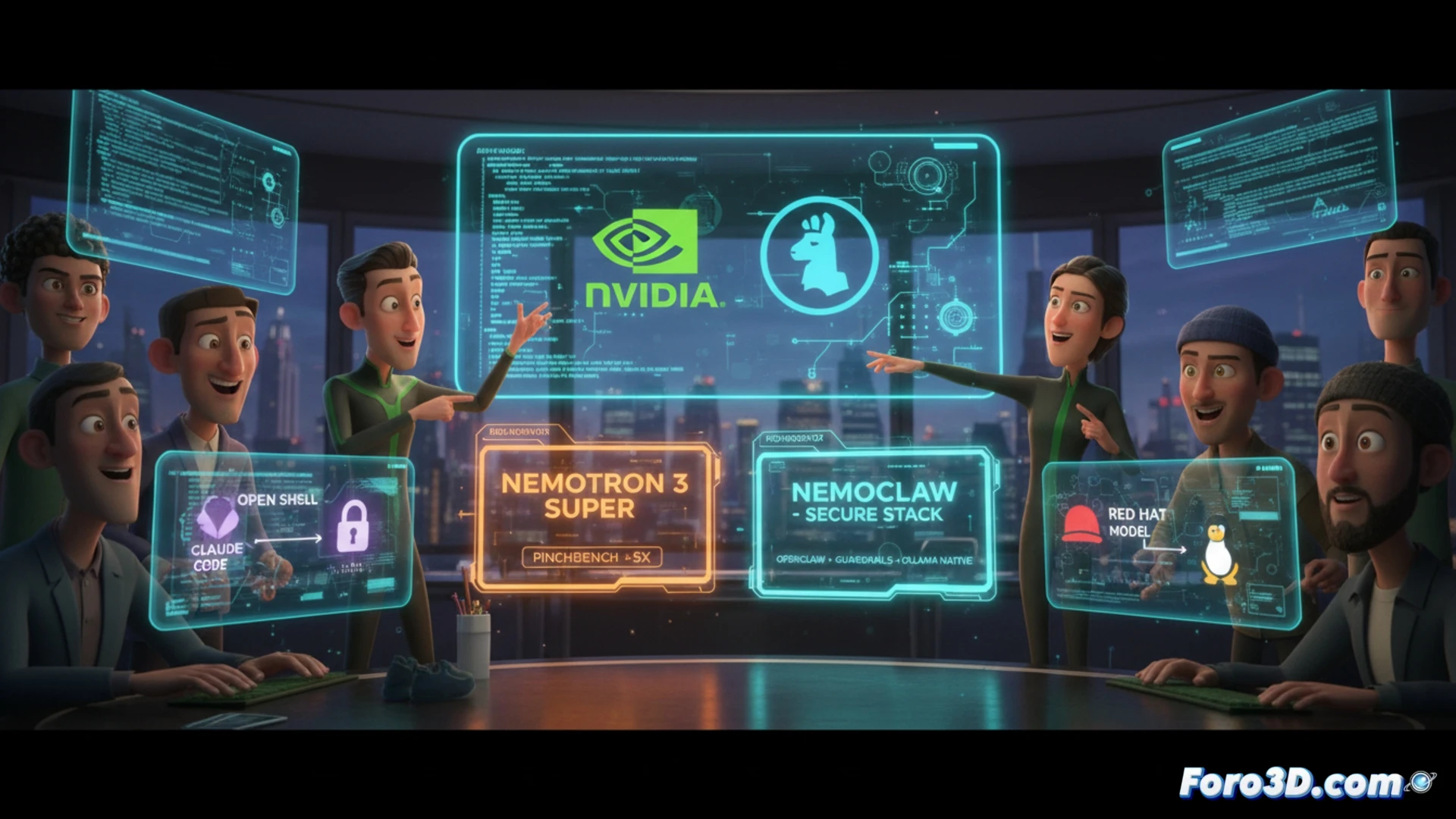
Nvidia has made a key strategic move in the AI agents ecosystem. Instead of competing head-on, it has launched Nemotron 3 Super, a high-performance open model, and NemoClaw, an open-source stack that offers a secure and enterprise version of the popular OpenClaw. Its bet is not on a single product, but on becoming the reference platform, packaging, securing, and supporting open technologies, a model that strongly resembles the one Red Hat successfully employed with Linux. 🚀
Nemotron 3 Super and NemoClaw: the secure and open stack ⚙️
The launch consists of two fundamental pieces. On one hand, Nemotron 3 Super is a leading language model in the PinchBench benchmark, offering five times better performance and available for free in the cloud or for local deployment. On the other, NemoClaw is the security and governance layer. This stack installs OpenClaw with safety guardrails, preconfigured privacy controls, and native support for Ollama. The setup is straightforward, and the strategy is clear: provide the reliable and secure infrastructure that enterprises demand. Additionally, with OpenShell, Nvidia extends these guardrails to other agents like Claude Code, positioning itself as a cross-cutting security provider for the entire category.
Platform vs product: the new battlefield ⚔️
This move goes beyond the launch of tools. It signals a shift in the AI battlefield. Nvidia is not seeking to have the best agent, but the essential platform on which all run. By offering the high-performance open model and the security stack, it structures the emerging market in its favor. For developers and enterprises, this means access to cutting-edge technology with guarantees, but also a possible dependence on the standards and controls that Nvidia defines. Competition will no longer be just about capabilities, but about who provides the secure and reliable base for the ecosystem.
Will Nvidia's Red Hat strategy with Nemotron democratize AI agent development and challenge the dominance of closed models?
(PS: tech nicknames are like children: you name them, but the community decides what to call them)