The latest NVIDIA driver update, version 595.71, fixes fan detection issues but introduces a severe undocumented limitation for the new RTX 50. When attempting overclocking, the voltage automatically reduces, capping frequencies around 3 GHz. For 3D artists and VFX studios, this translates to slower renders and reduced capacity in complex simulations, directly impacting productivity and delivery deadlines in demanding projects.
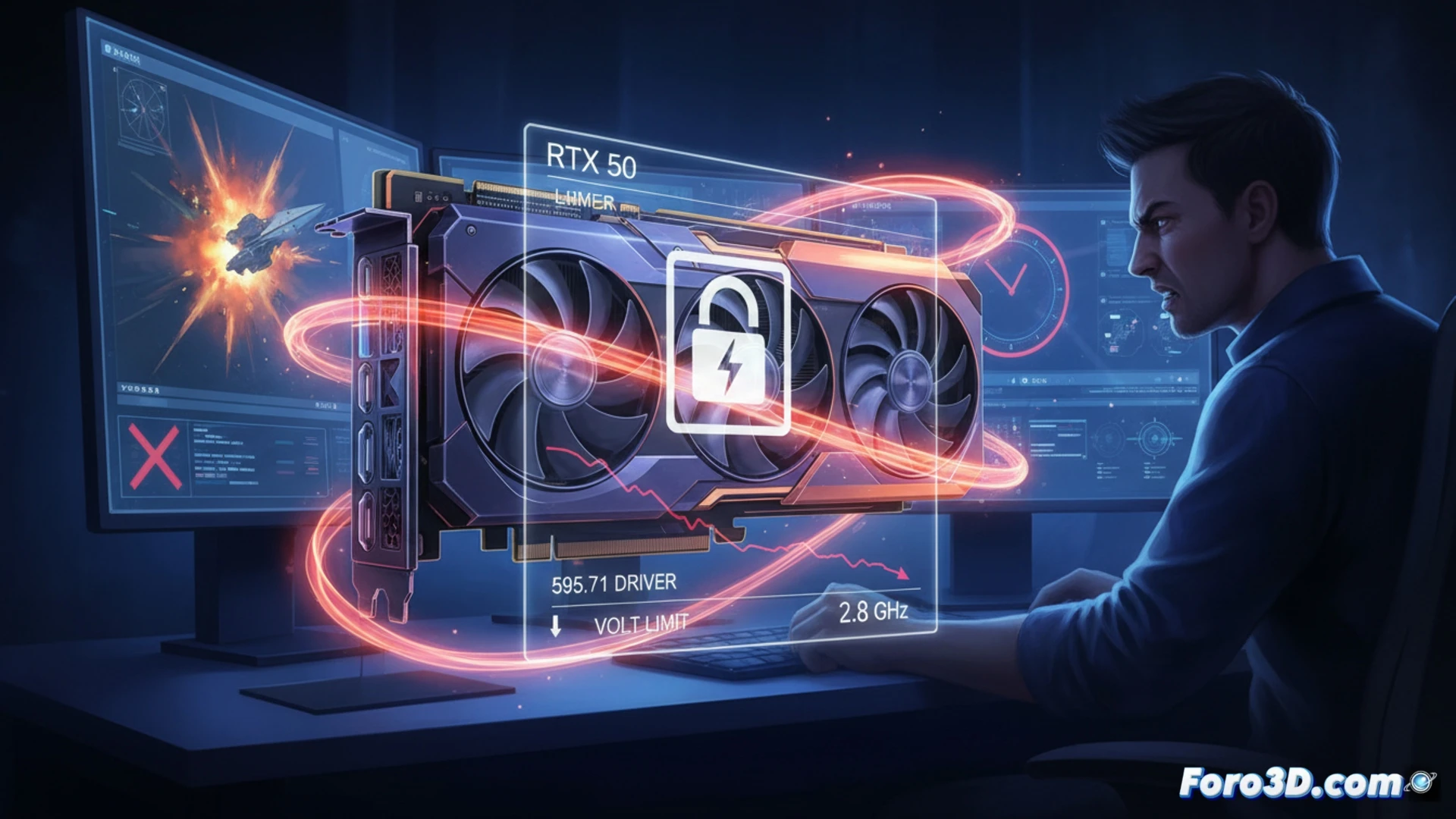
Technical impact on render and simulation workflows 🔧
This voltage and maximum frequency limitation directly affects professional applications. Render engines like Octane, Redshift, or V-Ray GPU will see increased frame times. Fluid dynamics, particle, or cloth simulations, which rely on raw power and stability at high frequencies, will lose rapid iteration capacity. Additionally, the viewport in dense scenes with millions of polygons could lose fluidity, slowing down the creative process. Stable overclocking was a key resource for freelancers and small studios to maximize their hardware investment.
Uncertainty for professional production ❓
The lack of official communication from NVIDIA generates concern. It is unknown whether it is a bug or a deliberate measure, perhaps for the safety of the 16-pin connector. This uncertainty complicates upgrade planning and trust in the platform for critical work. Professional users now must choose between the stability of old drivers, without fixes, or accept limited performance. The situation underscores the need for transparency in changes that affect the performance of work tools.
How does the voltage limitation in NVIDIA drivers 595.71 affect performance in 3D rendering and fluid simulation on the upcoming RTX 50?
(PS: VFX are like magic: when they work, no one asks how; when they fail, everyone sees it.)