Fifteen years after Fukushima and forty after Chernobyl, the lessons in nuclear safety are profound. These events demonstrated the need to anticipate the unthinkable: combined technical, human, and natural failures. The industry responded with more robust designs and a proactive safety culture. Today, forensic analysis and prevention have a crucial ally: 3D simulation and visualization technology, transforming how we understand and prepare for high-impact scenarios. 🔬
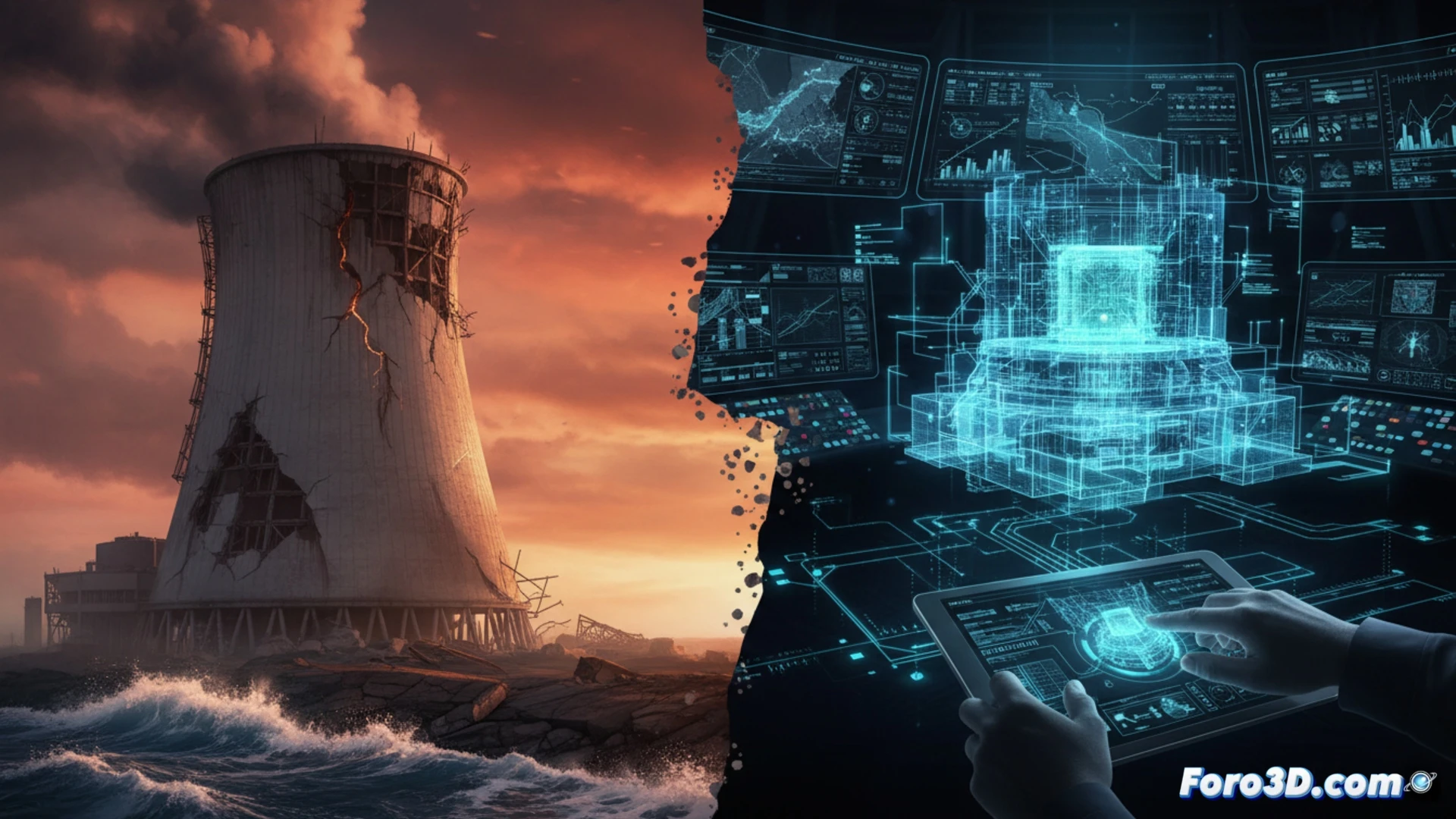
Forensic analysis and training through 3D simulations 🎯
3D simulation has revolutionized post-accident analysis. It allows digitally recreating the sequence of events, visualizing in detail containment failures, contaminant propagation, and critical rupture points. These reconstructions are vital for root cause analysis. Additionally, these tools are essential for personnel training, allowing practice of emergency responses in hyperrealistic and safe virtual environments. 3D models of nuclear plants, coupled with engineering data, enable digital stress tests, testing resilience against earthquakes, floods, or multiple failures, identifying vulnerabilities before they materialize.
Visualizing risk to communicate transparently 🌍
One of the key legacies is the need for transparent communication. Here, 3D visualization becomes an essential bridge between experts and the public. Interactive maps showing hypothetical contaminant dispersion, or models explaining containment barriers, help manage fear and combat misinformation. By making risks and protocols visually comprehensible, a more informed public discussion is fostered and a safety culture that, learning from the past, is built with future tools.
Would you export the results to GIS format?