Kim Jong Un's recent statements, reaffirming North Korea's irreversible nuclear status and designating South Korea as its most hostile enemy, mark a turning point on the peninsula. This analysis goes beyond rhetoric. The increase in defense spending to 15.8% and constitutional reform plans demand a technical evaluation. This is where 3D modeling becomes crucial to transcend political discourse and understand the real military and strategic implications of this escalation.
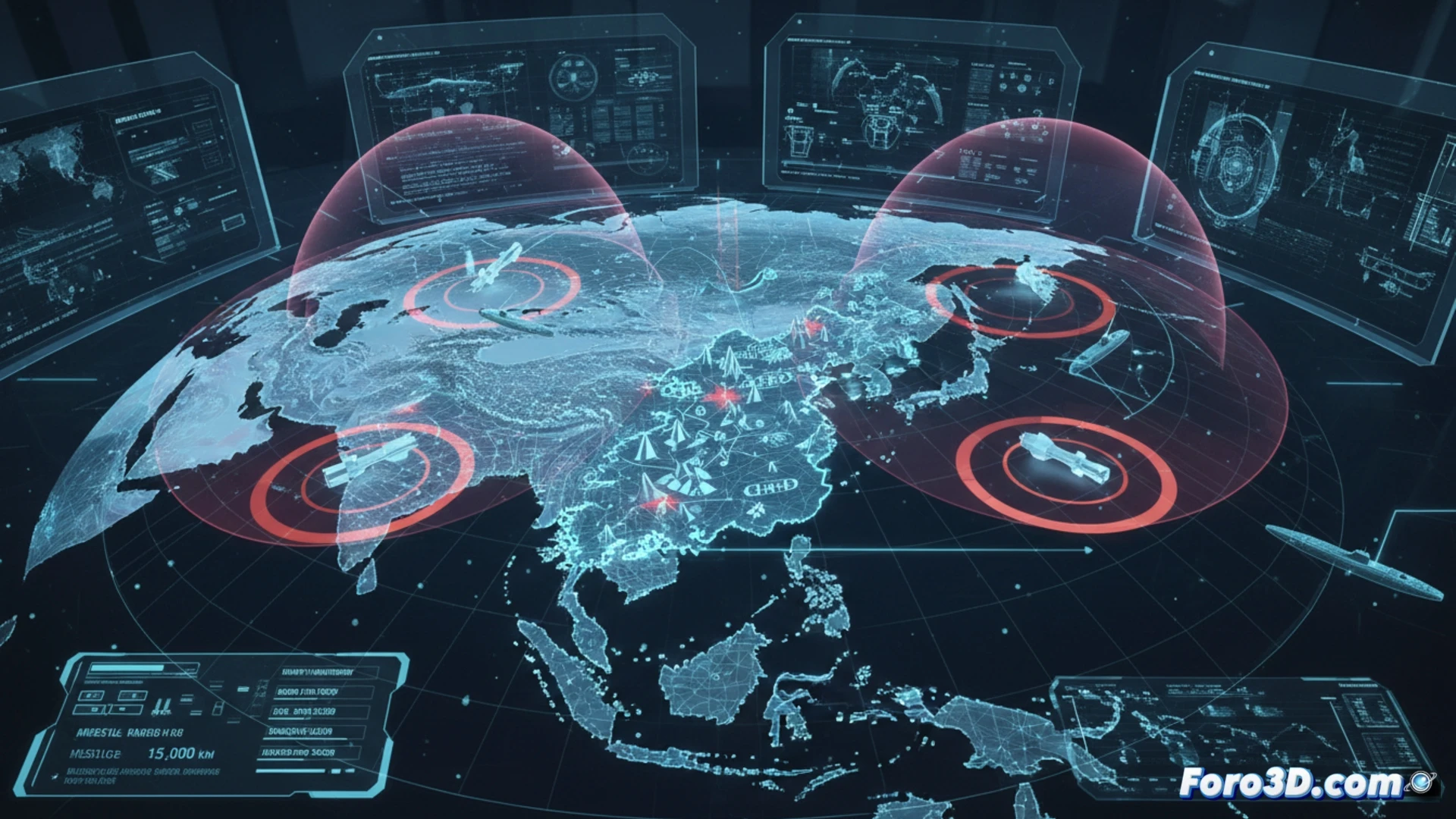
3D Simulation of Crisis Scenarios and Force Disposition 🎯
3D simulation tools allow for accurately recreating the geographical disposition of North Korean forces and their possible attack vectors. We can model the trajectory of short- and medium-range missiles, calculate probable impact zones in the South, and visualize the location of conventional artillery near the border. Additionally, it is possible to simulate escalation scenarios, such as an allied response to a weapons test, to analyze reaction times and logistical bottlenecks. Integrating data from the new military budget into 3D models helps project how that spending could translate into new deployable capabilities on the ground.
Beyond the Map: The Strategic Narrative in Three Dimensions 🗺️
The true power of 3D analysis in this conflict lies in its ability to materialize the new North Korean doctrine. An interactive 3D map can illustrate how constitutional changes, eliminating the idea of a shared nation, translate into a tactical reimagining of the border as a front line. Visualizing the shadow of nuclear threat over Seoul's critical infrastructure in a 3D model contextualizes the rhetoric of regime survival guarantee. This technology does not predict the future, but it transforms abstract statements into tangible scenarios, offering an indispensable tool for strategic evaluation and crisis prevention.
How can 3D modeling and geospatial simulation help unravel the real capabilities and strategic implications of North Korea's declared new offensive military doctrine?
(P.S.: Virtually reconstructing is the first step to reconstructing in reality)