The rise of non-alcoholic wine in France reflects a cultural shift towards moderation and health, without abandoning sensory pleasure. This niche, driven by young consumers, faces the challenge of overcoming prejudices about its quality and explaining its complex production process. This is where 3D visualization reveals itself as a powerful educational tool for nutrition and food education, allowing to demystify this product and promote informed choices.
3D Modeling: Dismantling Technical Complexity 🧠
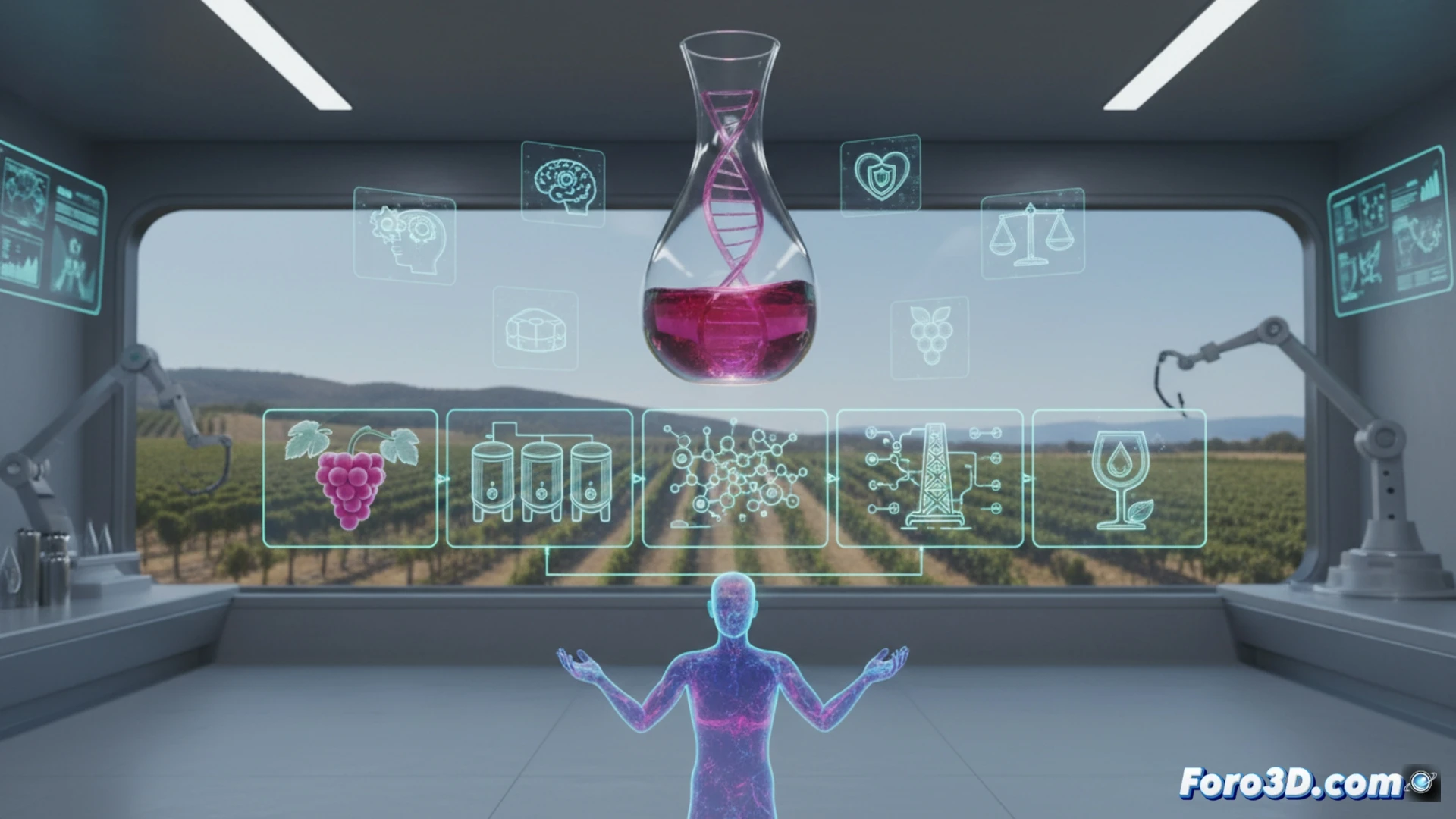
The production of non-alcoholic wine, through techniques like vacuum distillation, is a delicate process to preserve aromas and flavors. 3D visualization can educate the consumer in a unique way. Interactive models of vacuum distillation columns can be created, showing how alcohol is separated at low temperatures. Additionally, animated 3D infographics allow comparing the molecular composition of a traditional wine and a non-alcoholic one, highlighting the retention of volatile aroma compounds and the reduction in calories, making the science behind the product tangible.
Overcoming Prejudices with Interactive Experiences 👁️
3D technology not only explains but can also persuade. To combat prejudices about quality, immersive experiences can be developed that guide the user through a virtual tasting, educating on the parameters of color, nose, and palate in the absence of alcohol. This didactic approach, focused on sensory experience and knowledge, reinforces conscious consumption and demonstrates how the winemaking tradition adapts, with innovation, to new wellness demands.
How can 3D printing of wine molecular models, showing the difference between volatile compounds in alcoholic and non-alcoholic versions, become a key educational tool to foster more conscious and healthy consumption? 🍇
(PS: calories in 3D are like polygons: you never know how many you've consumed until it's too late)