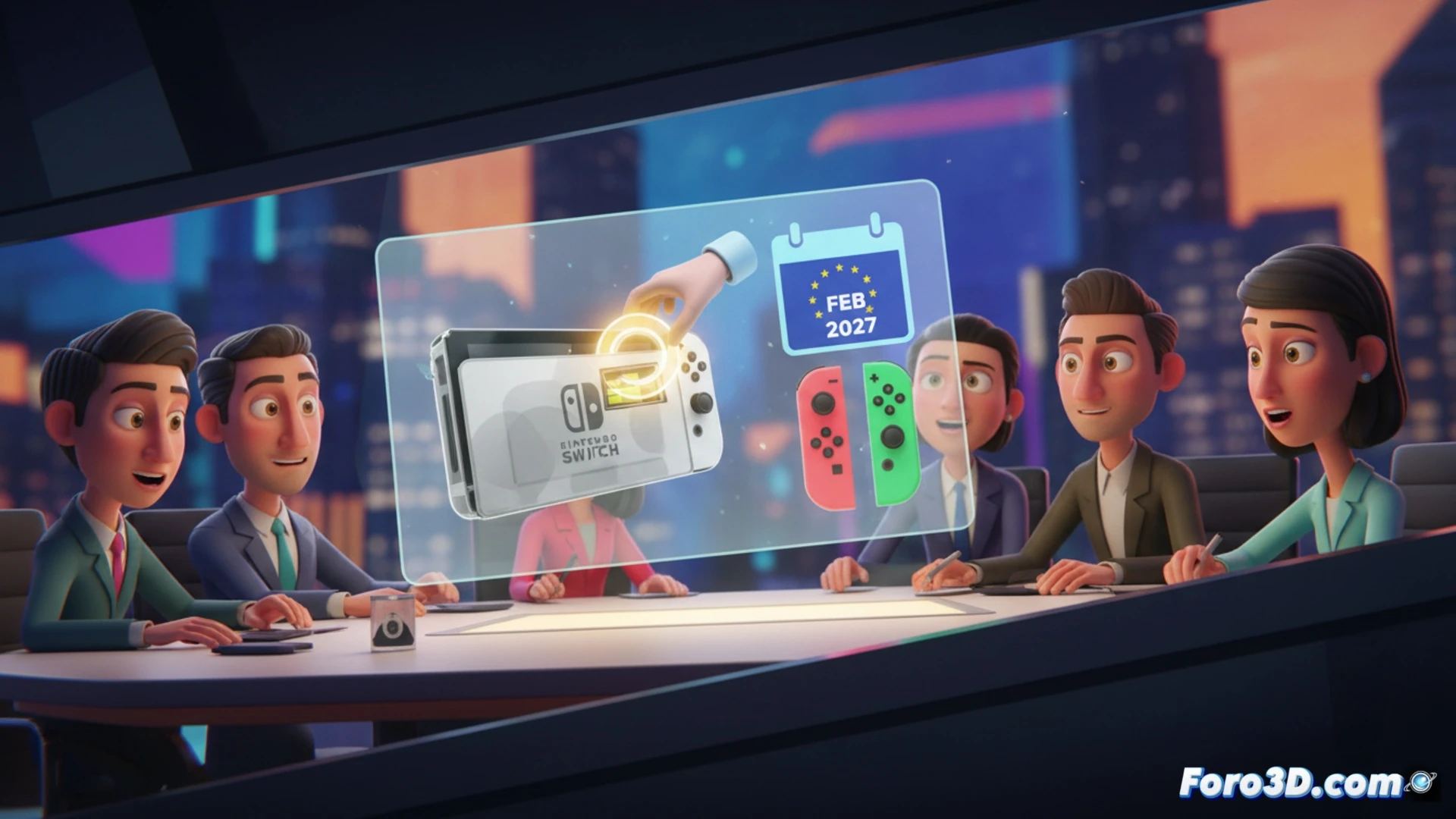
According to Nikkei, Nintendo is preparing a revision of the Switch 2 for the European Union with user-replaceable batteries, both in the main body and in the Joy-Cons. This measure responds to the new European legislation that, starting in 2027, will require this feature in portable batteries. The current version has the battery glued in, making repair difficult. This change, initially regional, marks a turning point toward more durable and repairable hardware.
Technical implications: from planned obsolescence to longevity 🔋
This technical adjustment, although driven by law, goes beyond the cosmetic. A design that facilitates battery replacement significantly extends the useful life of the entire device. For professionals and 3D enthusiasts who use portable consoles or tablets for visualization, digital sculpting, or project review, battery degradation no longer dooms the hardware. It contrasts with the reality of many laptops and tablets where the soldered or glued battery forces costly technical services or premature replacement of the entire unit, generating electronic waste and unnecessary costs.
Reflection: A standard for specialized hardware? ⚙️
Nintendo's measure, although geolocalized, sets a precedent. It pressures for reparability to be a design factor in specialized hardware. In our niche, where generations of consoles and devices last nearly a decade, this regulatory trend is crucial. It lengthens investment cycles and reduces the ecological footprint. The question now is whether other 3D work hardware manufacturers will voluntarily adopt these practices or wait to be regulated. The path to more sustainable devices and owners of their maintenance seems, finally, clear.
How will the European regulation on replaceable batteries affect the design, performance, and longevity of the future Nintendo Switch 2 in the context of 3D hardware and mobile gaming?
(P.S.: remember that a powerful GPU won't make you a better modeler, but at least you'll render your mistakes faster)