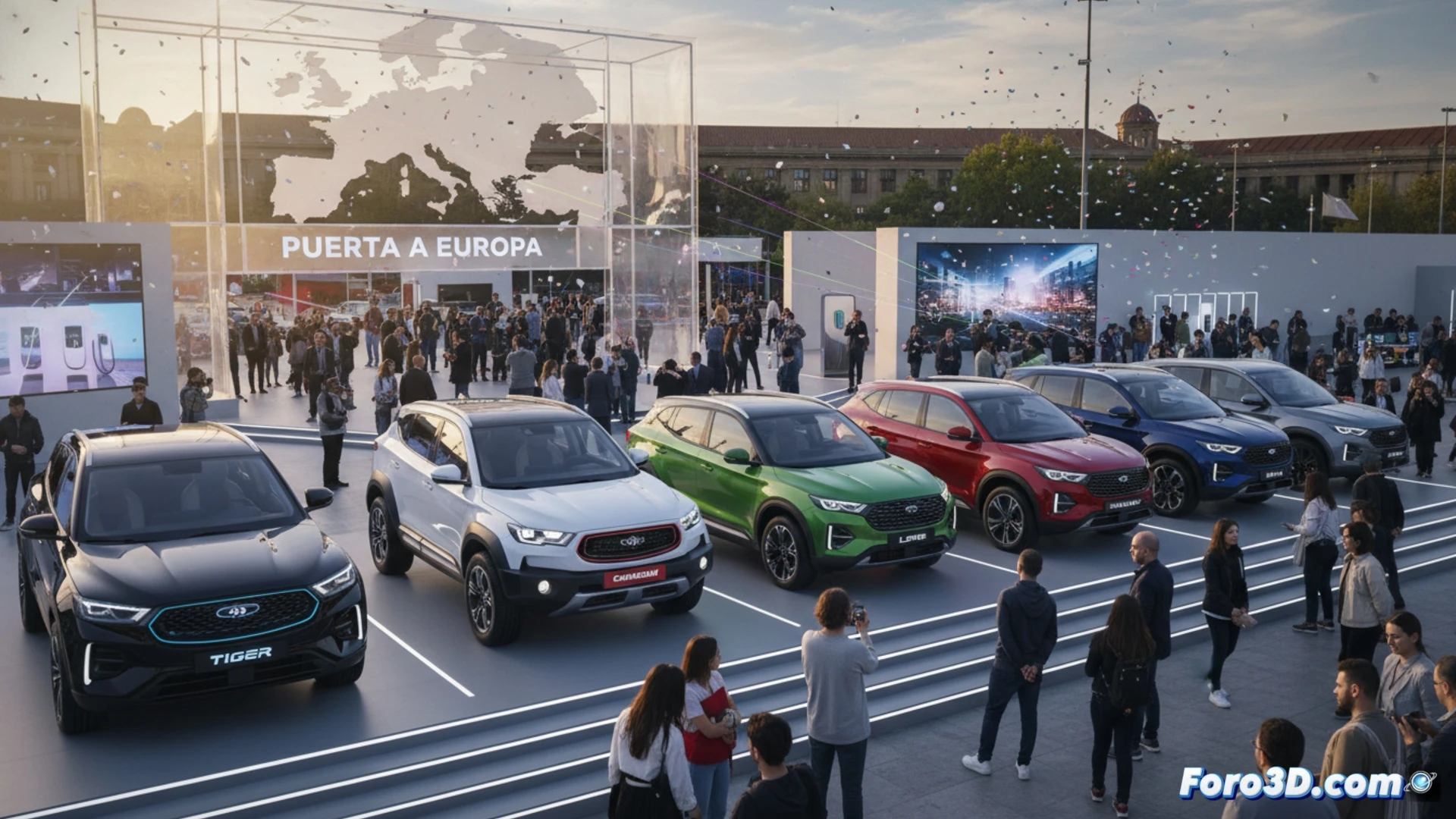
The Spanish automotive market is preparing for a shake-up in 2026 with the arrival of new brands like Tiger, Geely, Changan, and Lepas. Their strategy is clear: electrified SUVs for a demanding audience. To compete against already established manufacturers, these brands need a decisive advantage. This is where 3D design, simulation, and digital twin technologies become their fundamental tool, allowing them to accelerate the development of complex vehicles and optimize every electronic component and assistance system from day one.
CAD, simulation, and digital twins: the accelerator of innovation 🚀
For these new brands, development time is critical. 3D CAD design suites allow creating and modifying the complete vehicle architecture, from the skate platform for batteries to the distribution of ADAS systems and power electronics, with an agility that was impossible a decade ago. Finite element simulation (FEA) and computational fluid dynamics (CFD) virtually test structural integrity, battery thermal management, and aerodynamics, reducing costly physical prototypes. Finally, the digital twin of the electric SUV enables validation of embedded software, sensor integration, and energy performance in a virtual environment, ensuring an optimized and reliable product before manufacturing.
An opportunity for local engineering and software? 💡
This technological offensive not only affects dealerships. The need for these brands to implement advanced 3D solutions and develop specific software for their electronic architectures can generate demand for specialized talent in engineering, simulation, and embedded systems development in our country. It is an opportunity for design studios, engineering firms, and local software companies to collaborate in this new automotive ecosystem, demonstrating that innovation in automotive is no longer just a matter of metal, but of data and perfectly executed digital models.
How is 3D modeling and simulation technology transforming the market entry strategy of new Chinese brands in the Spanish automotive market for 2026?
(P.S.: modeling a car is easy, the hard part is making sure it doesn't turn into a cube on wheels)