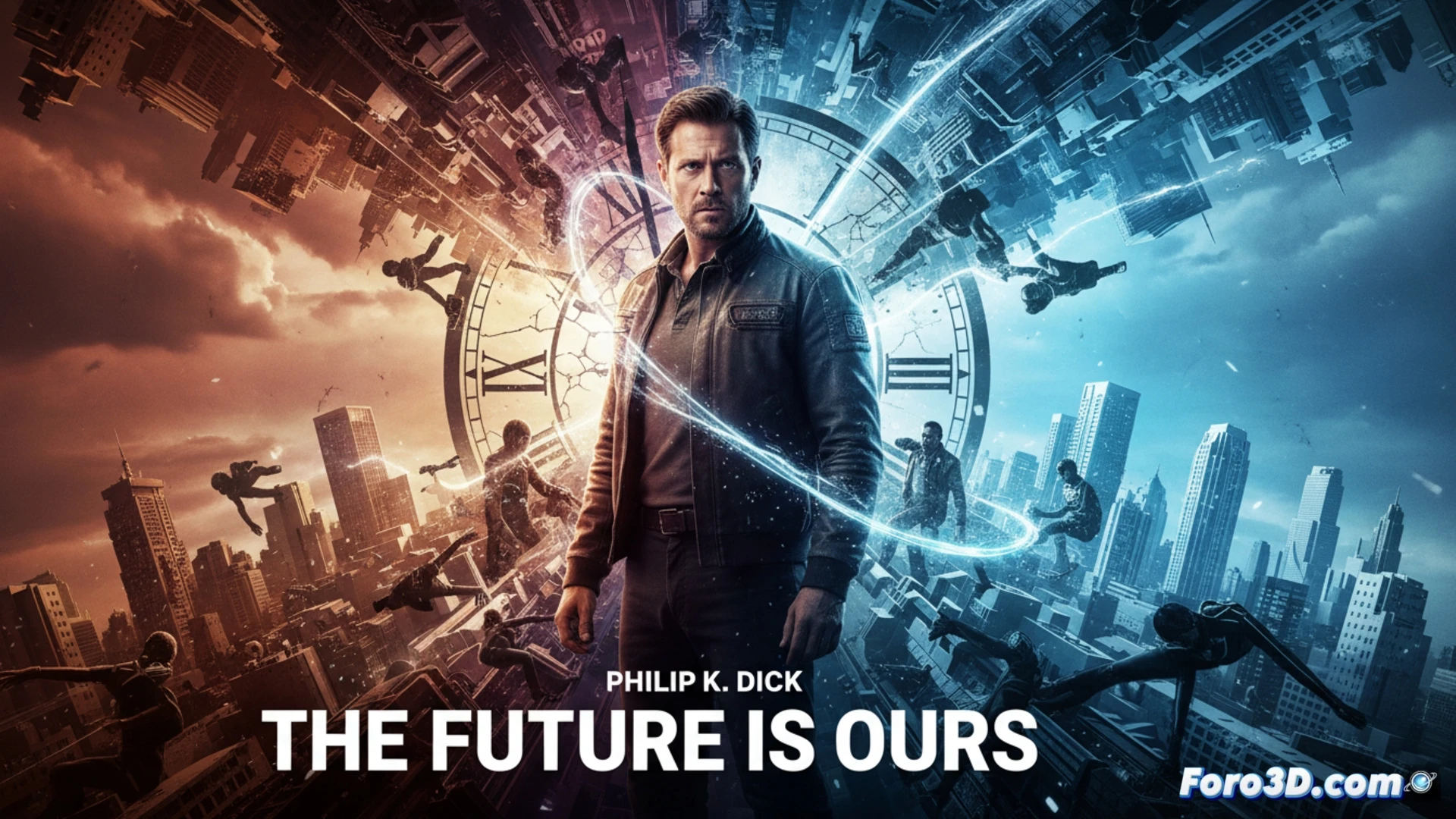
Netflix is preparing the series The Future Is Ours, an adaptation of Philip K. Dick's novel The World Jones Made. The story of a man who sees one year into the future promises to resonate with fans of 12 Monkeys, sharing its exploration of destiny, morality, and the figure of the manipulative prophet. This project is not just news for science fiction lovers, but a fascinating case study on how to translate complex temporal structures and speculative premises into audiovisual language.
Preview and 3D Storyboarding for an Uncertain Future 🎬
The central premise of seeing the future poses a monumental pre-production challenge. How do you visualize that precognitive knowledge on screen without falling into clichés? This is where tools like 3D storyboarding and previsualization become crucial. Filmmakers must design a coherent visual language to differentiate the present timeline from the protagonist's vision, possibly through the use of overlaid shots, selective blurs, or altered color palettes. The series 12 Monkeys solved this with a distinctive aesthetic for each era and editing that emphasized causal connections. The Future Is Ours will need an equally innovative solution for the prophecy to be a visual narrative element, not just explanatory dialogue.
Prophecy as a Tool for Editing and Screenwriting ⏳
The narrative is built on ambiguity: is the seen future unalterable or can it be changed? This tension must be translated into the rhythm and episodic structure. Editing can become the perfect ally, using cuts that anticipate events or repeat scenes with subtle variations, creating an unsettling sense of déjà vu for the viewer. The success of the adaptation will depend on its fidelity to the Dickian spirit of paranoia and questioning reality, using visual language not only to tell, but to make the viewer feel the burden and distortion produced by seeing tomorrow.
How can the visual narrative of a series like The Future Is Ours represent the complexity of the subjective realities and precognitive perception described in Philip K. Dick's novel?
(P.S.: Previz in cinema is like the storyboard, but with more chances for the director to change their mind.)