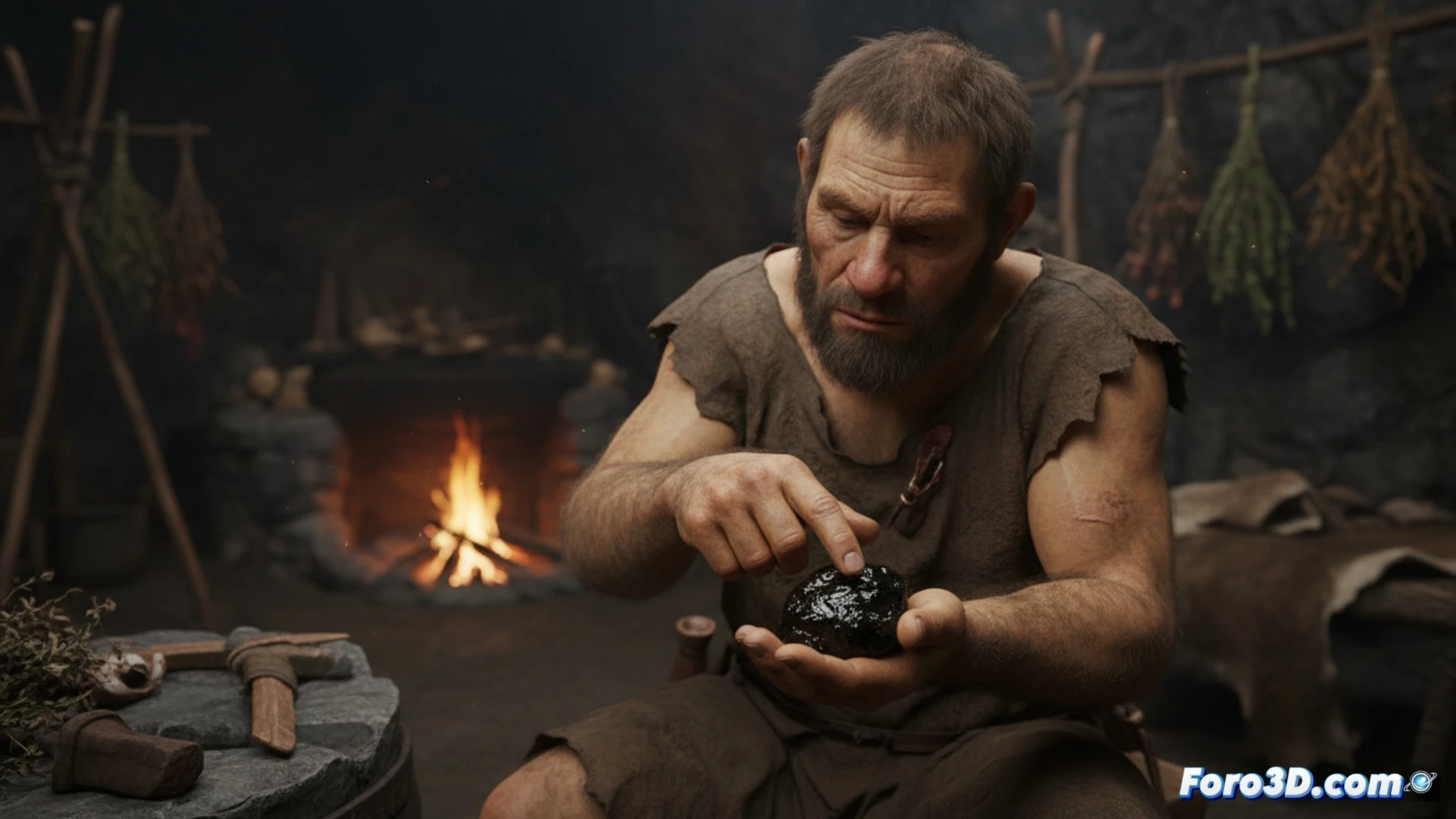
A recent archaeological study has revealed that birch tar, a prehistoric adhesive, possessed antibacterial properties. Led by Tjaark Siemssen, the team recreated the Neanderthal production process and tested its efficacy against bacteria such as Staphylococcus aureus. This finding suggests a possible intentional medicinal use, adding complexity to our understanding of health care in the Paleolithic. The research exemplifies how experimental archaeology, combined with modern analysis, unveils hidden knowledge in ancestral materials.
Experimental recreation and digital validation: bridges to the past 🔬
The key to this discovery lies in the methodology. The physical recreation of the tar production process is only part of it. This is where digital archaeology unleashes its potential. Through 3D modeling and simulations, the experimental process can be optimized, temperature and pressure variables analyzed, and results visualized precisely. Digitizing associated tools and find contexts allows for perpetual documentation and detailed spatial analysis. These techniques not only validate the manufacturing hypothesis but create a digital corpus that facilitates peer verification and interactive disclosure of the finding, transforming raw data into accessible knowledge.
Intentionality versus chance: a debate modeled in 3D 🤔
The big question persists: did Neanderthals know about its healing properties? Digital archaeology does not resolve the debate, but enriches it. By virtually reconstructing usage scenarios and contrasting them with site evidence, we can evaluate probabilities. 3D visualization of wounds and tar application helps formulate testable hypotheses. Thus, digital tools do not provide definitive answers about the Neanderthal mind, but provide a rigorous framework for exploring intentionality, showing how current technology illuminates the most intimate behaviors of the past.
How can we use 3D printing and computational simulation to recreate and validate the antibacterial properties of Neanderthal birch tar in an experimental archaeology context?
(P.S.: and remember: if you can't find a bone, you can always model it yourself)