On March 19, 2026, a free virtual event is being held on the convergence between nanophotonics and artificial intelligence applied to biology. Professor Jennifer Dionne from Stanford will present the VINPix technology. This platform promises to enable integrated detection of genes, proteins, and metabolites, with applications in diagnostics, environmental sciences, and oncological research.
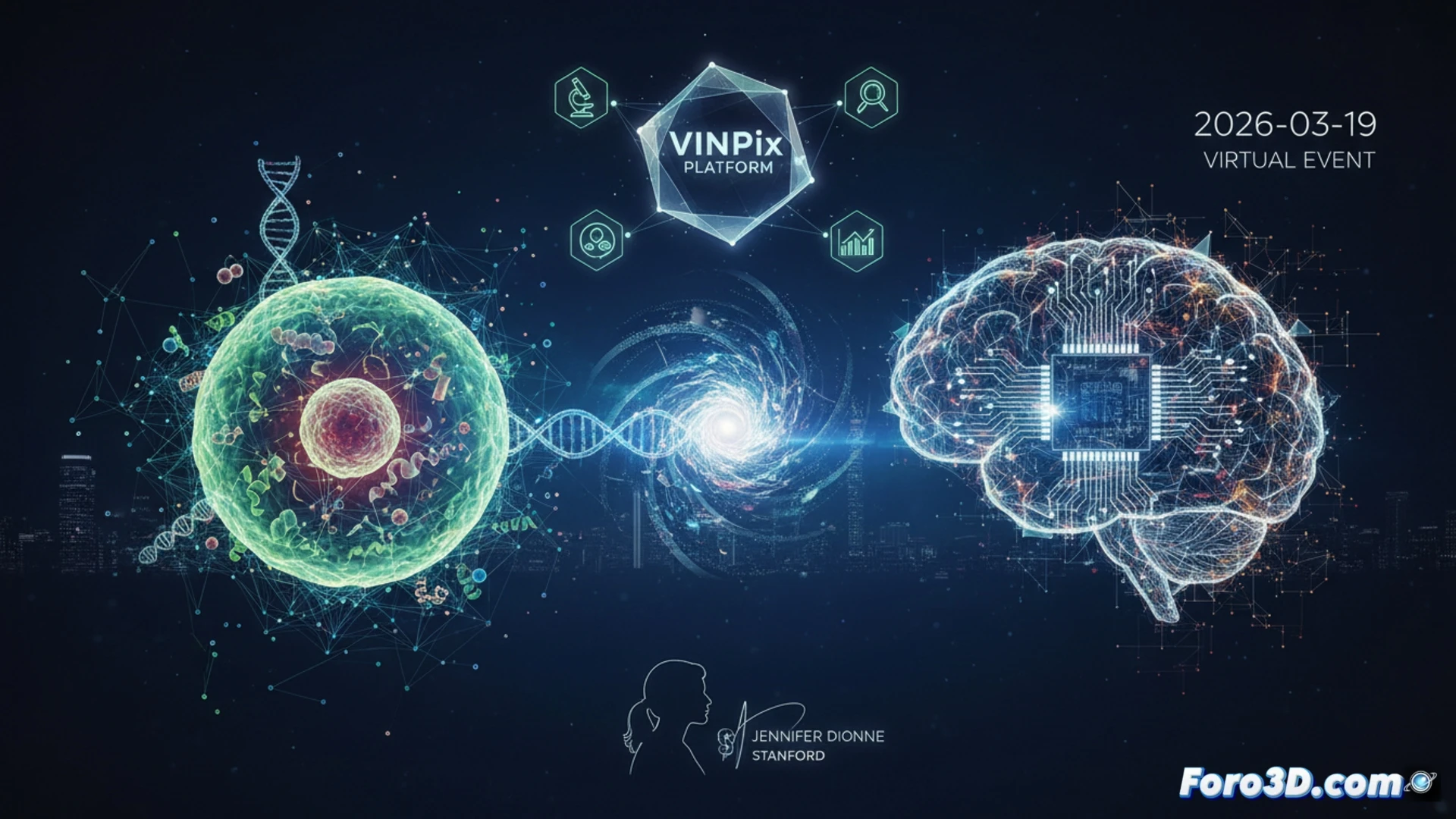
Silicon resonators and acoustic bioprinting: the core of VINPix 🔬
The foundation of VINPix consists of silicon nanof photonic resonators that act as ultrasensitive optical sensors. These are combined with an acoustic bioprinting system to deposit biological samples precisely onto the chip. An AI model processes the resulting spectral data, identifying and quantifying multiple biomarkers simultaneously in a single pass.
Your favorite robot will soon be a biochemical snitch 🤖
Among the most striking applications is oceanic monitoring with autonomous robots equipped with these chips. Imagine an underwater drone that, in addition to taking photos, sends you a detailed report on the metabolite profile of a reef. The next time your unmanned vehicle says mission accomplished, it might be adding in a digital whisper: and by the way, there's an excess of phosphates in zone 7.