Tim Chen, VFX artist, has released NanoGS, a free and open-source plugin for Unreal Engine 5.6 that revolutionizes the visualization of massive real-world 3D scans. Inspired by Nanite's philosophy, NanoGS implements the 3D Gaussian Splatting (3DGS) rendering technique in an optimized way, allowing the integration of complex digitized environments with unprecedented interactive performance, ideal for visual effects workflows and architectural visualization.
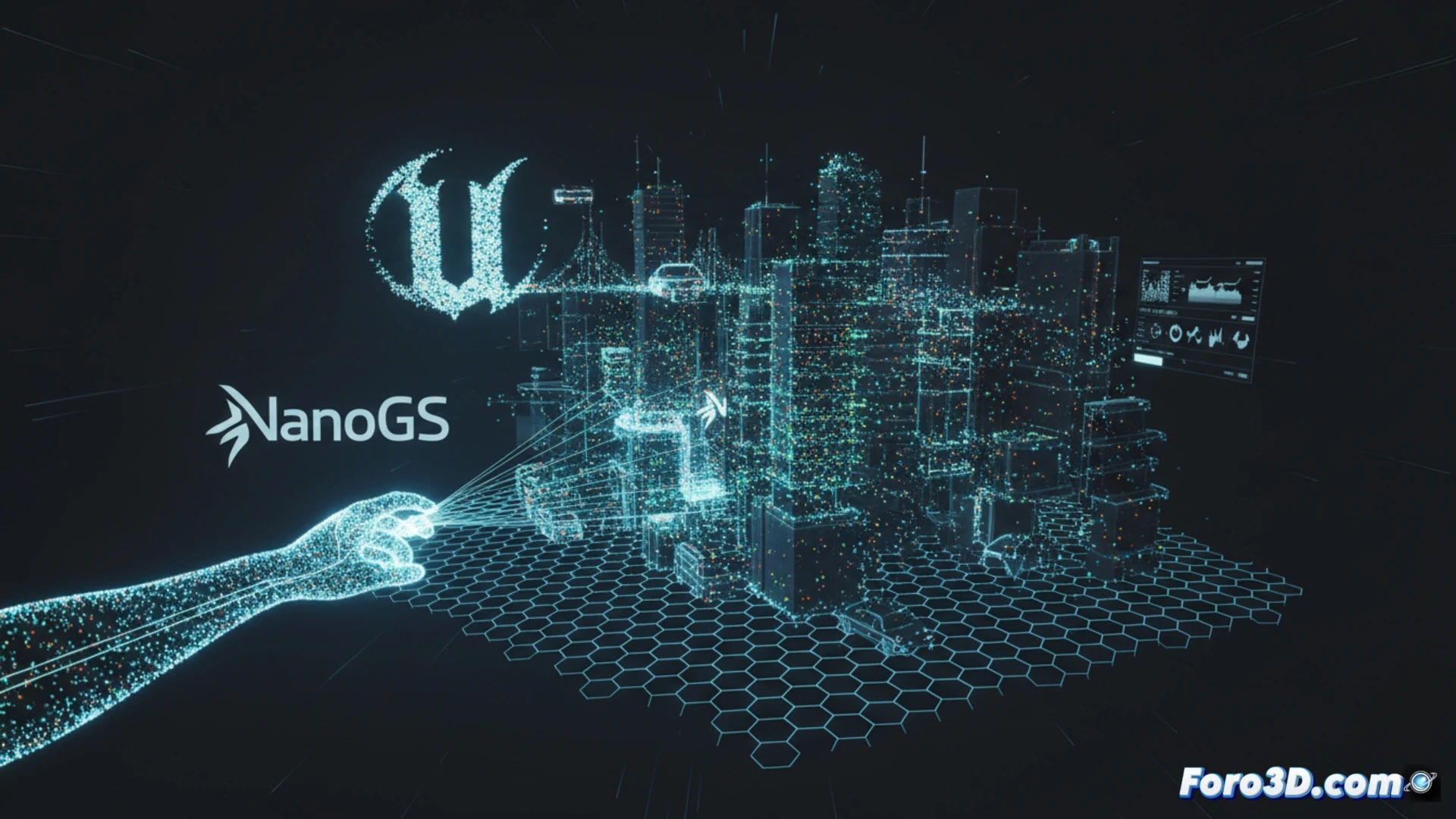
The power of 3DGS and Nanite-style optimization 🚀
3D Gaussian Splatting is a 3D reconstruction technique from photographs that represents scenes as millions of intelligent particles (Gaussians). The challenge is to render this point cloud in real-time. NanoGS overcomes this obstacle by implementing a sorting and level-of-detail system that, like Nanite with geometry, draws only the particles necessary for the current camera view. This drastically reduces the load on the GPU, achieving frame rate increases of more than 4x even on modest hardware, while maintaining high visual fidelity. Direct integration into UE5 avoids complicated conversions.
A leap for practical visual production ✨
NanoGS democratizes the use of massive photogrammetric scans in real productions. For film, series, or advertising, it means being able to incorporate digitized real environments directly into the Unreal scene, interact with them in real-time, and make creative decisions instantly. Its free nature and compatibility with the latest stable version of the engine make it an accessible and immediately impactful tool, closing the gap between real-world capture and digital visual storytelling.
How can NanoGS, by integrating 3D Gaussian Splatting into Unreal Engine 5, overcome the traditional limitations of meshes and volumetrics for creating complex and dynamic visual effects in real-time?
(P.S.: VFX are like magic: when they work, no one asks how; when they fail, everyone sees it.)