The Polytechnic University of Madrid will invest Rafael Nadal as doctor honoris causa, recognizing his career and values. This act transcends mere homage and invites us to analyze how current sports excellence is studied with cutting-edge tools. In the niche where sport and technology converge, 3D solutions have emerged as key allies to unravel the secrets of athletes like him.
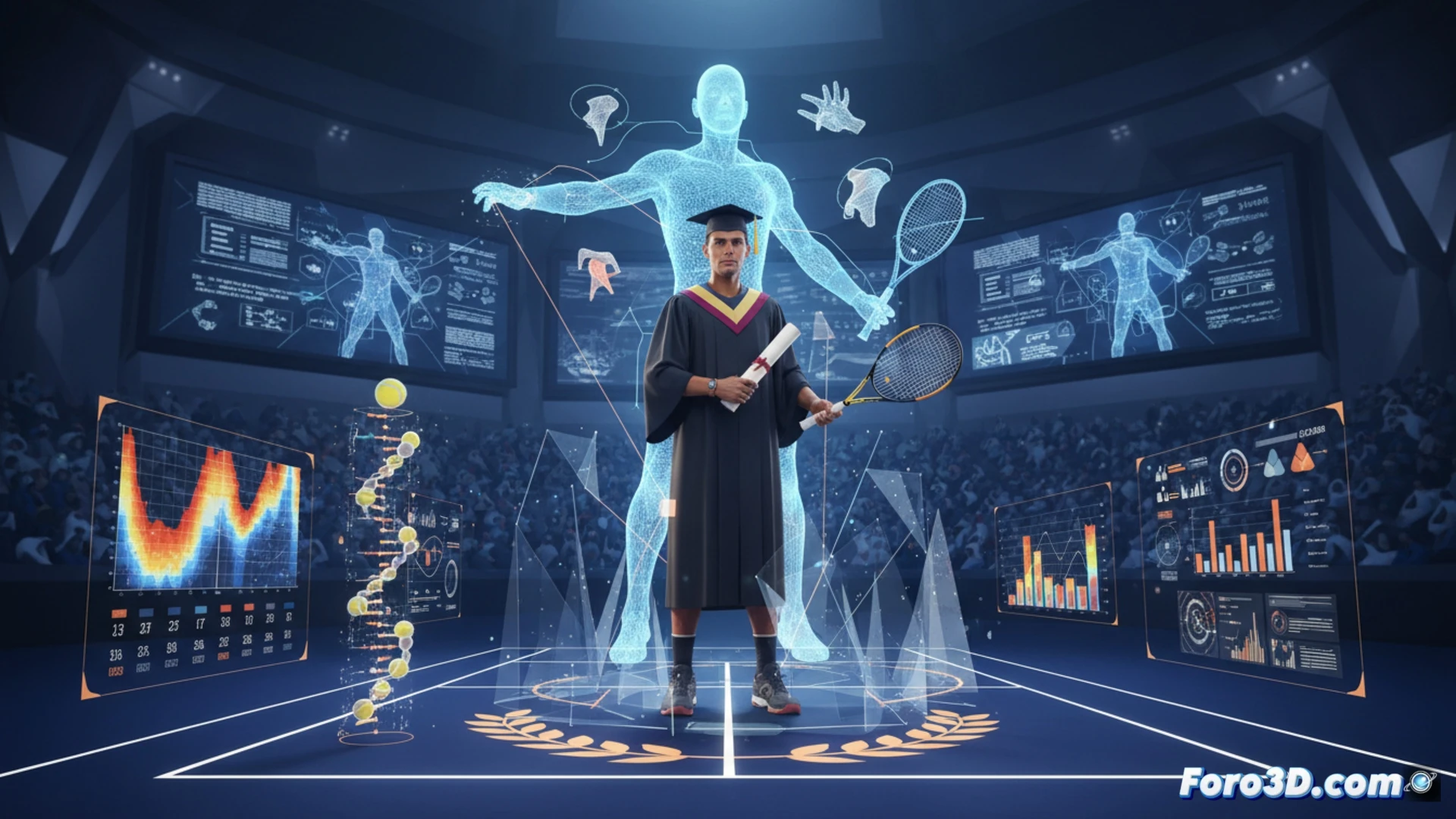
Scanning, simulation, and biomechanics: deconstructing the Nadal machinery 🤖
Nadal's technique has been meticulously studied using three-dimensional technologies. 3D body scanning allows monitoring his physical evolution and composition, optimizing preparation. Biomechanical simulation digitally recreates his movements, such as the backhand topspin, to analyze joint loads and energy efficiency. Even the 3D recreation of plays or playing surfaces facilitates specific training. These tools convert intuition and effort into quantifiable data, enabling objective analysis that supports continuous improvement and injury prevention.
Beyond the data: the ethics of effort in the digital era 💡
The UPM distinction values effort and perseverance, values that 3D technology does not replace but enhances. These tools offer a detailed map of the path, but it is the athlete's will that travels it. By digitizing Nadal's excellence, technology does not create his legacy but gives us a powerful magnifying glass to understand it and aspire to emulate his work ethic, which is the true foundation of his enduring success.
How has Rafael Nadal's team used 3D technology to analyze and perfect his biomechanics, prevent injuries, and extend his sports career?
(PD: reconstructing a goal in 3D is easy, the difficult part is making it not look scored with the leg of a Lego doll)