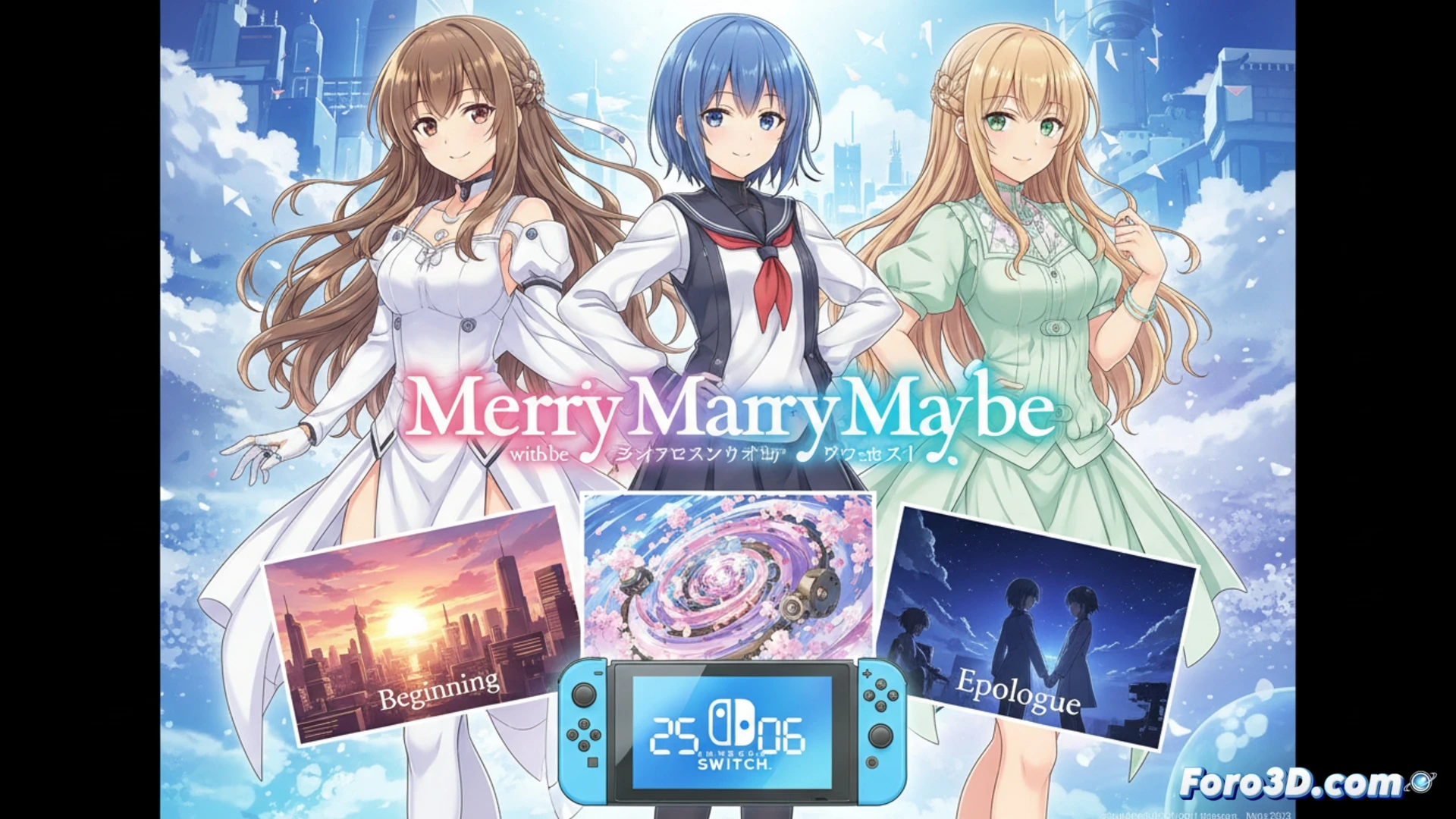
MAGES. has announced the release of My Merry May with be, a remastered collection that will arrive on Nintendo Switch on June 25 in Japan. This pack rescues the sci-fi and romance visual novel saga, originally published for PlayStation 2 between 2002 and 2005. It includes the two main titles and three additional scenarios, reviving a classic niche for the modern audience. This move aligns with the trend of preserving and adapting titles from past eras, facilitating their access on contemporary hardware.
The technical challenge of the Switch remaster: from PS2 to HD 🎮
Adapting a PlayStation 2 game to Nintendo Switch involves more than just a simple resolution increase. The development team must work with original assets that may be low resolution, requiring careful rescaling or partial redesign for HD screens. Additionally, Switch's architecture is radically different from PS2's, necessitating engine recoding and optimization for handheld and docked modes. In the case of visual novels, the challenge focuses on preserving the original artistic quality, updating interfaces for touch screens, and ensuring perfect framerate stability, crucial for the narrative experience.
Preservation and market: the value of remasters 💾
Releases like this go beyond mere commercial relaunch. They are acts of preservation that prevent important titles from disappearing with obsolete hardware. For the visual novel niche, especially in the West, these remasters test the market and gauge interest in lesser-known sagas. For developers, studying these adaptations offers valuable lessons on software lifecycle, asset reuse, and the logistics of keeping games viable across console generations.
What specific technical challenges do developers face when remastering a PlayStation 2 video game for Nintendo Switch, considering architectural differences and modern visual expectations?
(P.S.: game jams are like weddings: everyone happy, no one sleeps, and you end up crying)