In the 51st edition of the César Awards, the award for best visual effects recognized the meticulous work of Lise Fischer and her team at MPC Paris for the film L'Inconnu de la Grande Arche. A team of about thirty artists dedicated four months to creating around a hundred shots whose main challenge was to credibly recreate the evolution of the construction of the Grande Arche in 1980s Paris, blending classic and digital techniques with historical footage.
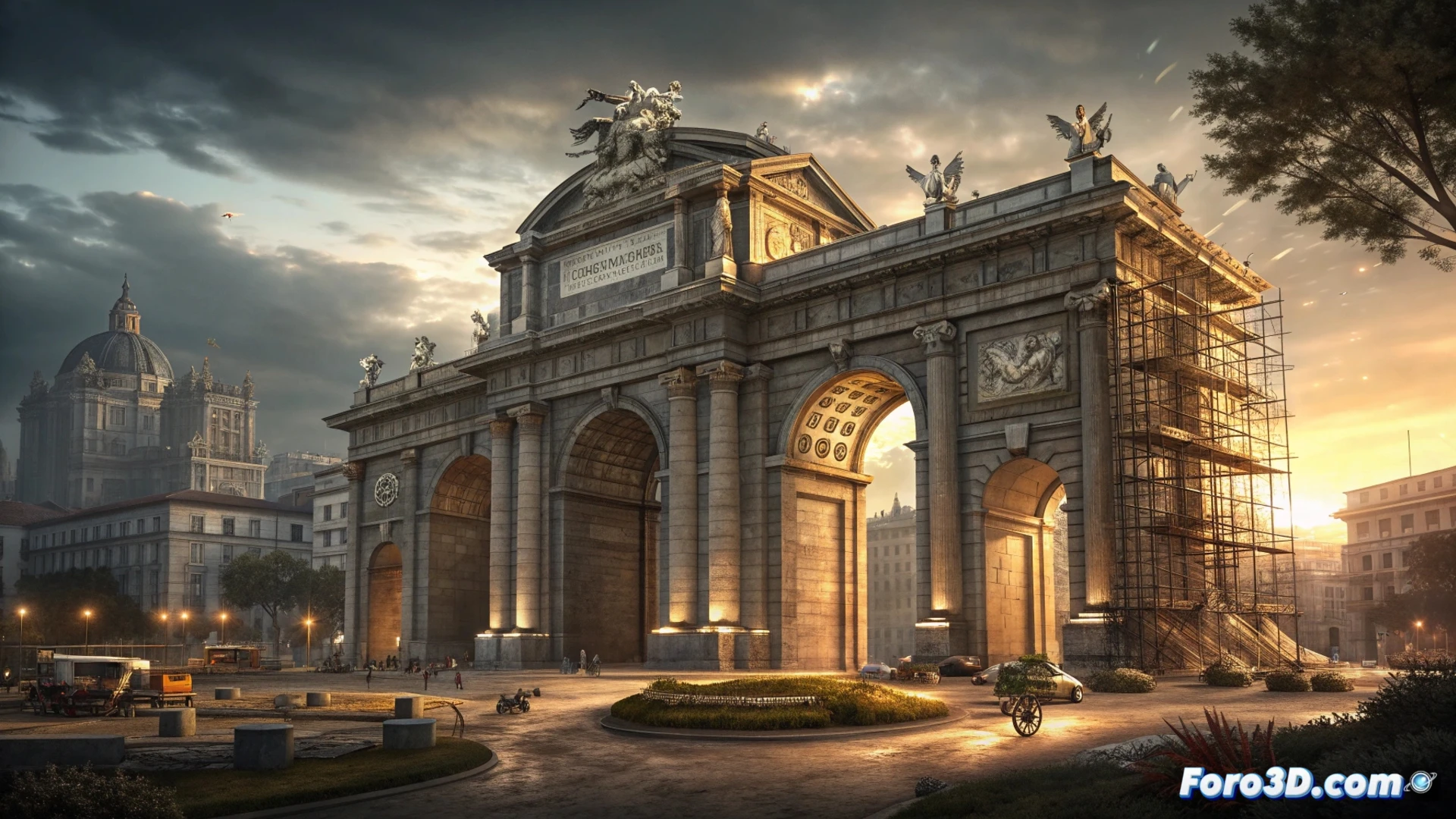
Historical reconstruction: a puzzle of archive, 3D, and compositing 🧩
The central technical challenge was to integrate the progressive construction of the Arch into real scenes from the era. The workflow combined multiple disciplines. It started with archive images that served as the basis for match moving and integration. On top of them, detailed 3D environments of the arch in its different construction phases were modeled. These geometries were enriched with matte painting to create realistic textures and backgrounds. Finally, compositing brought all the elements together, adjusting lighting, atmosphere, and gradients to achieve perfect cohesion and a sense of historical authenticity in every shot.
Lessons from a winning workflow 🏆
This award underscores the importance of a robust pipeline and efficient management. While MPC demonstrated mastery in VFX for live-action, the César for best animation went to Arco, whose studio, Remembers, used the tool Kitsu for project management. Both cases, although in different fields, highlight that success in complex productions depends as much on artistic and technical mastery as on impeccable organization that coordinates dozens of artists and hundreds of tasks under demanding deadlines.
How did MPC Paris balance historical accuracy with visual narrative in the César-winning effects, and what unique technical challenges did recreating that era present?
(P.S.: VFX are like magic: when they work, no one asks how; when they fail, everyone sees it.)