Marc Márquez, favorite for the 2026 title, has released a precise technical analysis: Ducati's hegemony will be increasingly difficult to maintain. After a podium in Thailand without Italian bikes, the rider points out that the rivals have made a leap. His reflection goes beyond a single result and points to the law of diminishing returns in development. This is where simulation and 3D analysis tools become crucial to understand the true technological battle that defines the championship.
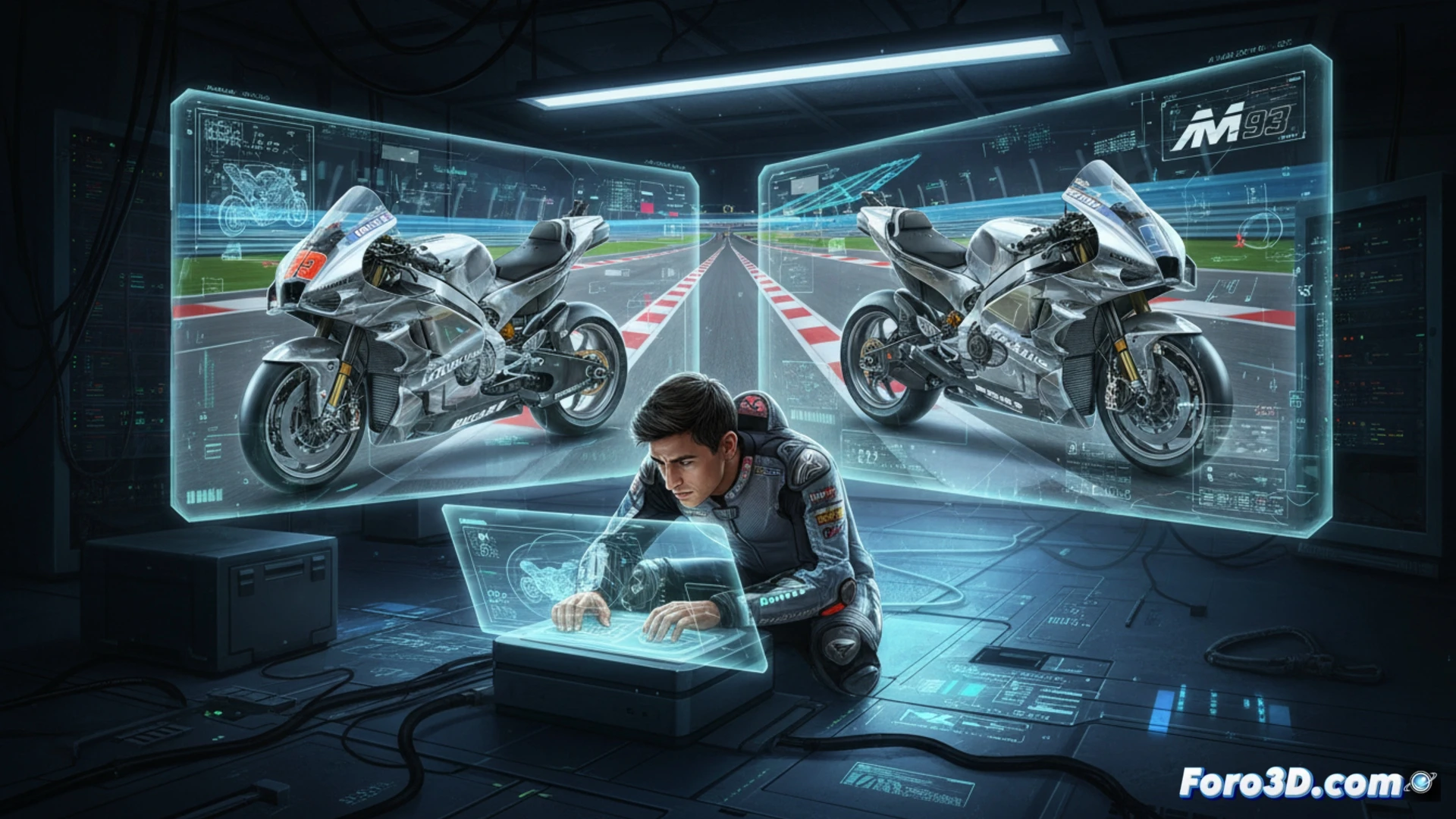
Digital twins and simulation: measuring the rivals' leap 🏁
When Márquez talks about the big leap of Aprilia and KTM, and Ducati's smaller margin, he describes a quantifiable process with 3D technology. Teams use digital twins of their bikes and circuits to run thousands of virtual simulations. These test aerodynamic configurations, chassis behaviors, and engine maps without hitting the track. The 3D comparative analysis of telemetry data allows visualizing where a rival has gained tenths: in the exit of a slow corner or in straight-line aerodynamic efficiency. Thus, what the rider intuits in the saddle, the engineers validate in computational models, prioritizing development areas with the highest return.
Beyond engineering: pressure in data visualization 🧠
Márquez's approach of relieving pressure and enjoying also has a technological correlate. 3D visualizations of race pace and tire wear data help riders understand race development intuitively, transforming numbers into clear strategies. This clarity reduces uncertainty and, therefore, pressure. Understanding through visual models why a rival can be fast in a specific section allows facing challenges with information, not anxiety. 3D technology not only optimizes the bike but is a key tool for the mental management of elite athletes.
How is 3D modeling and real-time data analysis transforming MotoGP bike development strategy for the 2026 regulations? 🤖
(PS: player tracking is like following your cat around the house: lots of information and little control)