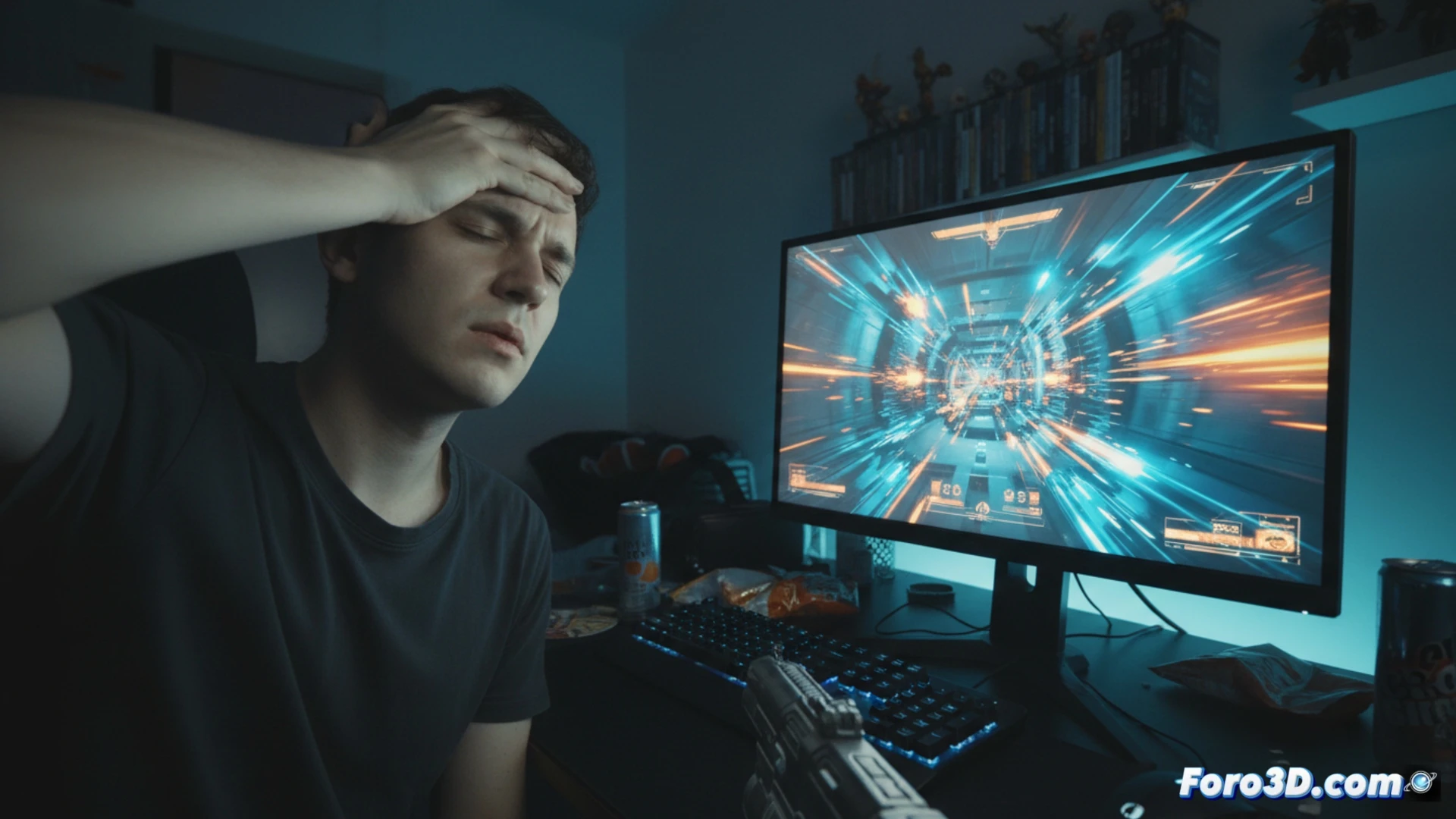
For a sector of players, immersing themselves in a title with a first-person perspective or virtual reality entails an unwanted side effect: motion sickness or simulator sickness. This discomfort arises from a sensory contradiction. Our brain processes intense on-screen movement, but the body reports that it is still. The result is usually nausea, headache, and the need to quit the game.
Graphics settings and parameters that influence it 🤔
The game's technical configuration is a decisive factor. Effects like motion blur or rotation blur deepen the visual desynchronization. A low and unstable frame rate worsens the perception. Adjustments like widening the field of view (FOV) help the scene resemble natural peripheral vision more closely. Prioritizing smooth performance, disabling excessive camera effects, and ensuring good lighting in the room are changes that reduce sensory confusion.
Training the stomach for virtual combat 💪
Adaptation seems to be the key, even if the method is peculiar. It involves dosing the experience like a strong medication: short 20-minute sessions, followed by a break gazing at a fixed horizon. It's training where the goal is not to improve the K/D ratio, but to keep dinner in its place. The player with motion sickness does not avoid combats, but wages a private battle against their own vestibular system.