A new geological analysis questions the antiquity of the Chilean Monte Verde site, traditionally dated to 14,500 years and key to understanding the early peopling of America. The controversy between the Surovell and Dillehay teams underscores the interpretive nature of archaeology. This is where digital archaeology unleashes its potential: to transcend the debate through the creation of accessible digital replicas that preserve every stratum and artifact, allowing a collective and transparent reevaluation of the primary evidence.
Photogrammetry and digital twins: tools for a stratigraphic debate 🗺️
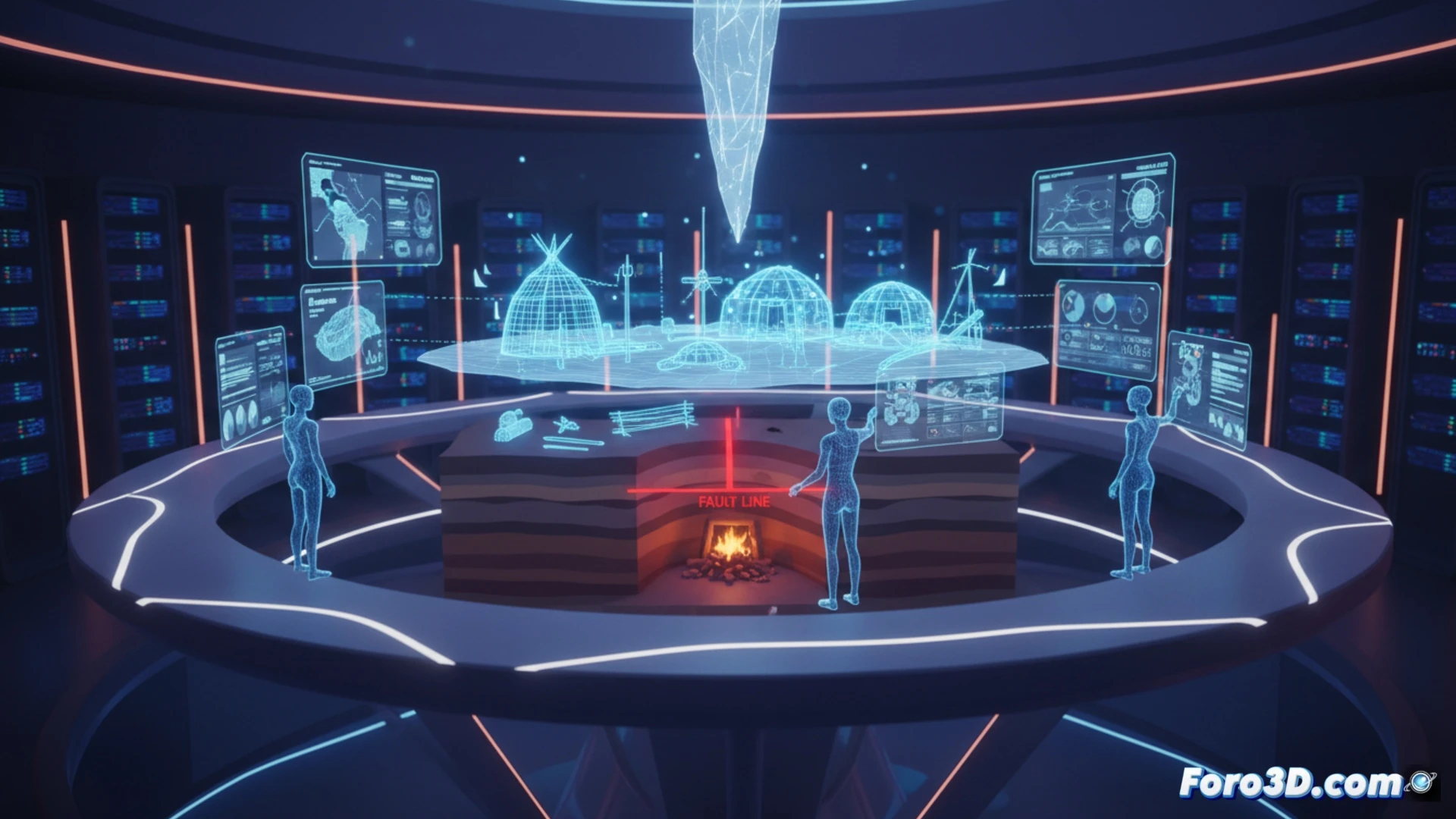
The core of the dispute lies in the interpretation of a volcanic ash layer. Imagine a comprehensive digital twin of Monte Verde, created through high-resolution photogrammetry and laser scanning. This 3D model would integrate not only the topography, but each stratigraphic unit, associating dating and findings metadata. Global researchers could virtually traverse the sequence, measure thicknesses, isolate layers, and test different deposition hypotheses. Collaborative platforms would allow annotating observations directly on the model, visually contrasting Surovell's reading with Dillehay's, transforming a theoretical discussion into an interactive examination of the material evidence.
Beyond dating: a new paradigm of scientific consensus 🔍
The true lesson of Monte Verde is not which date is correct, but how technology can manage the inherent uncertainty of the discipline. A digitized site becomes a scientific common good, immune to deterioration and open in perpetuity. This case demonstrates that the future of archaeology is not only in discovering, but in documenting in such a rich and accessible way that any future reinterpretation starts from an objective and verifiable database, fostering a consensus built on technological transparency.
How can 3D modeling techniques and digital geospatial analysis reevaluate the stratigraphy and dating of key archaeological sites like Monte Verde?
(P.S.: If you dig at a site and find a USB, don't plug it in: it might be Roman malware.)