The Spanish athlete Moha Attaoui arrives at the Torun Indoor World Championships with a clear goal: gold. Although his season's best places him eleventh, his experience and excellent form give him confidence. His plan is well-known: run from the back and decide in the final moments. But how do you perfect a strategy like that? This is where 3D technology emerges as a fundamental tool for the analysis and optimization of elite athletes' performance.
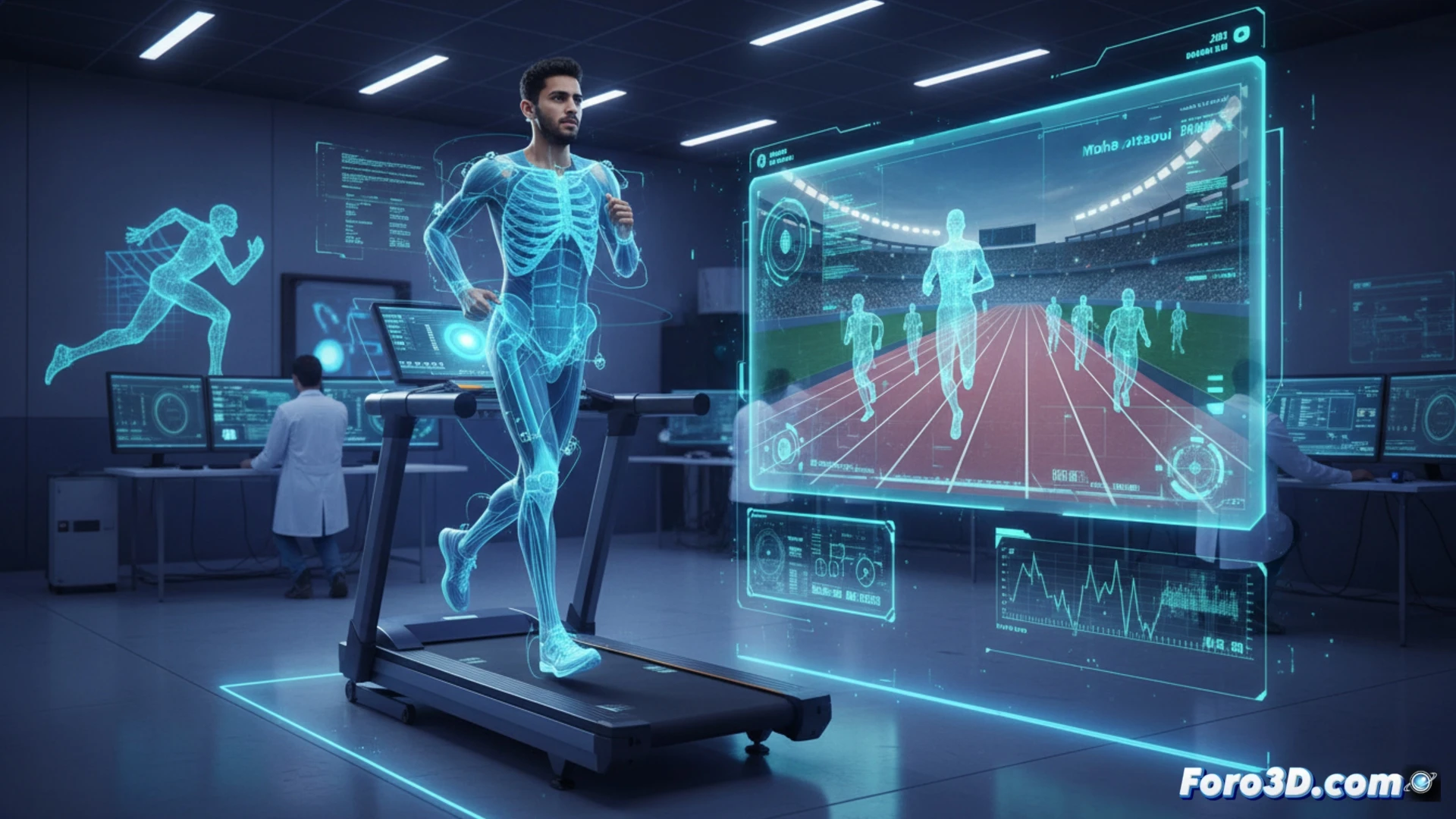
3D Simulation and Biomechanical Analysis: The Science Behind "Running From the Back" 🏃♂️
Attaoui's tactic is not just intuition. Through 3D reconstructions of races, it is possible to volumetrically analyze each runner's position, their relative distance, and energy expenditure in each segment. The technology allows simulating the aerodynamic wake and the effort of drafting. Additionally, the 3D biomechanical analysis of his stride, obtained with high-speed cameras, identifies inefficiencies and allows adjustments to optimize his final acceleration. These tools provide objective data to decide exactly at which meter to start his decisive attack, transforming a tactical idea into an executable plan based on data.
Immersive Visualization: Training the Mind to Beat the Favorites 🥽
Attaoui claims he can beat any rival. Immersive 3D visualization is key here. Using virtual environments, he can "run" a simulated final repeatedly against avatars of his main opponents, experiencing their possible pace changes. This mental preparation in a hyperrealistic scenario reduces uncertainty and strengthens conviction. 3D technology not only trains the body but forges the champion's mindset necessary to turn the eleventh best mark into world gold.
How is Moha Attaoui using 3D modeling and analysis of his biomechanics to optimize his technique and achieve world gold?
(P.S.: 3D tactical simulation never fails, players on the track do)