Loss of smell is a known symptom in Parkinson's disease, but a new study goes further. It reveals that patients not only smell less, but their perception of olfactory pleasure changes. While a lemon scent is perceived with the same intensity, it is less pleasant. This distinctive pattern, or olfactory fingerprint, opens the door to a novel diagnosis. This is where 3D biomedicine can transform these abstract sensory data into visual models and tangible diagnostic tools.
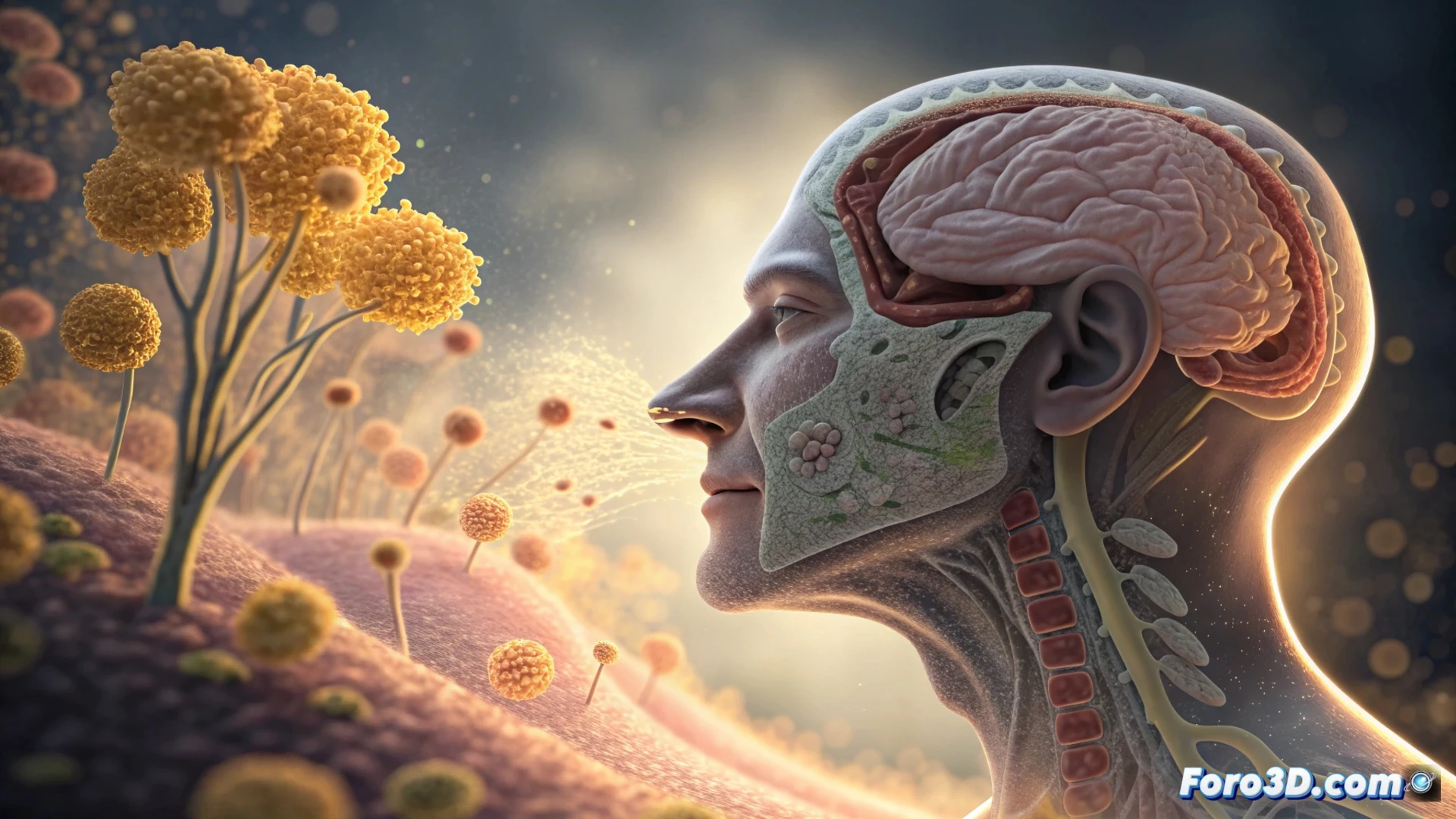
From perception to visualization: 3D maps for diagnosis 🧠
3D technology allows converting the olfactory fingerprint into a visual and interactive study object. We can create three-dimensional maps or point clouds where each axis represents a parameter: detection capacity, perceived intensity, and hedonic value (pleasure). A patient's data would be projected into this space, generating a unique shape. By comparing it with a healthy reference model or the typical Parkinson's fingerprint, an immediate visualization of the deviation is obtained. These spatial representations facilitate the identification of complex patterns, allowing clinicians to evaluate disease progression or response to treatments in a more intuitive and precise way.
Sensory integration: the future of the 3D clinical picture 🔬
The true potential lies in integration. The 3D-modeled olfactory fingerprint would not be an isolated datum. It could be fused with neuroimaging, brain connectivity models, or genetic markers, building a multidimensional biomedical avatar of the patient. This holistic approach, facilitated by 3D visualization environments, brings us closer to personalized medicine. Transforming the subjectivity of a smell into an analyzable geometric object is a powerful example of how 3D technology is redefining the boundaries of diagnosis and understanding of neurological diseases.
How can 3D modeling of a patient's olfactory fingerprint improve early diagnosis and personalized follow-up of Parkinson's disease?
(PD: If you print a heart in 3D, make sure it beats... or at least that it doesn't have copyright issues.)