The incident involving MEP Ilaria Salis, with her complaint about a preventive police search in her hotel, is not just a political event. It is a case study on opposing narratives: the opposition speaks of intimidation and a police state, the government of mandatory protocol. In political communication, the battle for the narrative is fundamental. This is where 3D visualization and data analysis tools can transform the discussion, moving from verbal confrontation to the objective deconstruction of the facts and their versions.
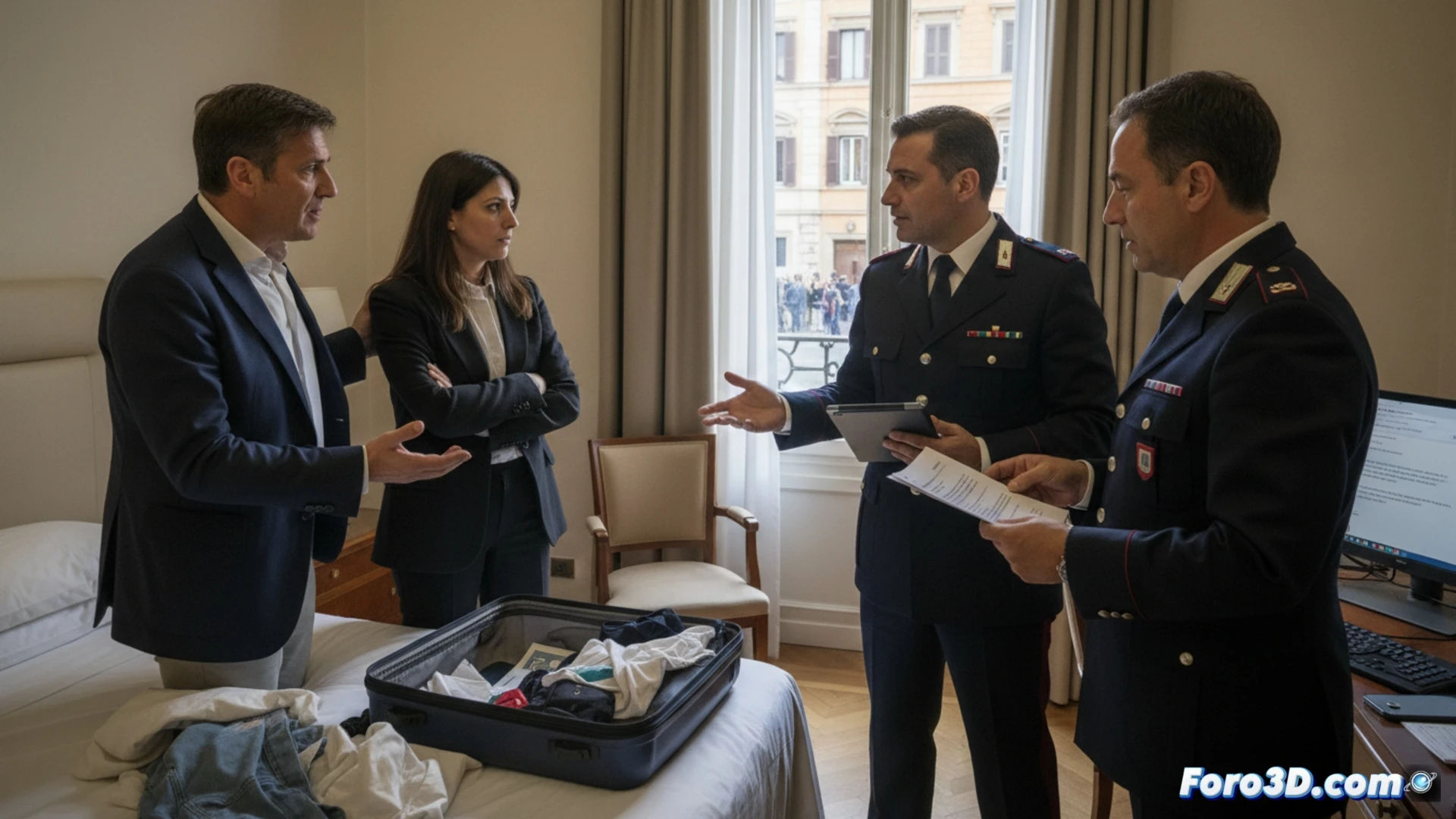
From Words to Space: 3D Reconstruction and Interactive Timelines 🕐
Technology allows transcending mere description. A precise 3D reconstruction of the hotel, the room, and the accesses could simulate the police operation described by the Questura, evaluating times, movements, and the literal application of the protocol. Parallely, a multilayer interactive infographic could overlay, on a single timeline, the sequence of events according to Salis, according to the police statement, and according to the coverage of different media. This comparative visualization would make narrative divergences, overlaps, and information gaps in each version evident, offering a powerful analytical tool for journalists and citizens.
Pattern Visualization: Beyond the Isolated Case 🗺️
The true potential lies in scaling the analysis. A georeferenced 3D model could locate this incident alongside other similar cases reported by politicians, activists, or journalists in Italy and the EU, filtering by date, party, or circumstance. Visualizing this data on an interactive map would reveal if there are spatial or temporal patterns, transforming an anecdote into a possible indication of a trend. Thus, technology does not give reason to anyone, but forces a discussion based on structured and visualizable data, challenging purely emotional or ideological narratives.
Do you think it is possible to visualize in 3D the contradictions between two official statements?