The recent decision by the Popular Party not to oppose the decree-law on fiscal measures is a perfect example of the complex parliamentary mechanics. Ensuring its approval without an affirmative vote, through a calculated abstention, reveals strategic negotiation. This process, often opaque to the public, can be broken down and intuitively understood through data visualization tools and 3D modeling, transforming politics into an interactive and educational experience.
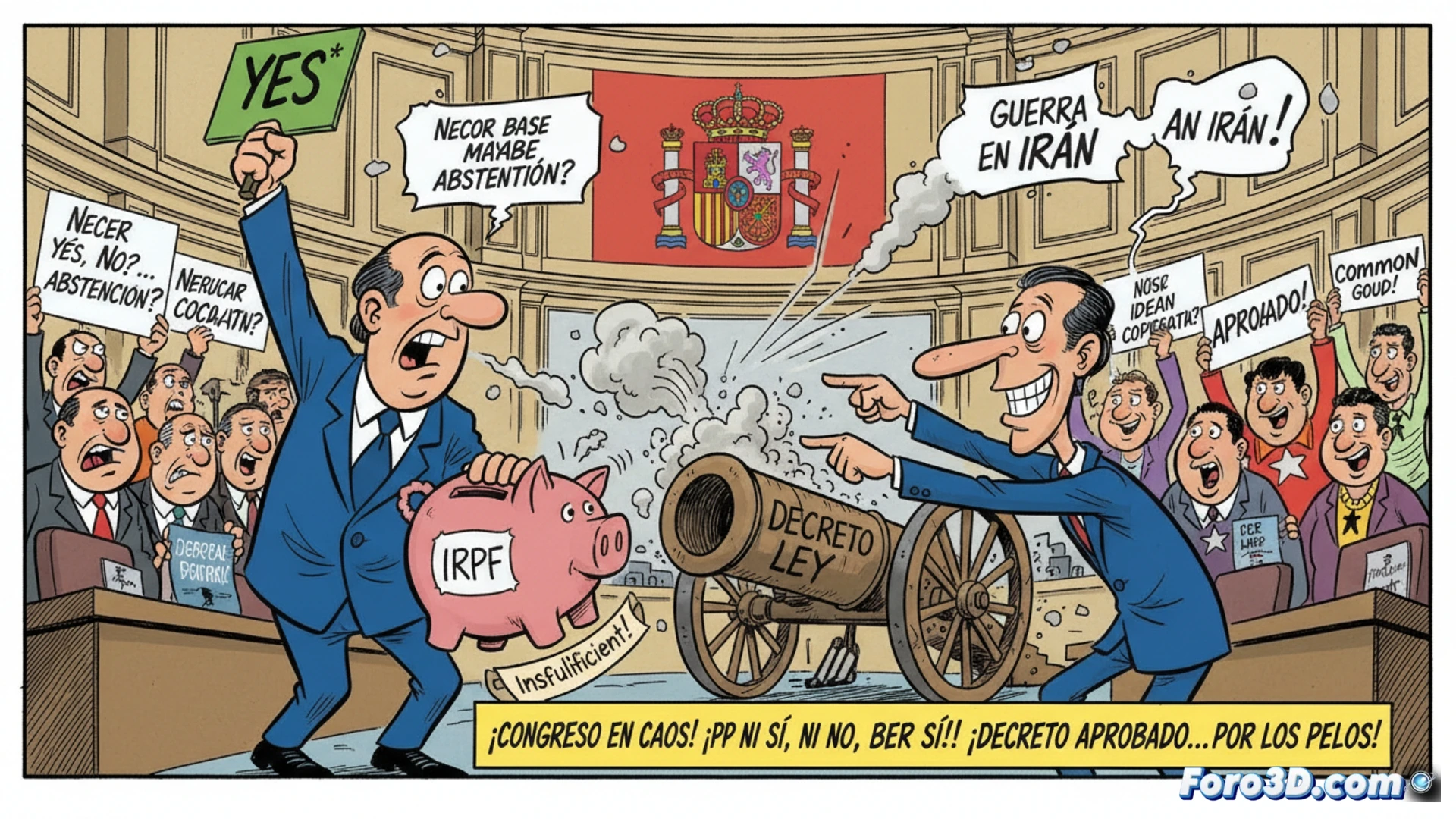
Interactive infographic proposal: hemicycle, votes, and scenarios 🎮
The proposal is an interactive 3D simulation of Congress. Each seat would be represented as a block, grouped by party and with a distinctive color. Upon loading the model of the specific case, the flow would be visualized: the Government presents the decree, the support blocks light up, and the PP's key position is shown in an intermediate negotiation state. The user could interact by modifying variables: what would happen if the PP votes against? The simulation would automatically recalculate the votes, showing if the norm fails and changing the color of the resulting hemicycle. This allows understanding the mathematical weight of each group and the fragility of majorities.
Democracy explained through data and virtual space 📊
This approach goes beyond a news item. It is a civic tool that demystifies decision-making. By spatializing the abstract data of a vote into a familiar 3D model like the hemicycle, a deeper understanding of political representation and negotiation is fostered. In the niche of Digital Democracy, projects like this are essential to create an informed and critical citizenship, capable of analyzing not only the what, but the how of the politics that determines their reality.
What software do you recommend for creating real-time electoral tracking panels?