In modern automotive engineering, the development of digital twins is key to optimizing designs before physical manufacturing. This article presents a case study on the virtual modeling of a mid-size battery electric vehicle, created with Simulink and Simscape. The model integrates five critical subsystems to analyze and optimize the thermal management system under various operating conditions, reducing energy consumption through iterative simulation.
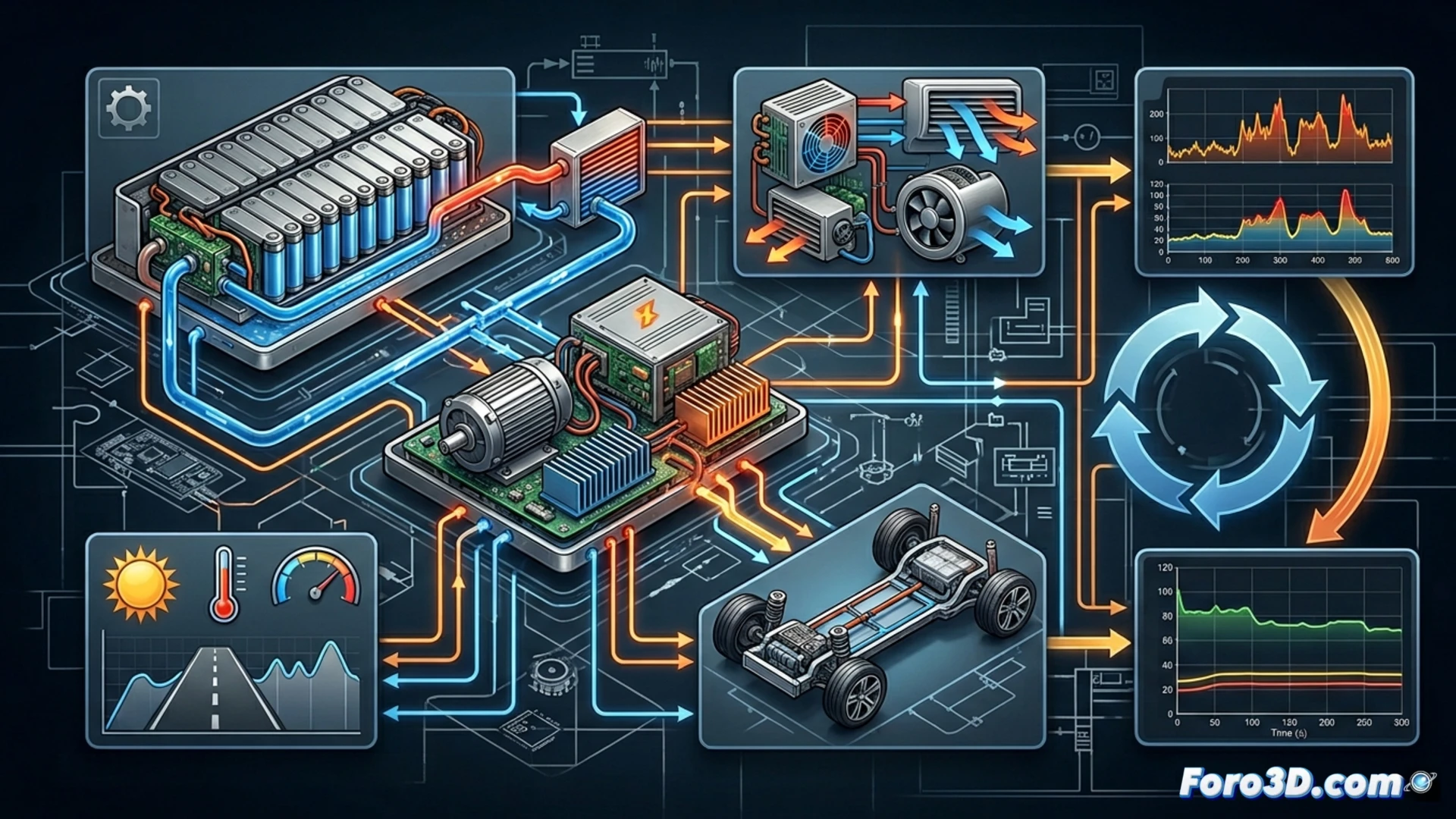
Model architecture and subsystem integration methodology 🔧
The model is structured into five main interconnected subsystems. The electric powertrain and transmission define the vehicle's dynamics and energy demands. In parallel, the battery and motor refrigerant cycle and the cabin refrigerant cycle are modeled, along with a cabin thermal model. This integration allows simulating the complete interaction between propulsion and thermal management. The model runs under different driving cycles and extreme environmental conditions, evaluating the impact of parameters such as temperature setpoints or pump efficiency on total energy consumption.
The value of the digital twin in iterative automotive design 💡
This simulation tool goes beyond isolated analysis, enabling system-level optimization. Engineers can quickly explore component configurations, thermal control strategies, and design trade-offs, reducing costs and development time. The model validates how intelligent thermal management, simulated virtually, is crucial for maximizing the range and efficiency of electric vehicles, consolidating CAE modeling as a pillar of automotive design.
How can a battery thermal management model in Simulink be integrated with a 3D digital twin of the electric vehicle to predict and mitigate temperature-related degradation under real driving conditions?
(P.S.: modeling a car is easy, the hard part is making sure it doesn't turn into a box with wheels)