The United States faces a historic drought affecting half of its territory, a slow-evolving disaster intensified by climate change. Amid critical scarcity, wastewater recycling emerges as a vital technological solution. At Foro3D, we explore how 3D modeling and simulation are key tools not only to visualize the magnitude of this catastrophe, but also to design and communicate the infrastructures that can mitigate it, transforming complex data into understandable strategies.
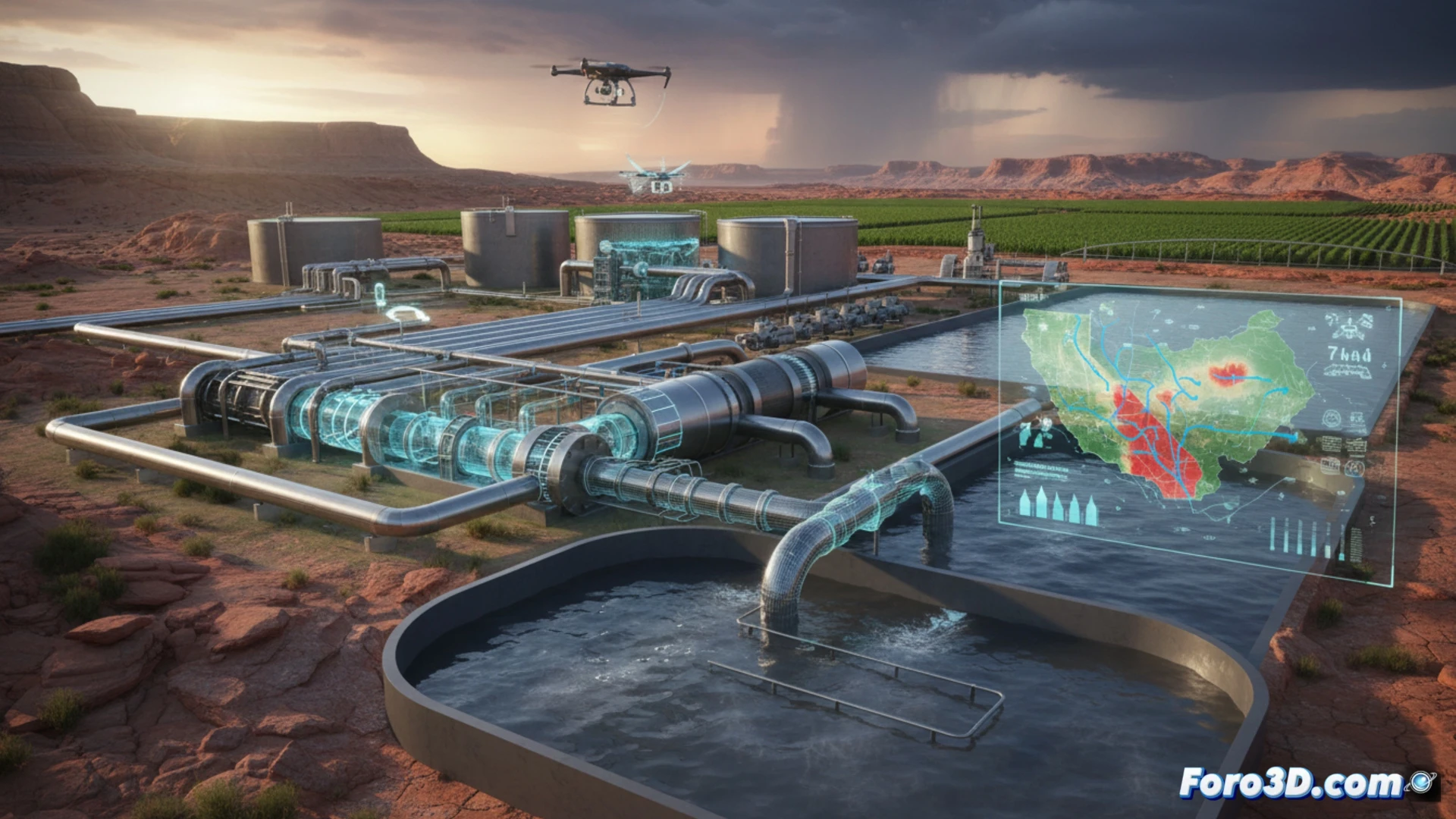
Digital Twins: From Dry Watersheds to Recycling Plants 💧
The power of 3D lies in creating dynamic and precise representations of real systems. A digital twin of a watershed allows simulating water stress, modeling drought propagation, and predicting long-term impacts. Similarly, 3D modeling is essential for the design of water treatment plants. We can visualize each stage of the process: solids removal, biological digestion, advanced filtration, and UV disinfection. These models facilitate infrastructure optimization, identification of bottlenecks, and serve as training and public awareness tools to explain how wastewater is transformed into a safe resource.
Rendering a Future with Safe Water 🌍
3D visualization transcends technical planning to become an essential communicative bridge. By rendering future scenarios with and without intervention, we can starkly convey the cost of inaction and the viability of solutions. An interactive model of a recycling plant can dispel public doubts and foster acceptance, clearly showing the rigorous purification process. In the fight against catastrophes like the megadrought, 3D establishes itself as the universal language for designing resilience and building consensus toward sustainable water management.
Would you export the results to GIS format? 🗺️