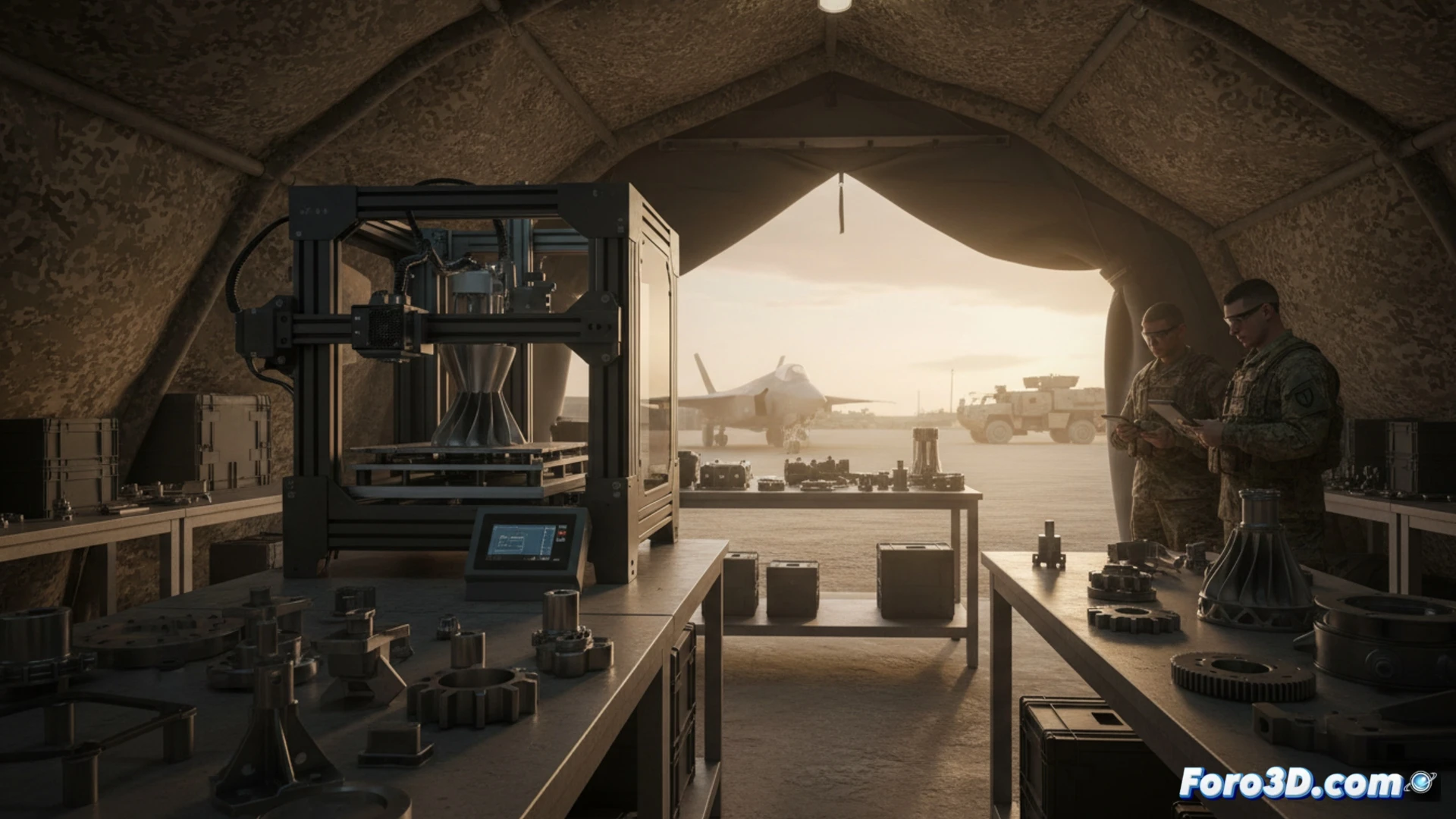
The U.S. Department of War has awarded Nikon AM Synergy a contract to revolutionize its aeronautical supply chain through additive manufacturing. This project goes beyond just printing parts; it pursues a logistical paradigm shift: replacing vast physical storage of spare parts with on-demand digital production of critical components. The goal is clear: gain resilience, reduce delivery times from months to days, and minimize the logistical costs associated with the traditional supply chain, strengthening strategic autonomy.
Technical analysis: logistical resilience through distributed additive manufacturing 🔬
This case is a practical example of the industrial transformation that 3D printing represents. Logistics shifts from a system of transportation and storage to a network of distributed digital manufacturing. Instead of maintaining costly global inventories of parts, often obsolete, certified digital files are stored. When a spare part is needed, it is manufactured locally or in advanced logistics centers, using aerospace-grade metals and polymers. This mitigates risks from geopolitical disruptions and streamlines maintenance. Parallelly, research such as that from the Bauhaus University of Weimar studies hybrid integration, where additive manufacturing does not replace but complements subtractive or forming processes, optimizing the design and production of complex components.
Reflection: towards a hybrid and decentralized industrial model? 🤔
The Nikon initiative and academic research point to a common direction: industry is advancing towards a hybrid and more decentralized model. On one hand, military strategic urgency drives immediate on-demand manufacturing applications. On the other, academia explores the deep symbiosis between the new and the traditional. The future will not be just about printing everything, but intelligently integrating each technology according to its strengths, combining the flexibility of additive with the efficiency of conventional methods. This redefines not only logistics, but the very philosophy of industrial design and production.
How would you represent the increase in workload in Taiwanese factories?