In his new project, Uri Tupka and the Gods, Mike Mignola dives back into a world of dark fantasy and Slavic folklore. His focus on monster design, Gothic architecture, and building an ominous atmosphere is not only crucial for the comic, but a direct mirror of the essential pre-production phase in film and animation. The visual conceptualization process he describes is the same one that brings coherent universes to life on screen, from the first sketch to the final 3D modeling.
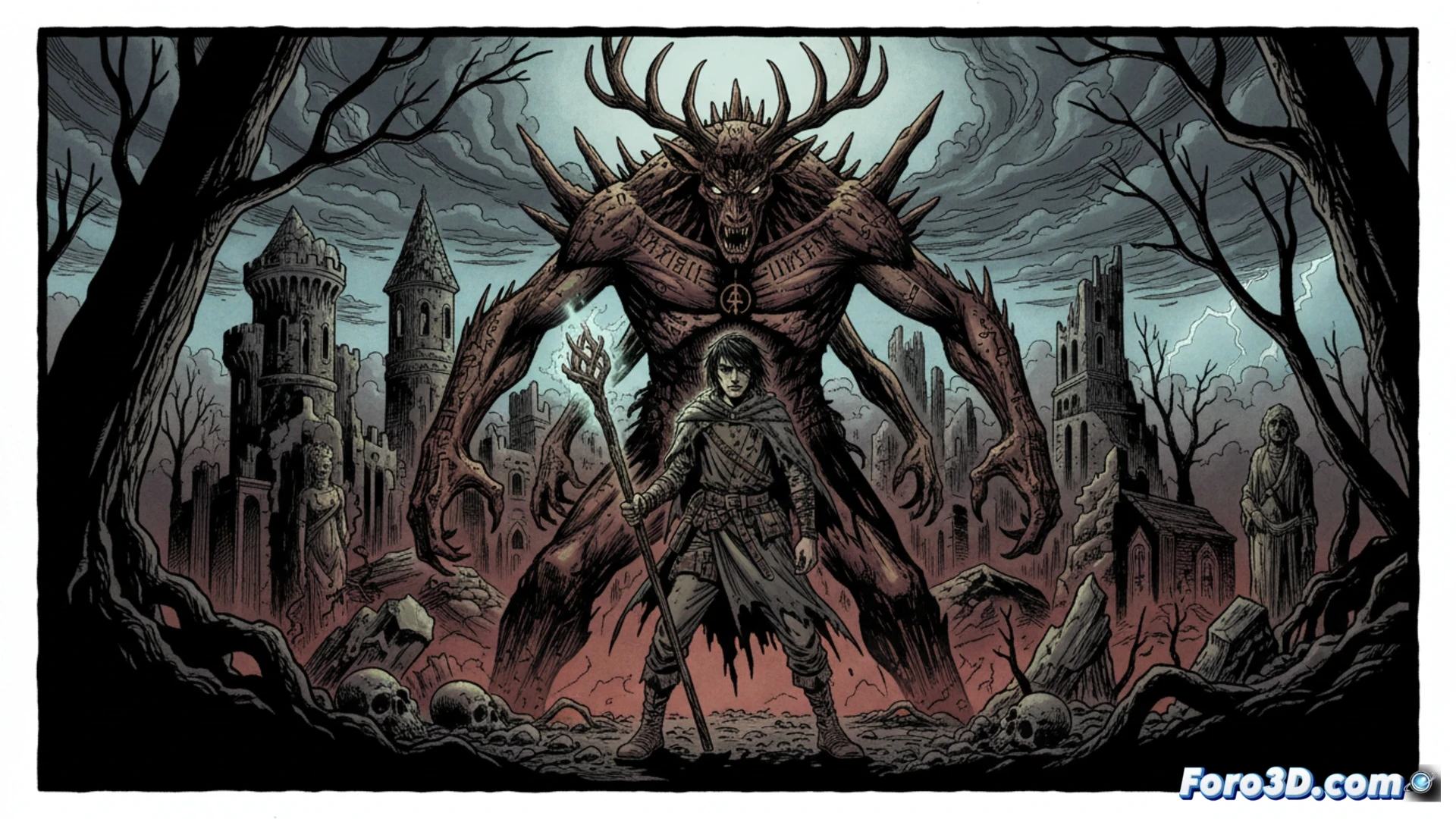
From concept art to 3D storyboard: building ominous worlds 🎬
When Mignola talks about enjoying drawing creatures and architecture, he is outlining the pillars of concept art and previsualization. His methodology, based on folklore research and creating a tangible Gothic aesthetic, is directly transferable to a visual production pipeline. A VFX creature designer or a 3D animation environment artist operates under the same principles: giving visual form to a mythology, ensuring that every monster and every pointed arch tells a story and reinforces the tone. This design phase defines the palette of lights and shadows, the scale, and the tactile sensation that will later be translated into 3D storyboards and previz, establishing the visual language long before the final render.
Visual narrative as the foundation of every universe 🏰
The key lesson from Mignola's approach is that visual narrative is built from the foundations. His passion for the atmospheric underscores that a convincing world is not a backdrop, but a character in itself. In film or video game production, this visual coherence, born from a clear authorial vision in pre-production, is what allows audiences to believe in the fantastic. Every drawn detail, whether on paper or in 3D software, is a brick in the viewer's immersion.
How can Mike Mignola's graphic style and atmospheric pre-production, based on silhouettes and economy of details, inform and enhance the visual and narrative design process in dark fantasy cinematic projects?
(P.S.: Previz in film is like the storyboard, but with more chances for the director to change their mind.)