Astronauts age acceleratedly in space. They lose bone and muscle mass, especially in the deep core muscles that stabilize the spine. This phenomenon is an extreme mirror of what happens on Earth due to sedentariness. Space research, crucial for future missions, offers vital clues to combat low back pain and promote healthy aging. This is where 3D biomedicine becomes an indispensable tool to translate these findings into practical solutions.
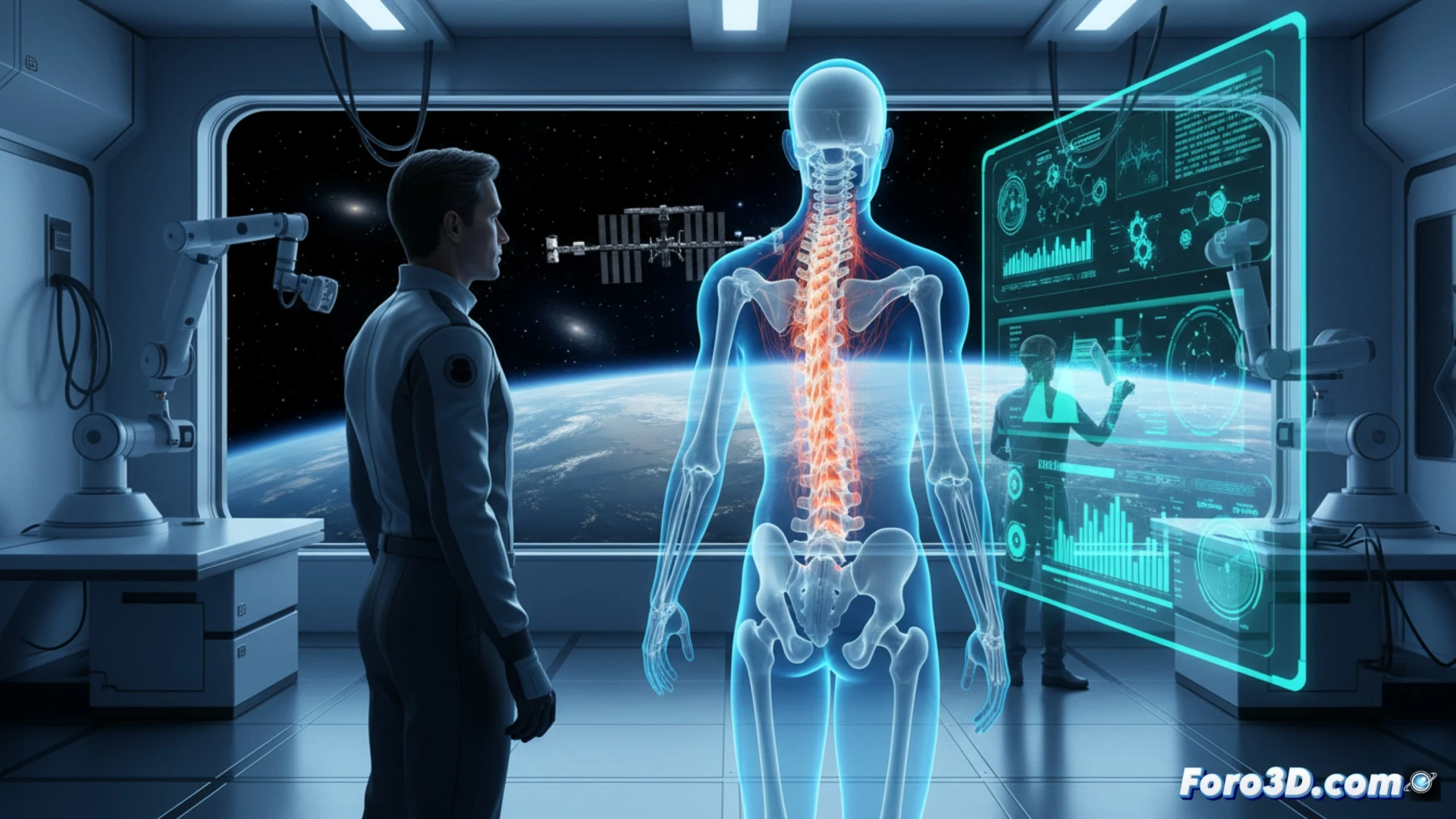
3D Modeling and Simulation: From the ISS to the Clinic 🧬
3D technologies allow the creation of precise anatomical models of the spine and its deep musculature, such as the multifidus and the transversus abdominis. From medical scans, we can visualize in detail their atrophy in microgravity or due to inactivity. Beyond visualization, computational simulation is key. We can digitally recreate microgravity conditions to analyze spinal biomechanics and virtually test exercise protocols. These dynamic 3D models help design personalized rehabilitation regimens on Earth, optimizing the movements that best reactivate these forgotten muscles.
3D Printing and the Future of Spinal Health 🖨️
The path doesn't end on the screen. 3D printing of physical models of vertebrae and muscle structures derived from these studies facilitates the education of patients and professionals. Physically understanding degeneration motivates change. In the long term, integrating this biomechanical data with artificial intelligence could lead to the creation of lightweight exoskeletons or personalized biofeedback devices. The space lesson is clear: strengthening the core is essential. 3D technology is the bridge that transforms that lesson into tangible tools for a stronger back and healthier aging on Earth.
What segmentation software do you recommend for this medical data?