The next generation of the Mercedes A-Class, scheduled for 2028, confirms its continuity as a compact hatchback. Its development on the modular MMA platform, which already underpins the CLA, involves a complex integration process where 3D modeling is fundamental. Digital tools allow adapting the traditional bodywork to the new technical scheme, optimizing spaces for the different propulsion configurations, hybrid and electric, from the earliest phases of the project.
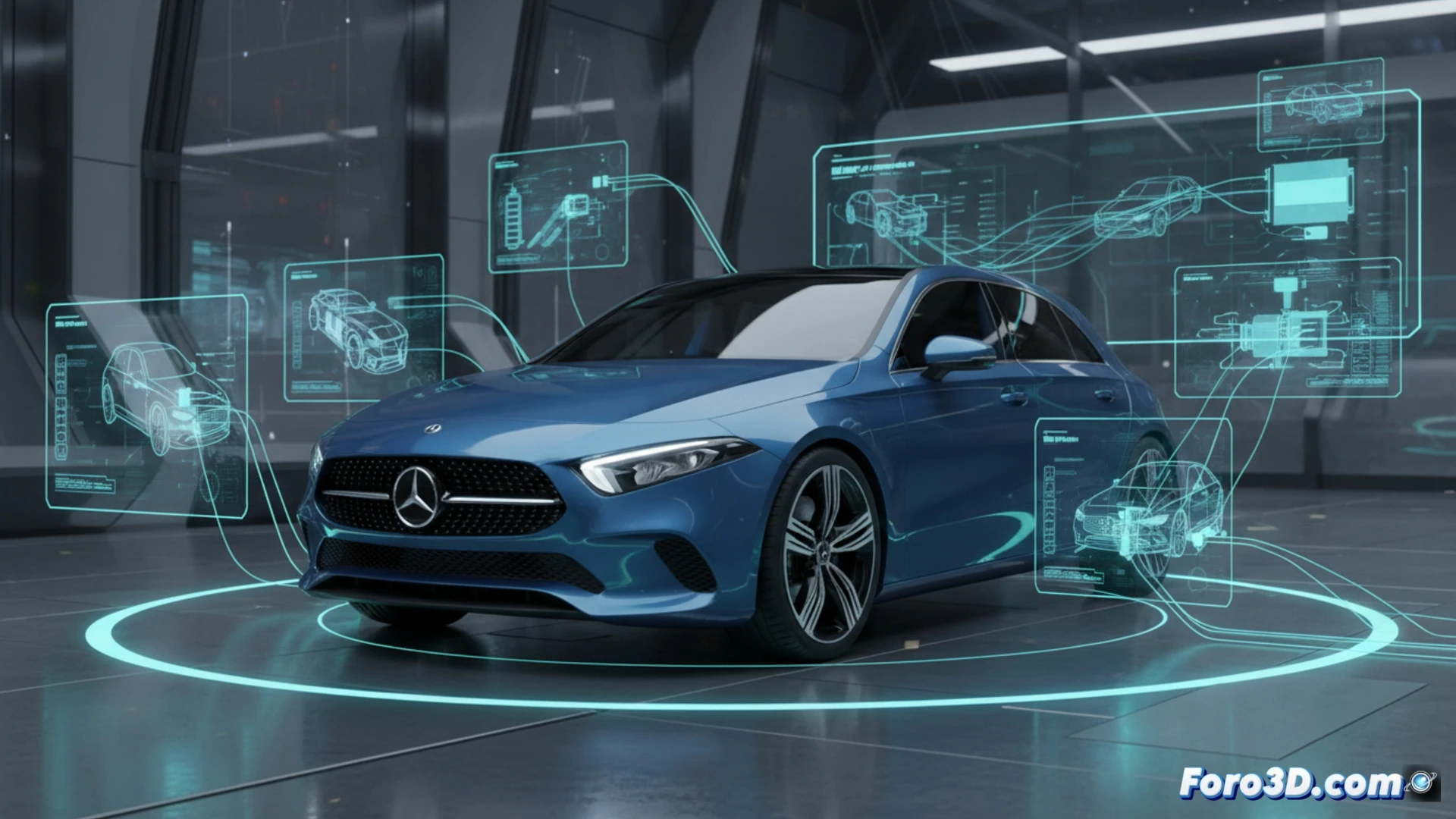
Systems simulation and packaging in the new A-Class 🛠️
The design of a multi-propulsion vehicle requires precise virtual integration. Through advanced CAD and CAE systems, engineers can visualize and test the arrangement of critical components. This includes the placement of battery modules, electric motors, and exhaust systems in the same volume, ensuring safety, mass balance, and trunk capacity. Aerodynamic and thermal simulation in 3D environments allows refining the design for efficiency and cooling without the need for early physical prototypes, accelerating the development cycle.
The digital strategy behind the conservative design 💻
The decision to maintain an evolutionary, non-disruptive design does not imply less digital work. On the contrary, 3D modeling allows iterating and perfecting known lines with new technical requirements, ensuring brand coherence. This strategy, validated through hyperrealistic renders and virtual reality, minimizes commercial risks. The long cycle of the current model, until 2027, gives development teams valuable time to fully exploit these digital tools in the pursuit of final optimization.
How is the MMA platform transforming the 3D design process and aerodynamic optimization of the future Mercedes A-Class 2028?
(P.S.: modeling a car is easy, the difficult part is that it doesn't turn into a box with wheels)