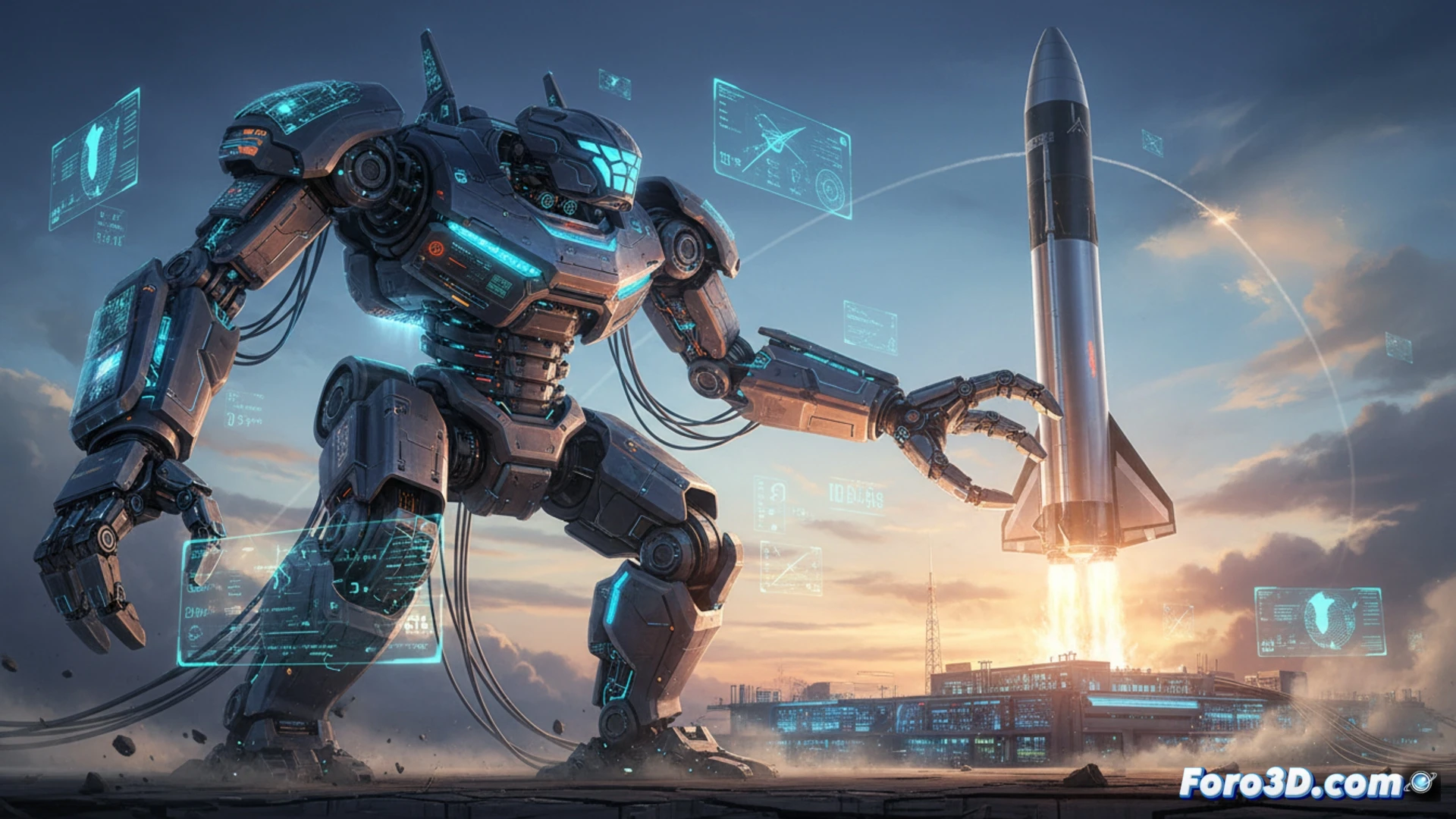
Mechazilla, SpaceX's aerial capture system, transcends its imposing physical presence. It represents the materialization of a high-fidelity digital twin. They are not just mechanical arms, but the tangible interface of a complex virtual model that simulates, decides, and acts in real time. Its mission, to catch the Super Heavy booster, is the culmination of a continuous data cycle where the physical and digital worlds merge to redefine space reusability.
The Architecture of a Digital Twin in Action 🤖
This system operates as a closed digital twin. The virtual model integrates real-time data from telemetry, radar, computer vision, and environmental conditions to create a dynamic replica of the descending rocket. This twin not only monitors but predicts the future trajectory and calculates the exact movement of the arms. The autonomous capture decision closes the cycle, translating the simulation into physical action with millimeter precision. Each attempt, successful or not, feeds the model, refining its accuracy for the next iteration in a continuous learning cycle.
Redefining the Space Value Chain 🚀
Mechazilla demonstrates that the supreme value of a digital twin lies not in visualization, but in autonomous execution. By physically intercepting the rocket, it eliminates the need for landing, landing gear, and much of the subsequent refurbishment. This radically compresses the time between launches, transforming the space operations chain from a sequential and slow process into a fast and nearly continuous cycle, where efficiency is measured in hours, not months.
How does Mechazilla's digital twin optimize rocket capture in real time and enable the simulation of failure scenarios to ensure the safety and efficiency of SpaceX missions?
(P.S.: don't forget to update the digital twin, or your real twin will complain)