The true utility of an artificial intelligence lies not only in its ability to reason, but in its skill to interact with the world. Until now, connecting AI models with external tools and data was a complex and customized process. The Model Context Protocol (MCP), an open standard created by Anthropic and donated to the Linux Foundation, comes to solve it. Acting as a universal language, MCP radically simplifies these integrations, allowing any compatible AI to access thousands of resources in a standardized way. This technical leap is fundamental for the next phase of applied AI.
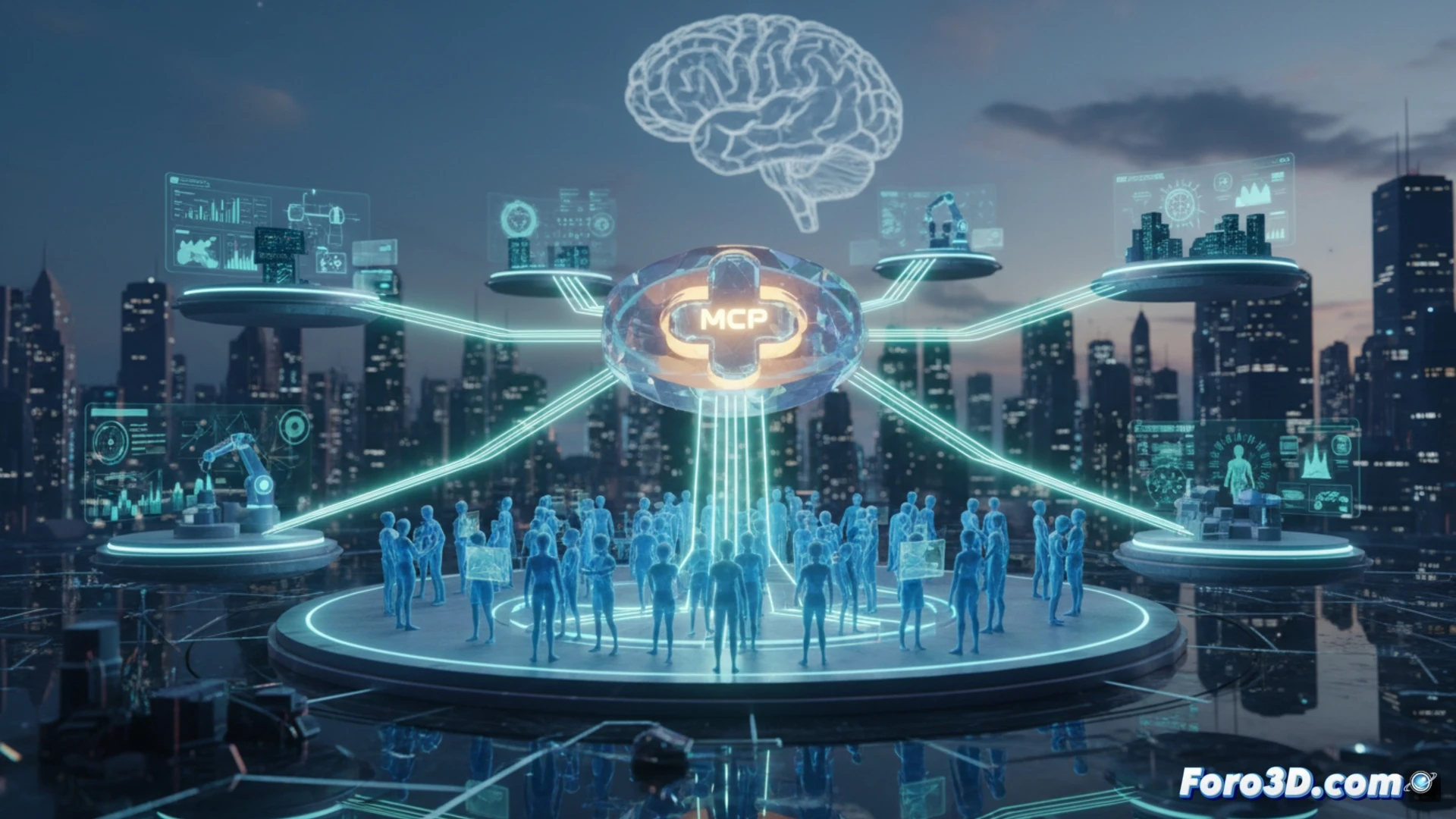
Architecture and Operation: Host, Client and Server 🤖
The elegance of MCP lies in its conceptual simplicity, based on three clear components. The Host is the main AI application, such as an assistant or chatbot. The Client acts as an intermediary within the Host, managing requests. The key component is the Server, which is responsible for exposing specific tools or datasets in a standardized way. An MCP server can offer anything from access to a database to control of a device. The protocol standardizes communication between these components, functioning as a USB-C cable for the AI ecosystem: the same connector works for multiple devices, and the same tool can be used by different models without needing custom developments.
Beyond the Code: The Social Impact of a Standard 🌍
The adoption of MCP by big tech companies and its institutional backing go beyond the technical. By standardizing and democratizing access to functionalities, it accelerates the integration of AI into everyday and business applications, making these capabilities more accessible to developers and end users. This not only simplifies future developments but also changes public perception: AI stops being an isolated black box to become an interoperable and usable component that can reliably interact with the digital environment around us, bringing its potential to society in a tangible way.
How can the Model Context Protocol (MCP) transform the accessibility of AI, allowing any model to interact and automate tasks in everyday applications and services without the need for costly custom integrations?
(P.S.: moderating an internet community is like herding cats... with keyboards and no sleep)