Cameron McEvoy has made history in Shenzhen by breaking the world record in the 50-meter freestyle, a mark of 20.91 seconds set by César Cielo in 2009 with polyurethane swimsuits, now banned. At 31 years old, the Australian clocked 20.88 seconds, surpassing a benchmark considered almost unattainable. This achievement, in front of a world elite, reopens the debate on human limits and how modern technology can help us understand them, not through prohibited materials, but through scientific analysis.
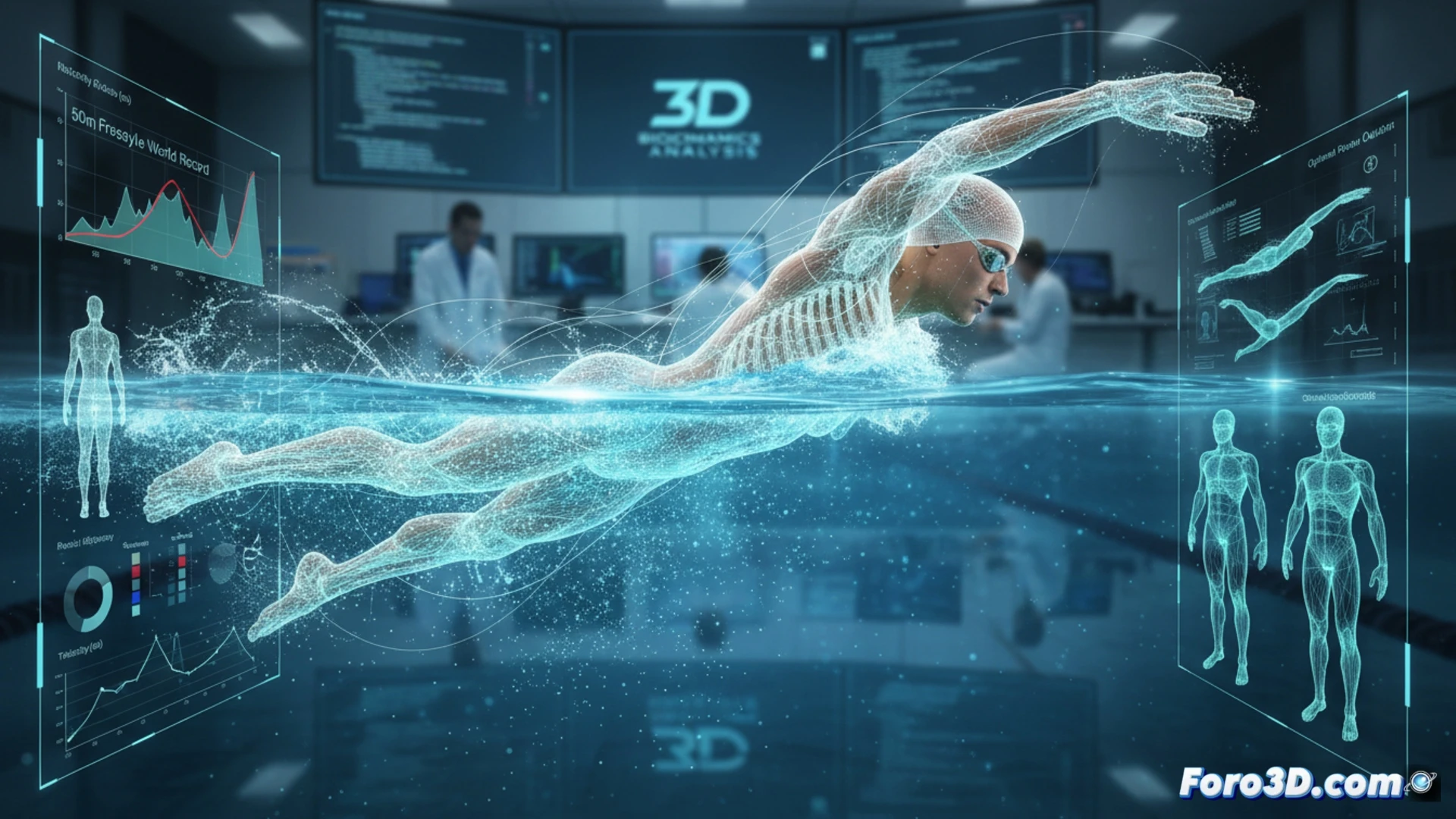
3D Modeling and CFD: Unraveling the Hydrodynamics of the Record 🏊♂️
3D technology offers tools to dissect a feat like McEvoy's. Through 3D body scanning and movement reconstruction with high-speed cameras, a digital twin of the swimmer can be created. This model can be introduced into Computational Fluid Dynamics (CFD) simulations to precisely analyze the interaction of his body with the water. Hydrodynamic drag, generated turbulence, and stroke efficiency could be compared with those of a model simulating the effect of the old polyurethane swimsuits, quantifying the purity of the current achievement.
Visualizing the Future of Sports Analysis 📊
Beyond analysis, the 3D recreation of the full race allows for immersive visualization for tactical and biomechanical study. Coaches and athletes could examine the start, turn, and finish sequence from any angle, contrasting it with other records. This capability transforms a fleeting moment into a permanent object of study, democratizing access to elite knowledge and pointing to a path where 3D technology is the key ally to overcome barriers, always respecting the essence of the sport.
How has 3D biomechanical analysis allowed identifying the technical keys to Cameron McEvoy's record-breaking swim in the 50-meter freestyle? 🥇
(P.S.: 3D VAR: now with replays from angles that didn't even exist)