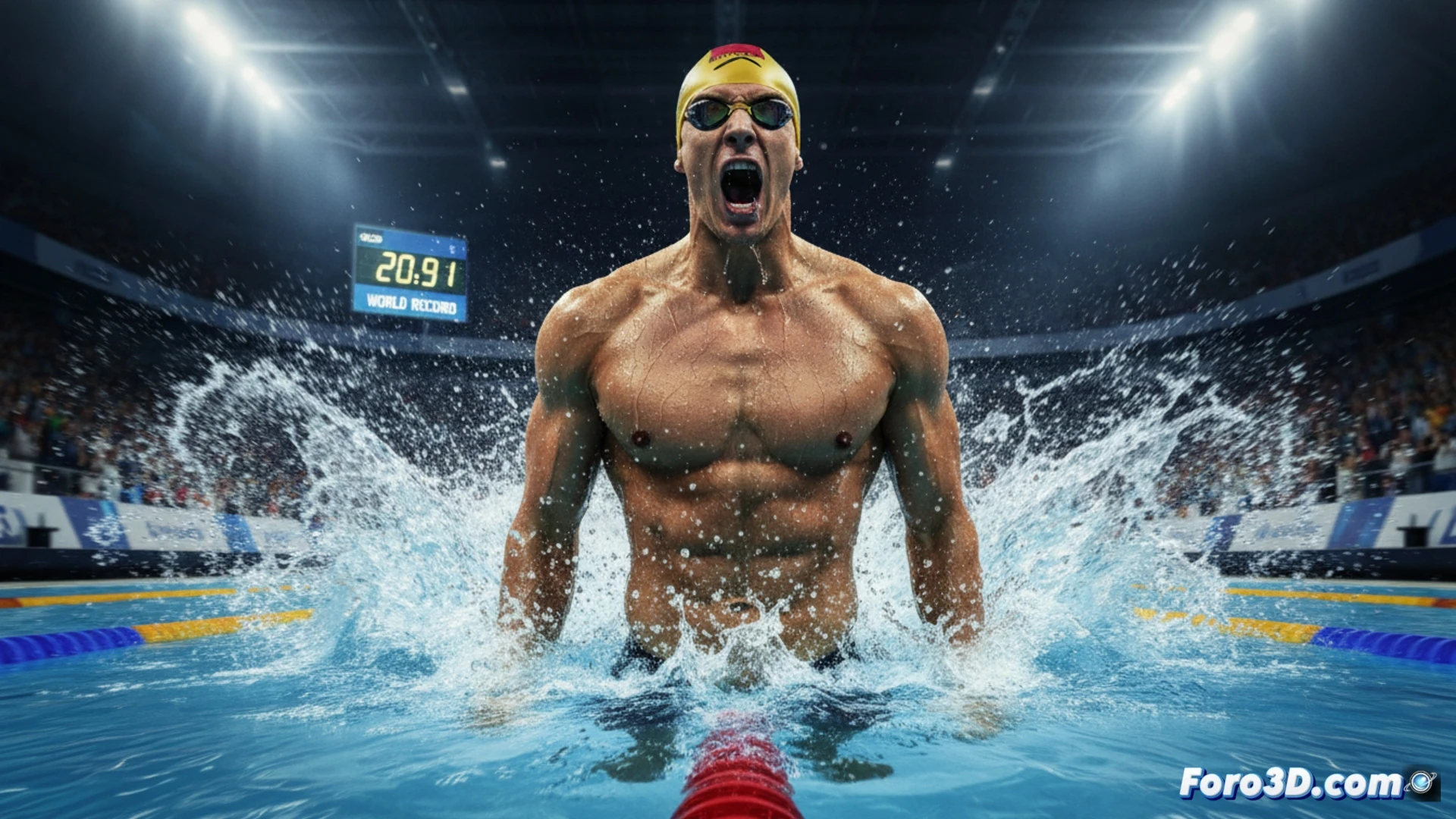
Cameron McEvoy, The Professor, has rewritten the laws of speed in the water. After a setback in Tokyo, this Physics graduate applied the scientific method to his training, challenging dogmas. His conclusion was radical: less pool volume, more explosive strength in the gym. The result is the 50-meter freestyle world record. This achievement is not just physical; it is the triumph of meticulous technical analysis. And this is where 3D technology emerges as the perfect tool to quantify and validate such a revolution. 🏊♂️
3D Biomechanics: the digital microscope of the perfect gesture 🔬
McEvoy's analysis required a millimeter dissection of his technique. Technologies like 3D body scanning and motion capture would allow creating a digital twin of the swimmer. This model can quantify attack angles, underwater stroke trajectories, and drag with exact precision. Biomechanical simulation could test, without muscle fatigue, how each kilo of mass gained in the gym affects propulsion and buoyancy. Thus, the principle less is more stops being an intuition to become verifiable data: the minimum water training volume necessary to maintain technique is identified, while power on land is maximized.
Beyond the record: a new paradigm of smart training 🧠
The McEvoy case points to a path where performance is optimized with engineering precision. 3D technology offers objective feedback, eliminating guesswork. It allows extreme personalization of the workload, preventing injuries by analyzing stress gestures, and accelerating the learning curve. It's not about training more, but training with perfect information. This approach, validated by a world record, transcends swimming. It is the promise of a new era for all sports, where improvement is designed digitally before being executed physically.
How can 3D biomechanical analysis optimize swimming technique to surpass physical limits, as in the case of Cameron McEvoy?
(PS: at Foro3D we know that a 3D simulated penalty always goes in... unlike in real life)