Autodesk presents Maya 2027, a major update that reinforces its position as the industry standard in visual effects. This version introduces strategic improvements in modeling, simulation, and animation, all aimed at optimizing the production of photorealistic and stylized content for film, series, and motion graphics. For VFX artists and studios, it means tangible gains in efficiency and creative control, from asset creation to final animation. 🎬
Key tools for a more robust VFX pipeline ⚙️
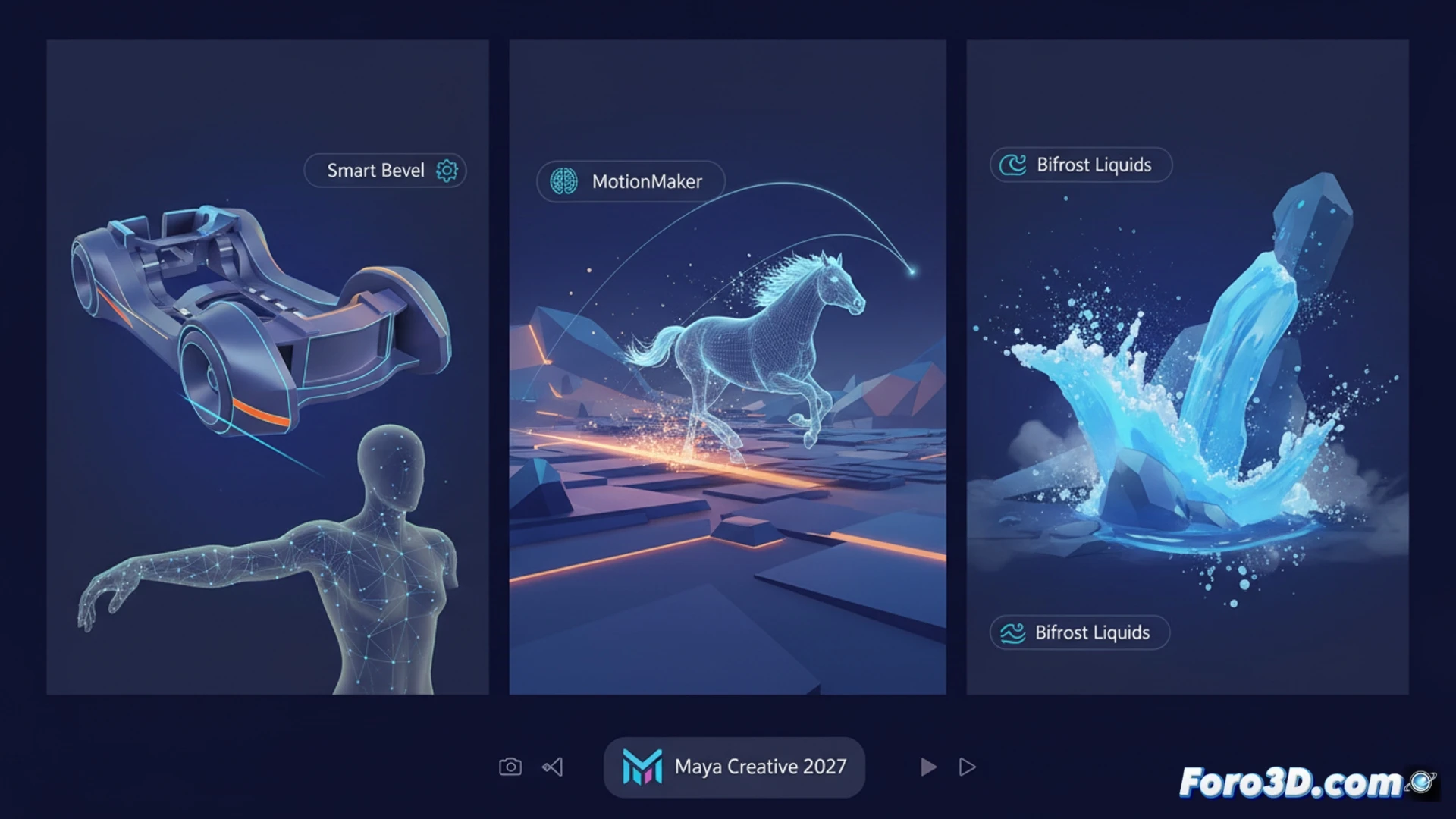
The technical novelties in Maya 2027 address common bottlenecks in VFX. Smart Bevel enables the generation of clean bevels on complex topologies, accelerating hard-surface modeling for vehicles or environments. The native integration of ngSkinTools elevates character skinning to a new level, crucial for believable deformations. In simulation, improvements in Bifrost for liquids offer greater realism and control. Finally, the extension of MotionMaker for animating horses with AI exemplifies how generativity begins to assist specific and demanding tasks, promising time savings in creature animation.
Efficiency and quality: the balance for large and small studios ⚖️
With the parallel launch of Maya Creative 2027, Autodesk recognizes the needs of more compact studios. This strategy democratizes access to high-end tools, allowing studios of different scales to compete in visual quality. Overall, Maya 2027 is not just a sum of features, but a bet on a more integrated workflow that is less prone to errors, where the artist can focus on the creative take without losing technical quality in the final delivery.
How are the new nodal simulation tools and task automation in Maya 2027 redefining the limits of efficiency and realism in visual effects pipelines for cinematic production?
(P.S.: VFX are like magic: when they work, no one asks how; when they fail, everyone sees it.)