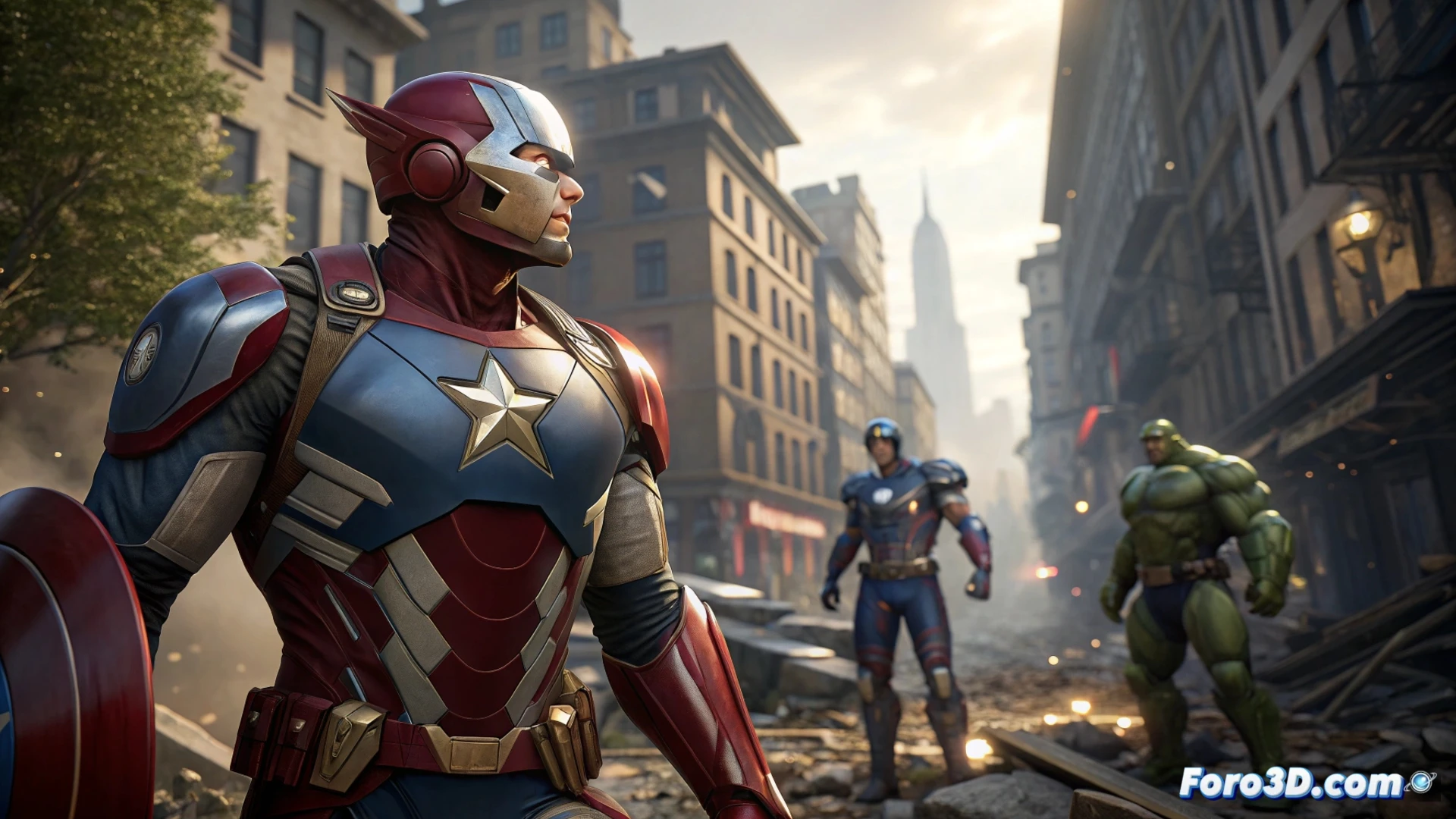
Marvel Rivals is not just another hero shooter. Its visual proposal, an advanced cel-shading that emulates the stroke of a modern comic, and its fully destructible environments, make it a fascinating technical case study. Developed in Unreal Engine 5, the game demonstrates how the most cutting-edge technologies can be put at the service of a very defined artistic style, creating visually cohesive chaos faithful to the Marvel essence.
The Technique Behind the Comic Style: Beyond the Simple Outline 🎨
The cel-shading of Marvel Rivals goes much further than a simple black outline. It uses Unreal Engine 5's lighting and post-processing capabilities to create high-precision flat shading, with defined transitions that recall hand coloring. This is combined with textures worked on in tools like Photoshop and Maya, which simulate printing textures and kinetic line effects. Procedural destruction, on the other hand, does not break the aesthetic: debris and fractures maintain the same visual treatment, integrating chaos into the artistic language without compromising performance in multiplayer matches.
A Pipeline for Controlled Chaos ⚙️
The technical choice has a direct impact on gameplay and production. Environmental destruction is not just decorative; it redefines the map and strategies in real time. This pipeline, which goes from modeling in Maya to UE5 systems, must ensure that destruction is performant and artistically coherent. Marvel Rivals exemplifies how a strong artistic style does not limit technical complexity, but demands a smarter integration of all the engine's tools.
How has NetEase implemented cel-shading and environmental destruction in Unreal Engine 5 to create the living comic aesthetic and dynamic combats of Marvel Rivals?
(PS: shaders are like mayonnaise: if they break, you start all over again)