The Marvel MaXimum collection rescues thirteen titles from the 90s, posing an interesting case study on the preservation and adaptation of classic video games. Beyond nostalgia, its value lies in how these games have been ported to modern consoles, with special attention to two arcade gems: X-Men: The Arcade Game and Captain America and The Avengers. This analysis focuses on the technical quality of the ports, the implementation of online play, and fidelity to the original experience, crucial elements for developers and expert players.
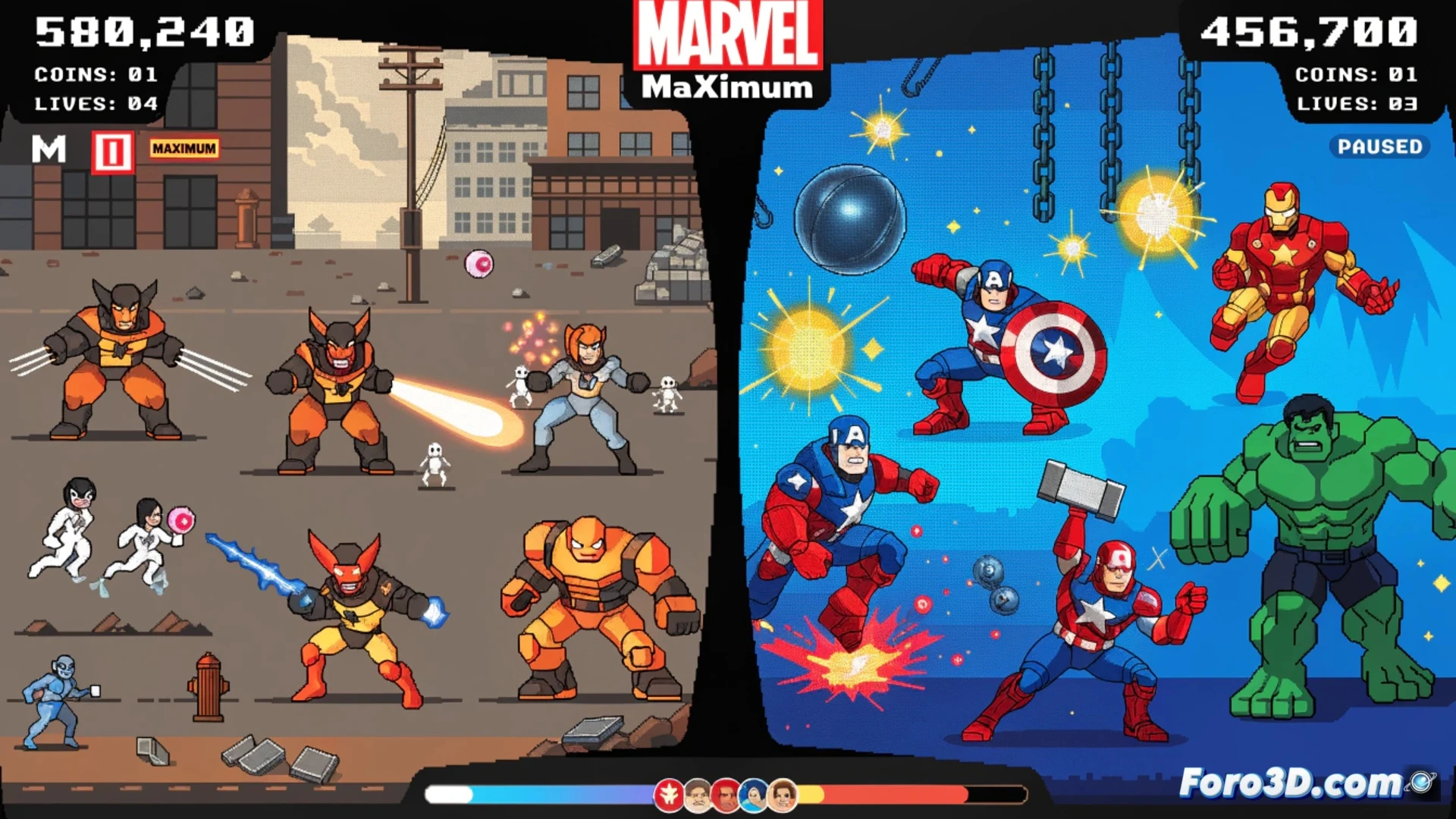
Netcode and Fidelity in Classic Arcade Ports 🕹️
Online co-op support is the most significant technical addition. Its implementation, or netcode, determines the smoothness of the experience in beat 'em up games designed for local sync. Titles like X-Men, with their detailed sprites and solid scrolling, and Captain America, with their varied mechanics, test the robustness of this adaptation. The contrast is marked by the ports of Spider-Man & Venom, whose original technical limitations are accentuated in the new environment. This disparity underscores the challenge of emulating diverse hardware: it's not just about replicating ROMs, but maintaining the precision of timing and controls response, aspects where modern development must intervene without altering the essence of the historical code and assets.
Playable Preservation vs. Irregular Compilation 📊
Marvel MaXimum functions as a playable archive of a specific era in licensed video game development. Its merit is making hidden gems accessible with contemporary features, a valuable resource for studying level design and power-up progression in the arcade era. However, its irregular nature evidences the risks of massive compilations: the lack of a unified quality criterion in the ports can dilute preservation value. For the development community, it highlights the importance of addressing each port as an individual project, where respect for the original code and optimization for new hardware are equally critical.
What specific technical challenges do developers face when emulating 90s arcade hardware, such as Capcom's CPS2, for a modern collection like Marvel MaXimum, and how do emulation decisions affect visual authenticity and gameplay?
(P.S.: optimizing for mobile is like trying to fit an elephant into a Mini Cooper)